
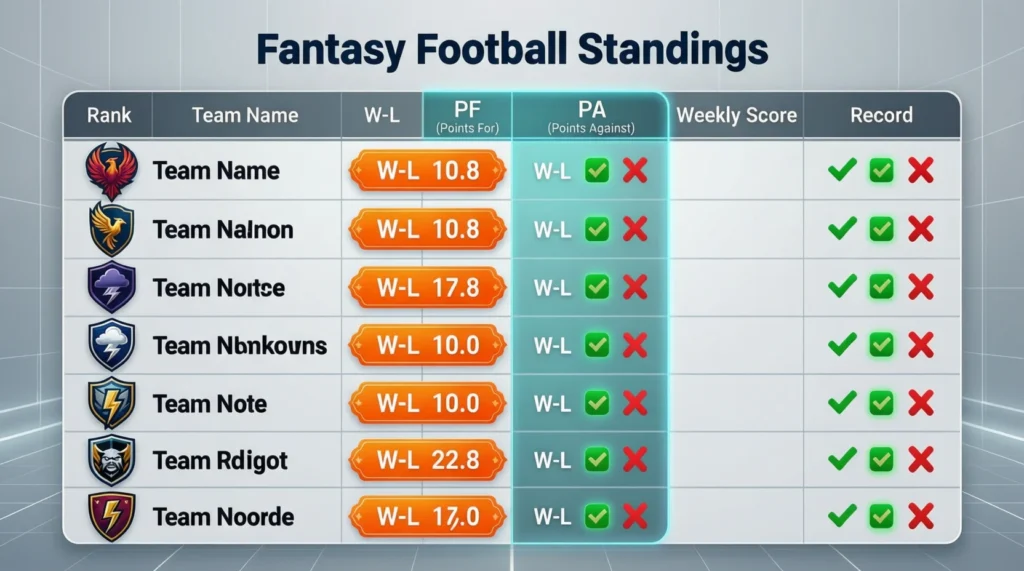
In fantasy football, PF means “Points For” and PA means “Points Against.”
PF is the total number of fantasy points your team has scored during the season.
PA is the total number of fantasy points your opponents have scored when playing against you.
If you’re playing fantasy football or checking league standings, you’ve likely seen the abbreviations PF and PA beside your team’s record. These stats aren’t just random numbers they tell an important story about how your season is going. Many new managers ask: what do PF and PA mean in fantasy football?
This article explains these terms clearly, shows how they’re calculated, why they matter, and how understanding them can help you win more games and make smarter decisions in your league.
What Does PF (Points For) Mean?

PF stands for Points For. It represents the cumulative number of fantasy points your team has scored throughout the season. Every week, your lineup earns points based on how your players perform in real NFL games—through rushing yards, passing touchdowns, receptions, field goals, interceptions allowed (for defenses), and more.
Your PF is simply the sum of those weekly totals.
How PF Is Calculated
PF is calculated by adding up all the fantasy points your starting lineup scores each week. Bench points do not count toward PF—only your active starters matter.
Example:
- Week 1: 120.50 points
- Week 2: 110.75 points
- Week 3: 95.30 points
➡️ Total PF after 3 weeks = 326.55 points
What Does PA (Points Against) Mean?
PA stands for Points Against. It represents the total number of fantasy points that your weekly opponents scored in the weeks they faced your team. This metric shows how many points you’ve had to outscore each week to earn wins.
Unlike PF, PA is completely out of your control—it depends entirely on how well your opponents did in those specific matchups.
PF and PA Together: What They Really Tell You
Looking at PF and PA together gives a deeper picture of your season beyond just win-loss records.
What PF Shows
- Your team’s offensive strength
- How productive your lineup has been
- How likely you are to score big in future weeks
- Often used as a tiebreaker for playoff seeding
What PA Shows
- The strength of schedule you faced
- How tough your opponents were each week
- Whether your record might have been influenced by luck or timing
Why PF and PA Matter
While win-loss record decides playoff eligibility, PF and PA help managers understand how a team reached that record.
PF: A Measure of Offensive Success
Teams with high PF typically:
- Drafted well
- Managed the lineup effectively
- Avoided injuries or had strong depth
A high PF is usually correlated with playoff-caliber teams and can serve as a tiebreaker in many leagues.
PA: Reflects Schedule Difficulty and Luck
A high PA doesn’t mean your team played poorly—it could mean:
- You faced opponents who scored a lot against you
- You had tough weekly matchups
- You were unlucky facing in-form teams regularly
A low PA generally suggests easier competition or favorable timing.
PF and PA in League Standings
Most fantasy platforms (like ESPN, Yahoo, Sleeper) list PF and PA in the standings. Here’s how these numbers often impact your season:
Playoff Tiebreakers
- PF is commonly used first as a tiebreaker if teams have the same win-loss record.
- Some leagues may use PA as an additional tiebreaker, rewarding teams that faced tougher opponents.
Evaluating Team Strength
- A team with a high PF and low PA is typically dominant and consistent.
- A team with high PF and high PA may be strong but unlucky.
- A team with low PF and low PA might be struggling offensively yet benefiting from weaker opponents.
- A team with low PF and high PA often needs roster improvements.
PF vs PA: Who Matters More?
Generally, PF is considered a more useful indicator of a team’s underlying strength and future success. That’s because how many points you score is something you can influence (through draft, lineup decisions, trades, and waivers), while PA reflects opponent performance and scheduling luck.
However, understanding both is key to smart strategy—especially in close playoff races.
Example PF and PA Table
| Team | Record | PF (Points For) | PA (Points Against) | Notes |
|---|---|---|---|---|
| Team A | 10-4 | 2,200 | 1,800 | Strong scoring, tough schedule |
| Team B | 10-4 | 1,950 | 1,500 | Solid but easier schedule |
| Team C | 8-6 | 1,850 | 1,950 | Good scoring, unlucky matchups |
| Team D | 6-8 | 1,600 | 1,650 | Struggled on both fronts |
This table helps illustrate how PF and PA add depth to the standings beyond wins and losses.
Tips for Managing PF and PA
How to Improve Your PF
- Start your best players every week
- Watch matchups and adjust weekly
- Add emerging players via waivers
- Make strategic trades to fill weak spots
Understanding PA
Remember: PA is not something you control, but it can help you evaluate whether your record reflects strong play or scheduling luck.
Common Misunderstandings
- PF is not league-only points — it’s only your team’s total.
- PA doesn’t measure defense — it simply reflects how many points opponents put up against your team when they played you, not how your players performed defensively.
- High PF doesn’t guarantee playoffs, but it improves seeding chances and tiebreakers.
FAQs
What does PF mean in fantasy football?
PF stands for Points For, the total fantasy points your team has scored during the season.
What does PA mean in fantasy football?
PA means Points Against, the total fantasy points that opponents have scored when they faced your team.
Are PF and PA used in playoffs?
They are mainly used for standings and tiebreakers, not direct playoff results.
Can PA be good?
A lower PA generally means your opponents scored fewer points, making your path potentially easier.
Does PF include bench players?
No, only points from your active starters count toward PF.
Is PF more important than PA?
PF is usually more actionable since you can influence it through decisions, while PA reflects opponent performance.
Can PF help you predict future success?
Yes, teams with high PF often have stronger rosters and better playoff prospects.
What if my PF is high but my record is bad?
It may mean you faced tough opponents (high PA), suffered bad luck, or had tough matchups.
Conclusion
In fantasy football, PF (Points For) and PA (Points Against) are key stats that give you a clearer picture of how your team is really performing. PF represents the total fantasy points your team has scored over the season, showing how strong and consistent your lineup has been.
PA, on the other hand, tracks the total fantasy points scored by your opponents when they play against you, helping explain tough matchups or bad luck have affected your record.
Together, PF and PA go beyond simple wins and losses, allowing you to evaluate true team strength, understand tiebreakers, and better predict future success in your league.
Discover More Related Articles:
- What Does TKO Mean in Boxing? When a Fight Is Stopped in 2026
- What Does High Volatility Mean in Slots? RTP, Risk, and Rewards in 2026

Laura Jackson is a writer at textroast.com, where she creates engaging articles that decode the meanings behind slang, phrases, and everyday expressions. Passionate about language and communication, she makes complex or confusing terms easy to understand, turning learning into a fun and relatable experience for readers around the world.