
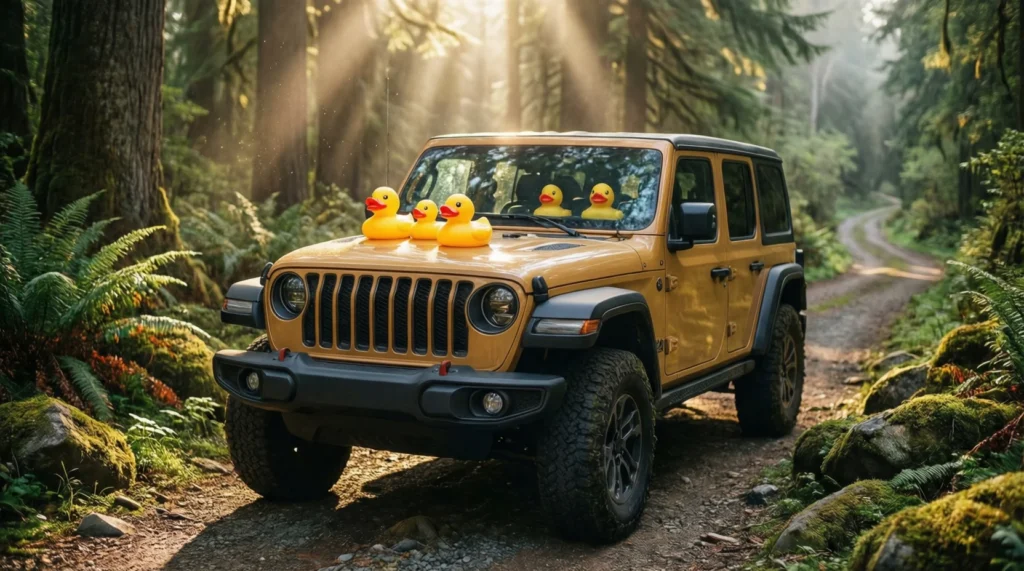
This quirky trend reflects a larger Jeep culture rooted in camaraderie, recognition, and lighthearted fun. If you’ve ever walked past a Jeep and noticed a little rubber duck perched proudly on the dash, hood latch, or mirror, you may have wondered: What do the ducks mean in Jeeps?
At first glance, they look like an adorable accessory. But for many Jeep drivers and enthusiasts, this trend carries meaning. It represents connection, community, and mutual respect among Jeep owners.
In this deep dive, we’ll unpack how this trend started, what it signifies, how it’s used in the Jeep community, variations you might see, and how you can join in. Whether you’re a Jeep owner curious about the duck phenomenon or someone interested in automotive culture, this guide explains it all in plain, friendly language.
Definition:
The ducks in Jeeps are small vinyl or rubber duck decals or toys that Jeep owners place on their vehicles, typically on the hood, windshield, or interior, as a playful tradition to “duck” other Jeep owners they spot on the trail or on the road.
What Is the “Duck Trend” in Jeep Culture?
A Jeep Duck is typically:
- A small rubber or vinyl duck figurine or sticker placed on a Jeep
- A symbol of recognition between Jeep drivers
- A gesture of friendliness or appreciation, like a tactile wave
- A tradition started and spread by Jeep communities online and in off-road clubs
People participate by gifting ducks to vehicles at shows, on trails, or even on the street. The idea is simple: You spot a Jeep, you duck it.
Origin: Where Did the Jeep Ducks Trend Come From?
While trends can be hard to trace precisely, the Jeep ducking trend is generally attributed to:
- The rise of Jeep owner communities on social media in the mid-2010s
- Groups that encouraged members to share photos of ducks on Jeeps, inspiring others to join
- A nod to off-road camaraderie, where Jeep drivers often wave to each other on trails. The duck is simply a portable wave you leave behind.
Timeline at a Glance
| Year/Period | Event |
| Early 2010s | Jeep culture booms on social media |
| Mid 2010s | Jeep owners start posting photos with ducks |
| 2017–2019 | Trend gains traction and becomes widely known |
| 2020s | Ducking becomes a staple of Jeep identity worldwide |
Why Do Jeep Owners Duck Other Jeeps?
At its heart, ducking is about connection, but there are a few more reasons people love this tradition:
- Community Recognition: Jeep owners wave to each other on the road. Ducking expands that connection.
- Trail Respect: On off-road trails, spotting and ducking a Jeep signifies mutual respect for the adventure.
- Playful Gifting: It’s a tiny surprise for someone else, brightening their day.
- Social Media Sharing: Jeepers love sharing photos of ducks, which helps the trend grow.
How Jeep Ducks Are Used: Examples and Styles
Placement Examples
| Location | Meaning/Use |
| Hood | Most visible; classic placement |
| Dashboard | Keeps duck inside the Jeep; often viewed daily |
| Mirrors | Eye-catching and easy to attach |
| Tire Carrier | Fun surprise for the recipient |
| Gas Cap | Unique placement; memorable for the driver |
Types of Jeep Ducks
- Standard rubber ducks
- Custom Jeep-themed ducks with Jeep logos
- Trail markers for special routes
- Collector ducks with dates or event labels
Friendly Example
Sarah spots a Wrangler on her daily drive. She leaves a small duck on its front bumper with a note saying “Nice Jeep!” space a cheerful surprise for another driver.
Neutral Example
Mike sees a local Jeep parked at the grocery store. He places a duck quietly on the windshield wiper space no message, just a simple nod of Jeep solidarity.
Playful Example
Sometimes people use oversized or themed ducks to tease or surprise another driver. This is done in good humor but should always remain respectful.
The Social Meaning Behind Jeep Ducking
Jeep ducking is about more than decoration. It represents:
- Friendship: A physical reminder of shared passion for Jeep culture
- Community: Recognition without needing to know the other driver
- Respect: Especially among off-roaders or at Jeep events
- Humor: It’s lighthearted and clever
It is not competitive or judgmental space the vast majority of ducking is positive and fun.
Comparison With Related Jeep and Automotive Traditions
| Tradition | What It Is | Similar to Ducking? |
| Jeep Wave | Jeep drivers wave to each other while driving | Yes, same community feel |
| Car Stickers | Decals showing clubs or interests | Somewhat, but stickers are static |
| License Plate Frames | Personalized plates for vehicles | Not spontaneous like ducking |
| Trail Badges | Stickers indicating completed trails | More achievement-oriented |
Jeep Ducking vs Jeep Wave
| Feature | Jeep Ducking | Jeep Wave |
| Physical object | Yes, a duck | No |
| Visible off the trail | Yes | Only when driving |
| Requires direct interaction | No | Yes |
| Social media shareable | Yes | Only via photo |
Alternate Meanings (Briefly)
Outside of Jeep culture, “ducking” could mean:
- Avoiding a topic or situation (“He kept ducking the question.”)
- Typing autocorrect euphemisms
- Lowering your head/body quickly in sports
But in the Jeep world, it is all about the little rubber friends.
Polite or Professional Alternatives
If you want to join the trend in a more formal way:
- Jeep decal or badge showing membership in a club
- Custom keychains for Jeep events
- Trail participation stickers denoting completed trails
- Jeep community badges on social media
These alternatives still celebrate community without being purely playful.
Jeep Ducking: Story and Community Examples
At Jeep Rallies and Events
Jeep meets often include tables for trading, decorating, and collecting ducks. Many events even have limited-edition ducks made just for that rally.
On Off-Road Trails
After a challenging section of trail, spotting a Jeep ahead? Leave a duck as a “trail kudos.” Other riders often photograph these moments and share the joy.
Daily Driving
Even when not off-road, Jeep owners sometimes receive a duck at a coffee shop parking lot or grocery run space an unexpected moment that brightens the day.
Important Tips Before You Duck
- Be Respectful: Don’t block visibility, avoid sticky residue, and use removable materials
- Ask When Appropriate: Quick “Mind if I leave this?” in private lots is polite
- Stay Safe: Never place ducks in a way that interferes with driving or vehicle safety
Example Table: Duck Placement and Meaning
| Placement on Jeep | Typical Meaning | Visibility |
| Hood | Classic duck; greeting | High |
| Dashboard | Personal keepsake | Medium |
| Mirror | Fun and visible | Medium |
| Tire Carrier | Surprising placement | Medium |
| Gas Cap | Unique and memorable | Low/Medium |
Conclusion
Jeep ducks may seem like simple toys or stickers, but they symbolize community, recognition, shared passion, and friendly connection. From hood to dashboard, each duck tells a story of connection space a Jeep driver recognizing another on the road, at a show, or on a trail.
You are a Jeep owner or a curious observer, the ducking trend shows how small gestures can foster belonging and spark joy. If you ever find a tiny duck on your Jeep, consider it a miniature badge of Jeep camaraderie.
FAQs
- What do the ducks mean in Jeeps?
They are a fun community tradition where Jeep owners leave small rubber duck items on other Jeeps as a sign of recognition and friendship. - Where did Jeep ducking come from?
The trend emerged from Jeep communities on social media and off-road groups who shared photos of ducks on their vehicles. - Is ducking only for Jeep Wranglers?
Mostly, but any Jeep model can participate. Enthusiasts of all Jeep types join in. - Do you have to be in a Jeep club to duck?
No. Anyone who appreciates the culture can join the practice. - Is there a specific duck to use?
No. Many people use classic rubber ducks, but custom or themed ducks are common. - Can ducking damage my Jeep?
When done respectfully, it is harmless. - What social media tags are popular for ducking?
Tags like #DuckDuckJeep, #JeepDucking, and #JeepLife are common for sharing photos. - Is ducking only for off-road situations?
No. While common among off-roaders, it is popular anywhere Jeeps are spotted.
Discover More Related Articles:

David Brown is a content writer and language enthusiast at textroast.com, where he creates insightful articles that explain the meanings of words, slang, and phrases used in everyday life. His work helps readers decode modern language trends, understand cultural expressions, and make sense of online communication with clarity and fun.