
In boxing a draw means that neither fighter is declared the winner because the judges’ scorecards result in an equal outcome under official scoring rules.
Boxing matches usually end with a clear winner and loser but sometimes the result leaves fans confused disappointed or debating for days. One of the most common sources of confusion is when a fight is announced as a draw. That leads many fans to ask a simple but important question what does a draw mean in boxing
This article explains the meaning of a draw in boxing in a clear friendly and professional way. You will learn how draws happen the different types of draws how judges score fights why draws matter and how they impact fighters careers and future matchups.
What Does a Draw Mean in Boxing
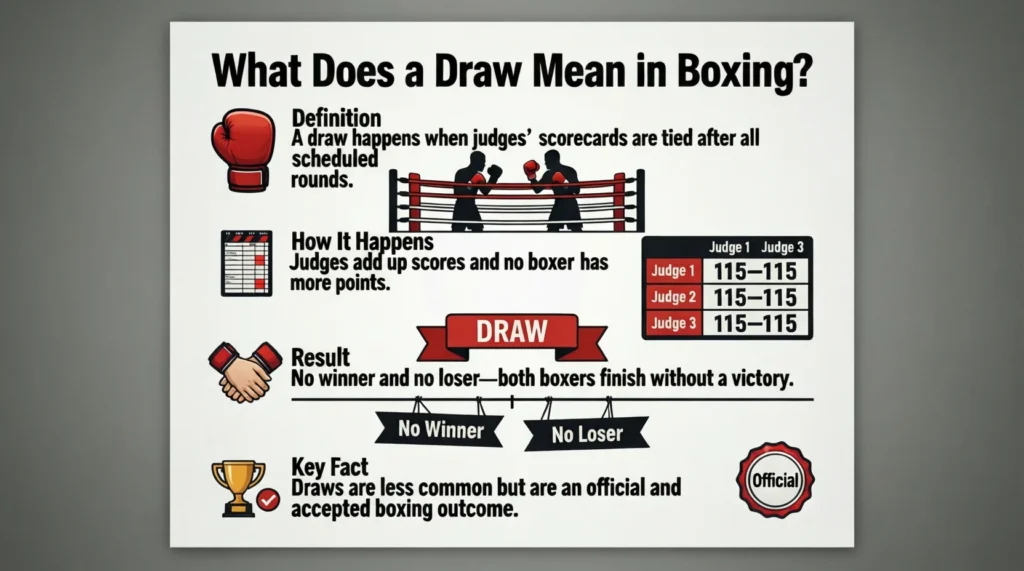
A draw in boxing occurs when the official scoring does not produce a winner. After all scheduled rounds are completed the judges’ scorecards are added up. If the scores result in a tie the fight is ruled a draw.
This means neither boxer wins and neither boxer officially loses. The fight ends without a victor even though the full contest was completed.
Draws are less common than wins or losses but they are an accepted and important part of boxing.
How Boxing Matches Are Scored
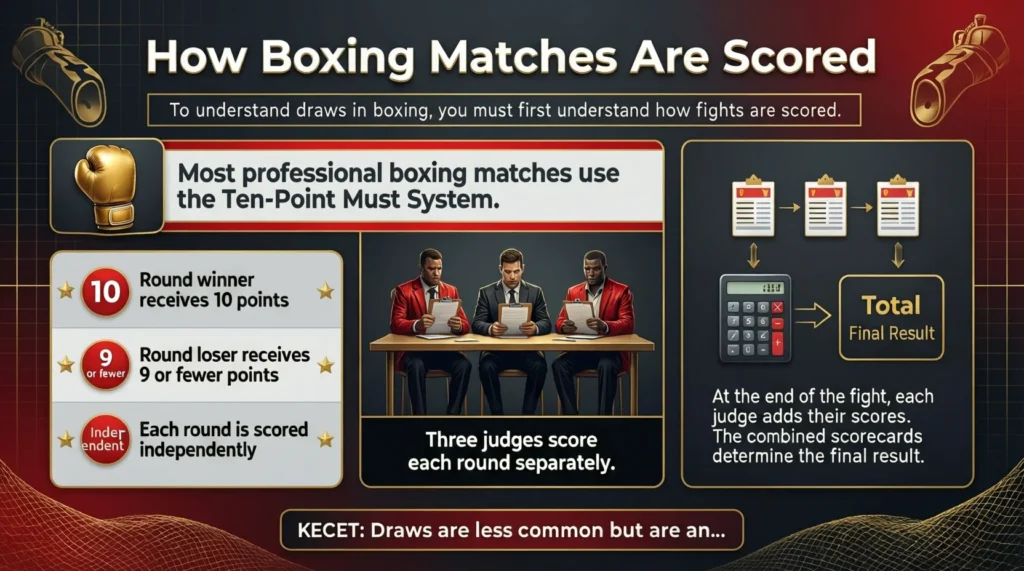
To understand draws you must understand basic boxing scoring.
Most professional boxing matches use the ten point must system.
In each round
The round winner receives ten points
The round loser receives nine or fewer points
Judges score each round independently
At the end of the fight each judge adds up their scores. The three judges’ scorecards determine the final result.
How a Draw Happens
A draw happens when the judges’ scores balance out in a specific way. There are three main types of draws in boxing.
Types of Draws in Boxing
Unanimous Draw
A unanimous draw occurs when all three judges score the fight as a tie.
This usually means each judge had identical or balanced scorecards resulting in no winner.
This type of draw is rare and often happens in extremely close fights.
Majority Draw
A majority draw happens when two judges score the fight as a draw and the third judge scores it for one fighter.
Because two of the three judges saw the fight as tied the overall result is a draw.
This is the most common type of draw in boxing.
Split Draw
A split draw occurs when one judge scores the fight for Fighter A another judge scores it for Fighter B and the third judge scores it as a draw.
Since there is no majority decision the result is ruled a draw.
Split draws often create debate among fans and analysts.
Draw vs Decision Explained
Here is a simple comparison.
| Result | Meaning |
|---|---|
| Unanimous decision | All judges pick one winner |
| Majority decision | Two judges pick one winner |
| Split decision | Two judges pick one winner one disagrees |
| Draw | No judge majority for either fighter |
This table shows why a draw stands apart from other decisions.
Does a Knockdown Prevent a Draw
No a fight can still end in a draw even if there are knockdowns.
Knockdowns affect scoring by reducing points in a round but if the overall scores balance out a draw is still possible.
A boxer can knock down their opponent and still draw the fight if they lose other rounds clearly.
Is a Draw the Same as a Tie
Yes in boxing draw and tie mean the same thing.
Draw is the official term used in boxing announcements and records.
How Draws Affect Boxing Records
When a fight ends in a draw both fighters receive a draw on their professional record.
Records are typically listed as
Wins
Losses
Draws
A draw does not count as a win or a loss but it still appears on the record permanently.
Are Draws Considered Bad for Fighters
Not necessarily.
A draw can be
Positive if the opponent was highly ranked
Neutral if the fight was evenly matched
Disappointing if one fighter was expected to win
In some cases a draw enhances both fighters reputations by showing competitiveness.
Draws in Championship Fights
In title fights a draw has special consequences.
If the champion draws the fight
The champion keeps the title
To win a championship the challenger must clearly defeat the champion. A draw is not enough to take the belt.
This rule makes championship draws especially controversial.
Famous Draws in Boxing History
Many historic fights ended in draws and became legendary.
Some draws led to rematches
Some created rivalries
Some sparked rule debates
Draws often increase fan demand for a second fight.
Why Fans Dislike Draws
Many fans dislike draws for emotional reasons.
They want a clear winner
They feel unsatisfied after close fights
They may disagree with judges
However draws reflect the reality that some fights are simply too close to call.
Why Draws Are Important in Boxing
Despite controversy draws play an important role.
They preserve fairness
They protect fighters from unfair losses
They encourage rematches
They reflect competitive balance
Without draws judges would be forced to choose winners even when fights are truly even.
Draws vs No Contest
A draw is different from a no contest.
| Result | Meaning |
|---|---|
| Draw | Fight completed with tied score |
| No contest | Fight stopped due to accident or rule violation |
No contests usually occur early in fights while draws happen after completion.
Can Amateur Boxing Have Draws
Yes but it depends on the rules.
Some amateur tournaments allow draws
Others require tie breakers
Some use different scoring systems
Professional boxing allows draws more consistently.
Can Overtime Be Used to Avoid Draws
No boxing does not use overtime rounds.
If the scores are tied after scheduled rounds the fight is officially a draw.
Strategic Impact of a Draw
A draw can influence future fights.
Promoters may book rematches
Rankings may shift
Title opportunities may change
In some cases a draw creates more interest than a clear win.
Common Misunderstandings About Draws
Draw does not mean judges were lazy
Draw does not mean the fight was boring
Draw does not mean a scoring error
Draw does not cancel the fight
It simply reflects equal scoring.
Alternate Meanings of Draw
Outside boxing draw can mean
A tie in sports
Pulling something
Attracting attention
In boxing it strictly means a tied decision.
Professional Alternatives to Saying Draw
In formal writing a draw may be described as
Tied bout
Even decision
Deadlocked result
However draw remains the standard term.
Examples of Draw in Context
Neutral context
The bout ended in a draw after twelve rounds
Professional context
Judges scored the championship fight a majority draw
Fan reaction context
Many fans called for a rematch after the draw decision
FAQs
What does a draw mean in boxing?
It means the judges scored the fight as tied.
Can a fighter win a title with a draw?
No challengers must win outright.
Are draws common in boxing?
They are less common than wins but do happen.
Can knockouts result in draws?
No knockouts end the fight immediately.
Does a draw hurt a boxer’s career?
Not always it depends on context.
Do draws lead to rematches?
Often yes especially in close or title fights.
Can judges be wrong in a draw?
Fans may disagree but judges apply scoring rules.
Is a draw fair?
Yes when the fight is evenly matched.
Conclusion
So what does a draw mean in boxing It means that after all rounds are completed the judges’ scorecards result in a tie and no winner is declared. Draws reflect the competitive nature of boxing and acknowledge when neither fighter clearly outperformed the other.
While fans may prefer decisive outcomes draws play a vital role in fairness credibility and storytelling in boxing. Understanding how and why draws happen helps fans appreciate the sport on a deeper level.
Discover More Related Articles:
- What Does Libero Mean in Volleyball? A Beginner-Friendly Breakdown in 2026
- What Does Heel Mean in WWE and How the Role Works in 2026
- What Does Plus Minus Mean in Basketball and Why It Matters in 2026

David Brown is a content writer and language enthusiast at textroast.com, where he creates insightful articles that explain the meanings of words, slang, and phrases used in everyday life. His work helps readers decode modern language trends, understand cultural expressions, and make sense of online communication with clarity and fun.