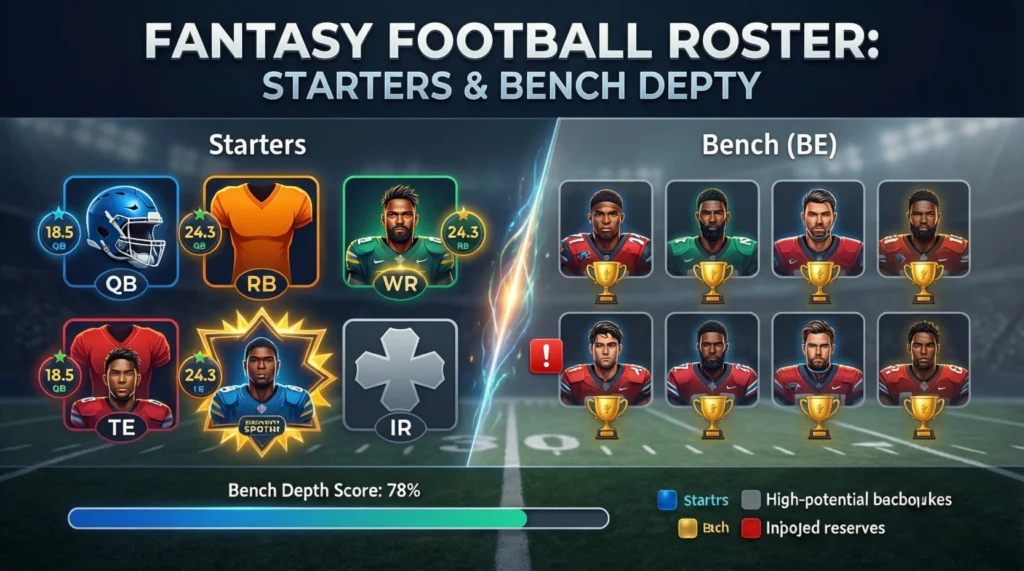
In fantasy football, BE stands for Bench, indicating players on your roster who are not currently in your starting lineup and therefore not scoring points for you in that week.
If you are new to fantasy football or browsing your roster online, you may have seen the abbreviation BE next to some player names or roster spots. It may not be as obvious as common terms like QB, RB, or PPR, which can leave many new managers wondering: what does BE mean in fantasy football?
This comprehensive guide explains BE clearly, shows how it’s used in fantasy leagues, why it matters, and how understanding it can help you manage your roster better throughout the season.
What Does BE Mean in Fantasy Football?
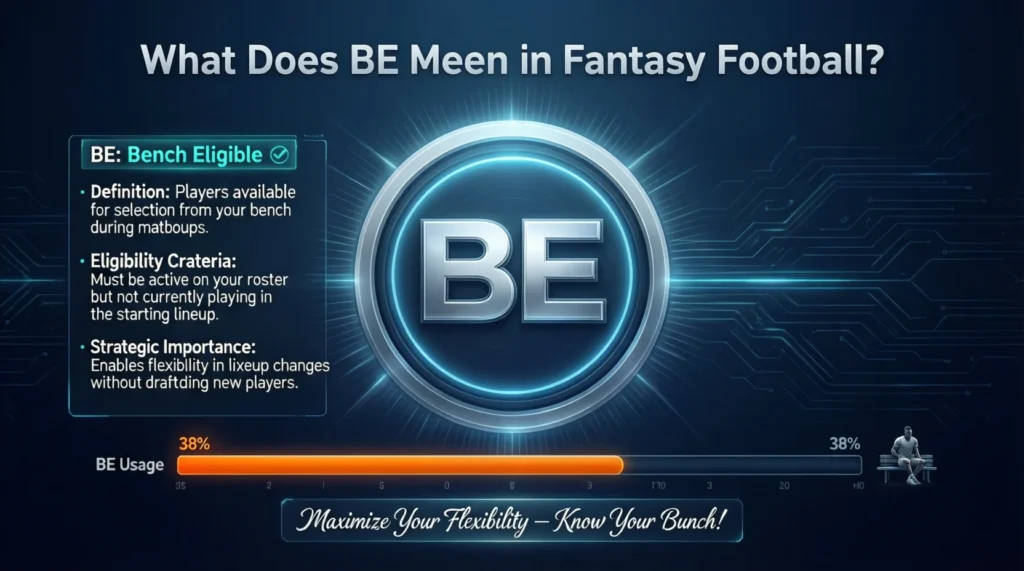
In nearly all fantasy football platforms including ESPN, Yahoo, Sleeper, and others the abbreviation BE is used to designate a bench player. These are players you have on your roster but are not active starters for that specific week’s matchup.
Bench players do not earn fantasy points for your team unless you move them into a starter position before game time. They remain part of your roster and can be substituted in or traded as needed.
Why BE Matters in Fantasy Football

Bench management is one of the most strategic aspects of fantasy football. A strong bench helps you handle:
- Injuries — You can replace injured starters with bench players.
- Bye Weeks — When a starter’s NFL team is on bye, you need bench depth to fill the gap.
- Underperformance — If a starter is struggling, you can swap in a bench player.
- Trades and Waivers — Bench players are often used as trade assets or waiver targets.
Because only your active starters score points, how you use and manage your BE players can have a big impact on wins and losses throughout the season.
How BE Appears in Fantasy League Interfaces
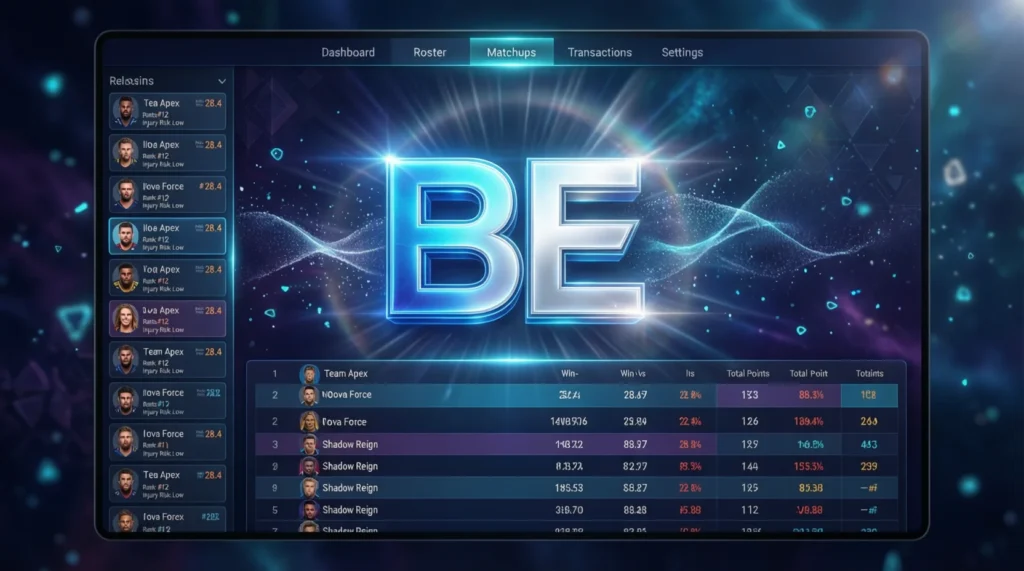
In most fantasy football league dashboards your roster is shown like this:
- QB – Starting Quarterback
- RB1 / RB2 – Starting Running Backs
- WR1 / WR2 – Starting Wide Receivers
- FLEX – A starter at a flexible position
- BE – Bench players
EMBEDS AND LISTS
Everything above your listed starters is scoring points that week. Bench (BE) players are listed below your starters and do not score unless you activate them.
Bench vs Active Starters
Here is a quick comparison of how bench and starters differ:
| Category | Active Starter | Bench (BE) |
|---|---|---|
| Points Count This Week | Yes | No |
| Can Be Substituted | Yes | Yes |
| Can Be Traded | Yes | Yes |
| Eligible for Scoring | Yes | No unless moved to starter |
| Position Impact | High | Backup |
How Many BE Spots Do You Usually Get?
The number of bench spots varies by league settings, but a typical fantasy football roster might include:
- 12 to 15 roster spots total
- 6 to 8 starters
- 4 to 7 bench spots (BE)
A well-structured bench gives both depth and flexibility throughout long seasons.
BE vs BN – Are They the Same?
Yes. Many fantasy platforms and communities use BE and BN interchangeably to mean bench. Both refer to players off your active Week lineup who are still part of your roster.
Why Bench Management Matters for Strategy
A good bench serves multiple strategic purposes:
Injury and Bye Week Protection
If a starter is hurt or on a bye, a bench player with suitable upside can replace them without hurting your weekly score.
Preparing for Trades
Bench players are often used as trade chips to improve your lineup or acquire higher-tier players.
Sleeper and Breakout Players
Sometimes you draft rookies or late picks who may become valuable later. Bench spots (BE) let you keep them until they prove worthy of starting.
Performance-Based Adjustments
Not every starter performs every week. Bench players provide a way to roll with matchups that favor certain players.
Common Bench (BE) Management Tips
Here are a few strategies fantasy managers use when handling BE players:
Keep Bench Flexible
Don’t stock too many players at the same position unless necessary. Diverse bench positions help cover more scenarios.
Monitor Player Schedules
When a starter has a bye week coming up, it’s smart to have a backup ready on the bench.
Use Bench for Upside
Young players with breakout potential might not start right away but can offer big value later if you keep them on BE.
Don’t Forget About IR Rules
Some leagues have Injured Reserve spots, which can free up a bench (BE) spot for a player who returns soon.
Common Misunderstandings About BE
It’s easy to mix up BE with similar terms, but here are a few clarifications:
BE Does Not Mean Bye Week
Some people accidentally think BE means bye week, but BYE is the abbreviation for those roster gaps while BE refers to bench players.
BE Players Do Not Score Points
Bench players never contribute to your weekly score unless you actively move them into a starter position before game time begins.
BE Is Not a Position
Unlike RB, WR, QB, or FLEX BE does not refer to a position on the field — it refers to where a player sits on your roster for that week.
Alternate Meanings of BE in Other Contexts
Outside fantasy football BE can mean different things in other fantasy games or data analysis, but within standard fantasy football rosters it almost always means bench.
FAQs
What does BE mean in fantasy football?
BE stands for bench, meaning the player is not in your starting lineup and does not score points.
Do BE players score points?
No, bench players score only if they are moved into a starting slot before games begin.
Is BE the same as BN?
Yes, BE and BN both indicate bench players.
Is BE a position like QB or RB?
No, BE refers to bench status, not a playing position.
Can I have too many players on BE?
Your total roster limit determines how many bench spots you can fill.
Should I draft for my bench?
Yes, drafting sleepers and backups helps protect your lineup during byes and injuries.
Does BE affect playoffs?
A strong bench can make the difference during long seasons and playoff runs.
Can BE players be traded?
Yes, bench players can be traded like any rostered player.
Conclusion
In fantasy football, BE means bench the players on your roster who are not starting and are not scoring points for that week. Bench management is a key strategic element of fantasy football because it affects how you deal with bye weeks injuries performance fluctuations and trade opportunities.
Understanding what BE means and how to use bench players effectively can give you a real edge during the season and help you make smarter lineup and roster decisions.
Discover More Related Articles:
- What Does Plus Minus Mean in Basketball and Why It Matters in 2026
- What Does Heel Mean in WWE and How the Role Works in 2026
- What FS Means in Text Conversations and Social Media Chats (2026)

Daniel Moore is a content writer and language enthusiast at TextRoast.com, specializing in decoding slang, abbreviations, and trending text expressions. He creates engaging and informative articles that help readers understand the meaning behind everyday words and online communication.