
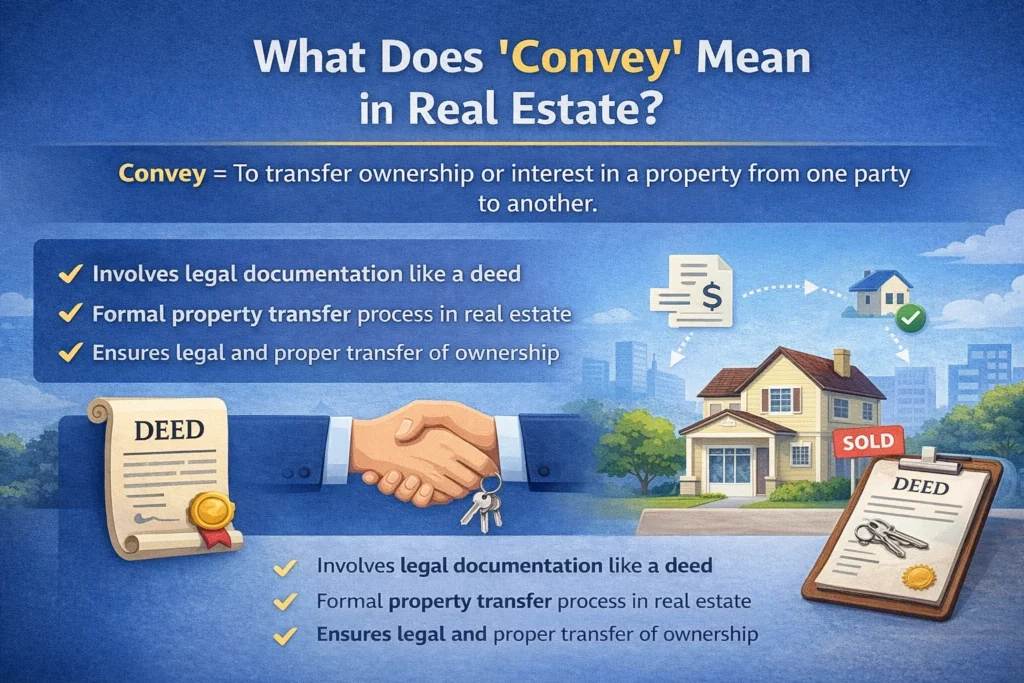
In real estate, to “convey” means to legally transfer ownership or interest in a property from one party to another, typically through a deed or legal document.
When buying, selling, or transferring property, you may encounter the term convey in real estate documents. It’s a legal term that often appears in deeds, contracts, and title transfers, but its meaning might not be immediately clear to non-professionals.
Understanding what it means to convey a property is essential for homeowners, buyers, and investors to ensure smooth transactions and avoid legal complications.
This article explains what convey means in real estate, provides practical examples, compares related terms, and answers common FAQs.
In simple terms:
When you convey property, you give legal ownership or rights to someone else.
Understanding Convey in Real Estate
Conveyance is the process of transferring property ownership. It involves:
- A seller (grantor) transferring the property
- A buyer (grantee) receiving the property
- Legal documentation to make the transfer official
The process ensures the buyer legally owns the property and the seller relinquishes their rights.
How Property Is Conveyed
Common types of deeds include:
- Warranty Deed – Guarantees the seller holds clear title and has the right to convey the property.
- Quitclaim Deed – Transfers whatever interest the seller has without guarantees.
The conveyance process may also involve:
- Title search – Ensures the property is free of liens or legal issues.
- Closing – Signing documents and officially transferring ownership.
- Recording the deed – Filing the deed with local government to make the transfer public.
Examples of Convey in Real Estate
1 Example : Home Sale
- Jane sells her house to John.
- At closing, Jane conveys the property to John via a warranty deed.
- John becomes the legal owner, and Jane no longer has ownership rights.
2 Example : Gift or Inheritance
- A parent conveys property to a child through a deed.
- Ownership is transferred without sale.
3 Example : Business Property
- A company conveys commercial property to another company in exchange for cash or shares.
- Legal ownership is transferred and recorded in public records.
Convey vs Transfer vs Assign
These terms are related but slightly different in legal and real estate contexts:
| Term | Meaning | Example |
|---|---|---|
| Convey | Legal transfer of property ownership | Seller conveys house to buyer |
| Transfer | General act of moving property or rights | Transfer title, assign lease |
| Assign | Transferring contractual rights, not necessarily ownership | Assign a lease agreement |
Tip: Convey specifically implies ownership rights are passed to another party.
Why Conveyance Is Important
- Establishes legal ownership
- Protects both buyer and seller from future disputes
- Ensures clear title to property
- Complies with state and local property laws
- Enables use of property as collateral or for financing
Without proper conveyance, the new owner may face legal challenges or unclear title.
Conveyance Costs
Conveyance may involve fees such as:
- Title search fees
- Attorney fees
- Recording fees
- Transfer taxes
These costs vary by jurisdiction and property type.
Conveyance in Real Estate Transactions
- Purchase & Sale – Most common scenario, where a seller conveys property to a buyer.
- Inheritance & Gift – Ownership is conveyed without a sale.
- Corporate or Business Deals – Companies convey property in mergers or acquisitions.
FAQs
What does convey mean in real estate?
It means to legally transfer property ownership from one party to another.
What is a conveyance deed?
A legal document used to transfer ownership from a grantor to a grantee.
Is convey the same as sell?
Not always. You can convey property through sale, gift, or inheritance.
What is the difference between convey and transfer?
Convey specifically refers to transferring ownership rights, while transfer is broader and may include leases or contractual rights.
What fees are associated with conveyance?
Fees may include title search, recording, attorney fees, and transfer taxes.
Why is conveyance important?
It protects both parties, ensures legal ownership, and prevents future disputes.
Conclusion
You’re buying your first home, selling a property, or transferring assets within a family, knowing what convey means ensures your rights are protected and the transaction is legally sound.
By understanding conveyance, you can navigate property deals confidently, avoid legal issues, and ensure smooth ownership transfer.
Discover More Related Articles:
- EFT Meaning in Banking: Electronic Funds Transfer Explained in 2026
- Why FTE Is Crucial for Your Business: Understanding Workload in 2026
- Everything About LDW in Cars: How to Use It Properly in 2026

Daniel Moore is a content writer and language enthusiast at TextRoast.com, specializing in decoding slang, abbreviations, and trending text expressions. He creates engaging and informative articles that help readers understand the meaning behind everyday words and online communication.