
In the Bible, a eunuch is a man who is physically or functionally incapable of fathering children, often serving in royal courts or positions of trust.
The term eunuch appears several times in the Bible and often raises questions about its meaning, role, and significance. While the word may seem unusual today, it had important social, political, and spiritual implications in biblical times.
Understanding what a eunuch means in the Bible helps us better grasp certain stories, teachings, and passages in Scripture.
This article explores the biblical definition of eunuch, its historical and cultural background, examples in Scripture, spiritual symbolism, and practical lessons for believers.
The Biblical Definition of Eunuch
The Hebrew word for eunuch is saris (סָרִיס) in the Old Testament, while the Greek word used in the New Testament is eunouchos (εὐνοῦχος).
These terms can refer to:
- A man castrated for service in royal courts
- A man incapable of reproduction, whether naturally or intentionally
- Sometimes, a man who voluntarily abstains from marriage for spiritual purposes
In biblical culture, eunuchs were often trusted officials in royal households, responsible for sensitive tasks because they were considered loyal and incapable of competing for royal lineage.
Eunuchs in the Old Testament
1. Eunuchs as Royal Servants
- Esther 2:3–5 – King Xerxes’ eunuchs assisted Queen Esther and other women in the palace.
- Daniel 1:3–7 – Young men, including Daniel, were appointed as eunuchs in the Babylonian court, serving the king with integrity and wisdom.
Eunuchs were valued for:
- Loyalty
- Discretion
- Administrative skill
They often held positions of great responsibility in the palace.
2. Law Concerning Eunuchs
Deuteronomy 23:1 states:
“No one whose testicles are crushed or whose male organ is cut off shall enter the assembly of the Lord.”
- This law regulated who could participate fully in Israelite worship.
- It reflected concerns about ritual purity and the covenant community.
3. Eunuchs as Servants of God
Interestingly, the Old Testament also highlights eunuchs who are devoted to God:
- Isaiah 56:3–5 promises blessings to eunuchs who keep God’s covenant.
- Here, spiritual faithfulness matters more than physical status.
- God values loyalty and devotion above social norms.
Eunuchs in the New Testament
1. Jesus’ Teaching on Eunuchs
- Matthew 19:12 – Jesus mentions three types of eunuchs:
- Those born as eunuchs
- Those made eunuchs by others
- Those who choose celibacy for the kingdom of heaven
- This passage emphasizes voluntary spiritual devotion, showing that abstaining from marriage can be a noble choice for God’s purposes.
2. The Ethiopian Eunuch
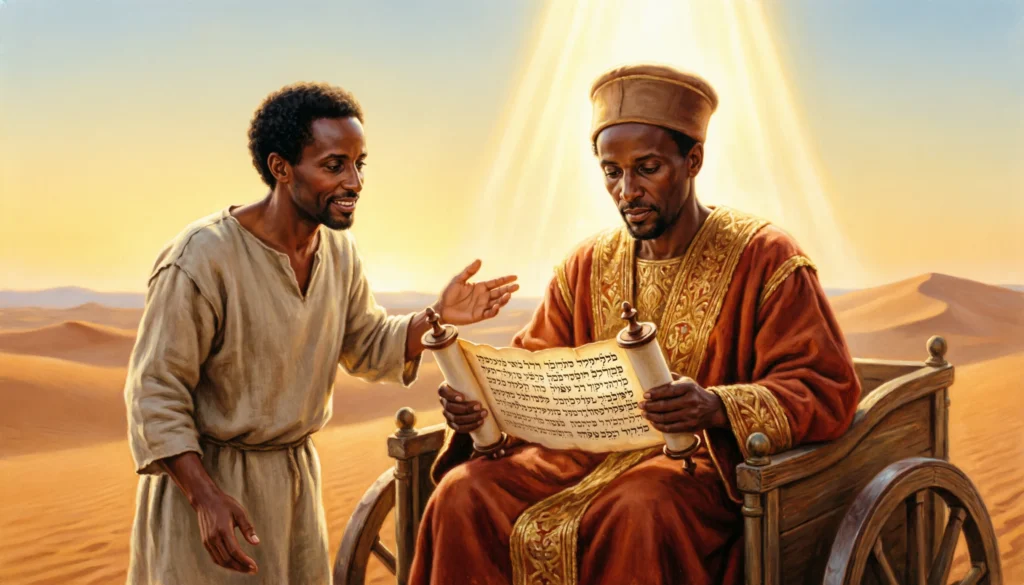
- Acts 8:26–40 tells the story of a eunuch, a high official from Ethiopia, reading Isaiah.
- Philip the evangelist explains the Scriptures to him, and the eunuch is baptized.
- This is significant because:
- He is a Gentile, showing the Gospel reaches all nations
- His faith demonstrates that eunuchs, traditionally excluded from some aspects of worship, are fully welcomed by God.
Spiritual Meaning of Eunuchs in the Bible
The Bible presents eunuchs as symbols of:
- Faithfulness and devotion to God – Isaiah 56 highlights spiritual reward over physical limitations.
- Inclusion in God’s kingdom – Acts 8 shows that anyone, regardless of social status or physical condition, can participate in God’s salvation.
- Sacrifice for God’s purposes – Voluntary celibacy or service can reflect spiritual focus and obedience.
- Loyalty and trustworthiness – Historical roles in royal courts illustrate God’s use of dedicated servants for critical work.
Biblical Lessons from Eunuchs
- God values the heart over status – Spiritual devotion is more important than physical or social condition.
- Exclusion is not permanent in God’s kingdom – Those historically marginalized, like eunuchs, are embraced when they follow God.
- Faithful service has great impact – Daniel and the Ethiopian eunuch influenced nations through integrity and faith.
- Voluntary dedication can honor God – Choosing a life of spiritual focus, like celibacy, is a gift when done for God’s kingdom.
Common Misconceptions
- Eunuchs were always castrated: Not necessarily. Some were simply celibate or excluded from royal lineage.
- Eunuchs were unimportant: Many held high office, were trusted advisors, and were spiritually honored.
- Eunuchs were rejected by God: Isaiah 56 and Acts 8 show they are fully included in God’s covenant.
Eunuchs vs Celibate Christians
| Category | Description | Biblical Example |
|---|---|---|
| Eunuch | May be physically incapable of marriage or childbearing | Ethiopian eunuch (Acts 8) |
| Voluntary celibate | Chooses to abstain from marriage for God’s kingdom | Jesus’ teaching (Matthew 19:12) |
| Married believer | Lives a regular married life | Many apostles and early Christians |
The Bible honors both voluntary celibacy for spiritual reasons and faithful eunuchs who serve God faithfully.
FAQs
What does eunuch mean in the Bible?
A man who is unable to have children, often serving in royal courts or dedicated to God.
Who was the Ethiopian eunuch?
A high official reading Isaiah, baptized by Philip (Acts 8), representing God’s inclusion of all nations.
Did Jesus approve of eunuchs?
Yes, He taught that celibacy for the kingdom of heaven is honorable (Matthew 19:12).
Were all eunuchs castrated?
No, some were naturally incapable or chosen to be celibate for God’s service.
Can eunuchs serve God today?
Yes, spiritual devotion is what matters, not physical condition.
What is the spiritual meaning of eunuchs?
Faithfulness, devotion, inclusion in God’s kingdom, and willingness to serve God above personal gain.
Why were eunuchs trusted in royal courts?
They were considered loyal, incapable of vying for the throne, and responsible for sensitive tasks.
Conclusion
In the Bible, eunuchs are more than a social or physical designation—they are symbols of faith, devotion, and inclusion in God’s kingdom.
From royal service in Daniel’s time to the Ethiopian eunuch in Acts, Scripture shows that God honors those who serve Him faithfully, regardless of physical condition or societal expectations.
Discover More Related Articles:
- Biblical Meaning of Alms: How and Why Christians Give in 2026
- Yeshua Meaning Explained: From Hebrew to English Jesus in 2026

Laura Jackson is a writer at textroast.com, where she creates engaging articles that decode the meanings behind slang, phrases, and everyday expressions. Passionate about language and communication, she makes complex or confusing terms easy to understand, turning learning into a fun and relatable experience for readers around the world.