
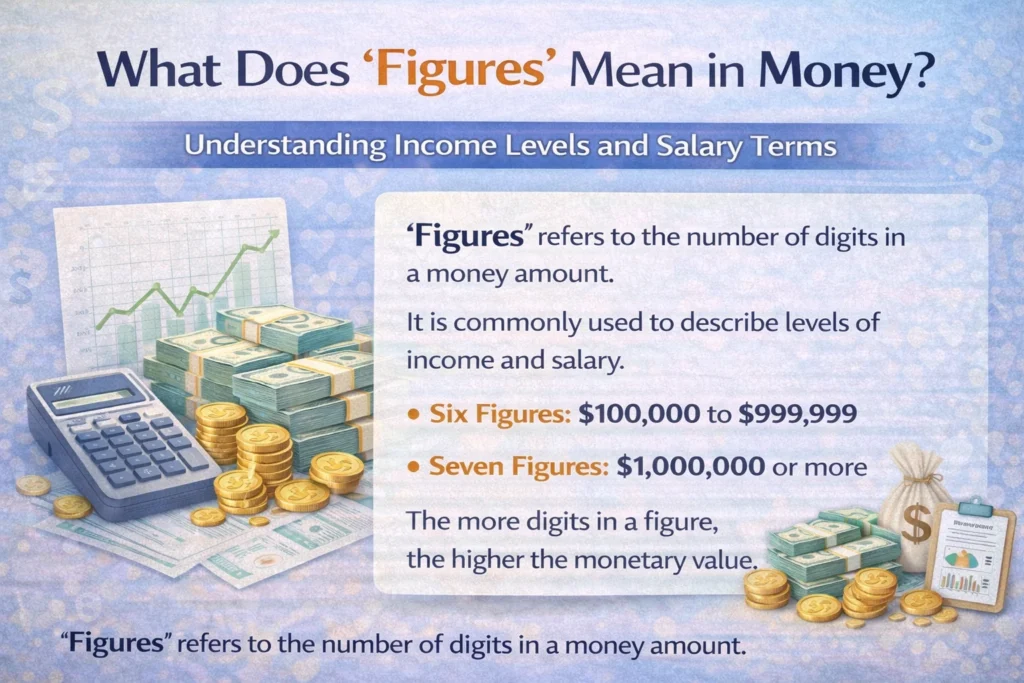
Definition
Figures in money refer to the number of digits in a monetary amount, often used to indicate the approximate scale of salaries, costs, or revenue.
When discussing finances, you may have heard someone say, “The project costs six figures” or “The salary is five figures”. But what exactly does figures mean in money? Understanding this term is essential in finance, business, and everyday conversations about earnings and costs.
This article provides a comprehensive, clear, and friendly explanation of what figures mean in money, how it’s used, examples, comparisons, and FAQs to make it easy to understand.
- Five figures = $10,000 to $99,999
- Six figures = $100,000 to $999,999
- Seven figures = $1,000,000 to $9,999,999
In short, figures give a quick way to describe the size of money without specifying the exact amount.
Understanding Figures in Money
The term figures in finance and money is commonly used to:
- Discuss salaries or wages
- Refer to costs or budgets
- Talk about profits or revenue
- Describe investments
It’s an informal way to indicate magnitude while keeping numbers general.
Example:
- “Her annual salary is six figures.” → Means her salary is between $100,000 and $999,999.
- “The new marketing campaign costs five figures.” → Costs between $10,000 and $99,999.
Figures and Their Ranges
Here’s a simple breakdown of figures based on the number of digits:
| Figures | Range (USD) | Example Use |
|---|---|---|
| One figure | $0–$9 | “The fee is one figure.” Rarely used |
| Two figures | $10–$99 | Small daily expenses |
| Three figures | $100–$999 | Minor purchases |
| Four figures | $1,000–$9,999 | Average home appliance cost |
| Five figures | $10,000–$99,999 | Mid-level salaries, car prices |
| Six figures | $100,000–$999,999 | Executive salaries, small business revenue |
| Seven figures | $1,000,000–$9,999,999 | Large contracts, millionaire assets |
| Eight figures | $10,000,000–$99,999,999 | Big business deals, major investments |
| Nine figures | $100,000,000–$999,999,999 | Large corporations’ profits |
| Ten figures | $1,000,000,000+ | Billion-dollar revenue, mega deals |
Using “figures” is a quick, conversational way to express money without writing exact numbers.
Why People Use Figures
- Privacy – Avoids disclosing exact financial details.
- Simplicity – Easier to communicate large sums quickly.
- Approximation – Gives a sense of scale without unnecessary precision.
- Impact – “Six figures” sounds more impressive than $120,000 in casual conversation.
Example:
- “The grant is six figures” is simpler and sounds more impressive than “$135,000”.
Figures in Salaries
One of the most common uses of figures is describing salaries.
- Five-figure salary: $10,000–$99,999 annually. Usually entry-level or mid-level jobs.
- Six-figure salary: $100,000–$999,999 annually. Often managerial or specialized roles.
- Seven-figure salary: $1,000,000+. Typically CEOs, high-level executives, or successful entrepreneurs.
Example Usage:
- “After years of experience, she finally reached a six-figure salary.”
- “Many tech startups offer five-figure monthly bonuses.”
Figures in Business
In business and finance, “figures” often refer to:
- Revenue or sales
- Profit margins
- Costs of operations
- Investments
Example:
- “The company generated six-figure profits last quarter.” → Profits between $100,000 and $999,999.
- “We need a five-figure budget for this project.” → Budget between $10,000 and $99,999.
Figures vs Exact Amount
Using figures is less precise than stating exact amounts but useful for:
- Conversations and negotiations
- Marketing or sales reporting
- Budgeting and financial planning
Example Comparison:
- Precise: “The project cost $42,750.”
- Figures: “The project cost five figures.”
Both communicate value, but figures are simpler for general discussion.
Figures in Everyday Language
In everyday speech, “figures” is widely understood to represent the scale of money:
- “She made six figures last year.” → Implies financial success.
- “That car costs five figures.” → Shows it’s expensive but not extravagant.
- “The contract is seven figures.” → Indicates a very large deal.
Adding the term “figures” makes statements concise and impactful.
How to Determine Figures
To determine how many figures a monetary amount has, count the digits:
Example:
- $12 → two figures
- $350 → three figures
- $7,500 → four figures
- $120,000 → six figures
- $2,500,000 → seven figures
It’s a simple method for classifying money amounts quickly.
Misconceptions About Figures
- Not precise: Figures indicate range, not exact numbers.
- Not currency-specific: Can be applied to dollars, pounds, euros, etc.
- Context matters: “Six figures” can refer to annual salary, monthly income, or revenue depending on the conversation.
Practical Tips for Using Figures
- Use figures when you want to express money approximately.
- Specify the context: salary, project cost, or revenue.
- Avoid figures when legal or financial documents require exact amounts.
- Combine with terms like “approximately” or “about” for clarity.
Example:
- Correct: “The new employee earns a six-figure salary.”
- Correct: “The campaign requires an approximately five-figure budget.”
FAQs
What does figures mean in money?
It refers to the number of digits in a monetary amount, often used to indicate approximate scale.
What is a five-figure amount?
A five-figure amount is between $10,000 and $99,999.
What is a six-figure salary?
A six-figure salary ranges from $100,000 to $999,999 annually.
Can figures refer to monthly income?
Yes. For example, a “five-figure monthly income” means $10,000–$99,999 per month.
Is figures the same as exact money?
No. Figures are approximate and used for general discussion.
Why do people say six figures instead of $120,000?
It’s simpler, easier to understand, and sometimes more impactful in conversation.
Do figures apply to business revenue?
Yes. Companies often describe profits, costs, or deals in five, six, or seven figures.
How do you count figures in money?
Count the number of digits in the number, excluding commas, periods, or currency symbols.
Conclusion
Understanding figures in money helps you communicate financial amounts quickly and effectively. Whether discussing salaries, business revenue, or project costs, using figures provides clarity while keeping conversations simple and impactful.
By mastering this term, you can better understand finance discussions, negotiate deals, and interpret statements about money in both personal and professional contexts.
Discover More Related Articles:
- REO Homes Explained: Benefits and How to Purchase Them in 2026
- Real Estate Conveyance Explained: Everything You Need to Know in 2026

David Brown is a content writer and language enthusiast at textroast.com, where he creates insightful articles that explain the meanings of words, slang, and phrases used in everyday life. His work helps readers decode modern language trends, understand cultural expressions, and make sense of online communication with clarity and fun.