
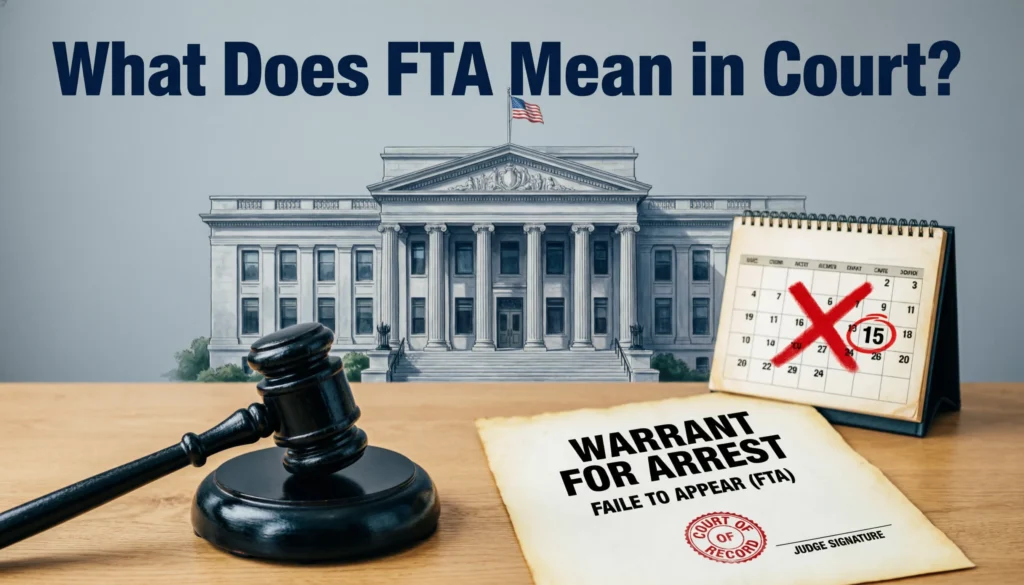
FTA in court stands for Failure to Appear. It means a person did not attend a scheduled court hearing or legal proceeding as required by law. An FTA can lead to fines, warrants, license suspension, or additional criminal charges depending on the case.
Seeing the abbreviation FTA on a court document, arrest record, or background report can feel alarming. Legal shorthand often carries serious weight, and FTA is no exception.
If you are wondering what FTA means in court, how it affects a case, and what happens next, this complete guide will explain everything clearly and professionally.
Understanding this term is important because a Failure to Appear can quickly turn a minor legal issue into a much bigger problem.
What Does FTA Mean in Legal Terms?
In the court system, Failure to Appear happens when someone who has been legally notified of a hearing does not show up at the scheduled date and time.
Courts treat scheduled hearings as mandatory. When a person signs a citation, receives a summons, or is released on bail, they are agreeing to appear in court as directed. Missing that appearance triggers an FTA.
FTA can occur in many types of cases, including:
Traffic violations
Misdemeanor charges
Felony cases
Probation hearings
Family court matters
Civil lawsuits
No matter the type of case, attendance is a legal obligation.
Why Appearing in Court Is Mandatory
Courts depend on attendance to keep the legal system moving efficiently. Judges schedule hearings to review evidence, hear arguments, determine penalties, and issue decisions.
When someone fails to appear, it disrupts the process and can be interpreted as ignoring a court order. Even if the absence was accidental, the court may still impose consequences.
What Happens After an FTA?
The consequences of an FTA depend on the seriousness of the original case and the laws of the jurisdiction. However, common outcomes include the following.
Bench Warrant
A judge may issue a bench warrant. A bench warrant authorizes law enforcement to arrest the individual and bring them before the court.
Additional Fines
Courts may impose new financial penalties for missing the hearing.
License Suspension
In traffic related cases, a Failure to Appear may result in suspension of a driver’s license.
Bail Revocation
If the person was out on bail, the court may revoke bail and forfeit the bond.
Additional Criminal Charges
In some jurisdictions, Failure to Appear itself can become a separate criminal offense, especially in felony cases.
Real World Examples of FTA
Traffic Example
A driver receives a speeding ticket and is ordered to appear in court. The driver forgets the date and does not attend. The court marks the case as FTA and may issue a warrant.
Criminal Case Example
A defendant released on bail misses their court date. The judge issues a bench warrant and may revoke bail.
Civil Case Example
A person involved in a lawsuit does not attend a scheduled hearing. The judge may issue a default judgment in favor of the other party.
In each scenario, missing court leads to serious legal consequences.
Common Reasons People Fail to Appear
While courts enforce attendance strictly, there are many reasons people miss hearings.
Forgot the court date
Did not receive proper notice
Medical emergency
Transportation problems
Work conflicts
Confusion about the date or time
Even when the reason is understandable, courts usually require documentation and immediate action to correct the issue.
Is FTA a Criminal Charge?
The answer depends on the situation.
In minor traffic cases, FTA may simply result in fines or license suspension.
In misdemeanor or felony cases, Failure to Appear can become a separate charge. This means a person could face penalties not only for the original offense but also for missing court.
Because laws vary by state and country, outcomes differ depending on local regulations.
How to Fix an FTA
If you discover that you have an FTA, taking immediate action is critical.
Contact the court clerk right away
Consult a qualified attorney
Ask about scheduling a new court date
If a warrant has been issued, file a motion to quash the warrant
Acting quickly shows good faith and can reduce additional penalties.
Ignoring the problem almost always makes it worse.
FTA vs Other Legal Terms
It is helpful to understand how FTA compares with similar legal terms.
FTA means Failure to Appear and refers specifically to missing a scheduled hearing.
Failure to Respond means not replying to a legal notice or filing.
Bench Warrant is an arrest order issued by a judge, often after an FTA.
Default Judgment is a ruling entered when one party does not appear in a civil case.
Each term has different legal implications, but FTA specifically focuses on absence from court.
Long Term Impact of an FTA
A Failure to Appear can affect more than just one court date. It may influence:
Background checks
Employment opportunities
Professional licenses
Credit reports if fines go unpaid
Future bail decisions
Sentencing outcomes
Even a minor ticket can escalate into a serious legal issue if ignored.
How to Avoid an FTA
Avoiding a Failure to Appear is simple with proper planning.
Write down your court date immediately
Set multiple reminders on your phone
Confirm the hearing with the court clerk
Keep your mailing address updated
Arrive early on your court date
Courts rarely accept forgetting as a valid excuse.
FAQs
What does FTA mean in court?
FTA stands for Failure to Appear. It means a person did not attend a scheduled court hearing as legally required.
Is FTA serious?
Yes. Even in minor cases, FTA can lead to fines, warrants, or license suspension. In criminal cases, it can result in additional charges.
What happens if I fail to appear in court?
The court may issue a bench warrant, impose fines, suspend your license, revoke bail, or add new charges depending on the case.
Can you go to jail for FTA?
Yes. If a bench warrant is issued, law enforcement may arrest you, which can result in jail time.
How do I clear an FTA?
Contact the court immediately, seek legal advice, and request a new court date. If there is a warrant, you may need to file a motion to resolve it.
Does FTA show up on background checks?
If it leads to a warrant or conviction, it may appear on certain background checks.
Is FTA the same as missing a payment?
No. FTA refers specifically to missing a court appearance, not failing to make a payment.
Can an emergency excuse an FTA?
Possibly. Courts may consider documented emergencies, but proof such as medical records is usually required.
Conclusion
Failure to Appear is not just a simple abbreviation. It represents a missed legal obligation that can carry significant consequences. The original issue involved a traffic ticket or a serious criminal charge, missing court can escalate the situation quickly.
The most important step after an FTA is prompt action. Contact the court, seek professional legal advice, and resolve the matter as soon as possible. Courts respond more favorably to individuals who take responsibility and act quickly.
Understanding what FTA means empowers you to protect your legal rights and avoid unnecessary complications in the future.
Discover More Related Articles:
- Booking a Run of House Room: What You Should Know in 2026
- How MSRP Affects Car Buying: What You Need to Know in 2026

Laura Jackson is a writer at textroast.com, where she creates engaging articles that decode the meanings behind slang, phrases, and everyday expressions. Passionate about language and communication, she makes complex or confusing terms easy to understand, turning learning into a fun and relatable experience for readers around the world.