In the Bible, to glean means to gather leftover crops from fields after the harvesters have collected the main harvest. Spiritually, it represents God’s provision for the poor, widows, orphans, and strangers, and symbolizes humility, dependence, and faithfulness.
The term glean is used multiple times in the Bible, particularly in the Old Testament, and often relates to harvest, provision, and God’s care for the vulnerable.
Though it may seem like a simple agricultural term, gleaning carries profound spiritual meaning, teaching lessons about faith, generosity, humility, and trust in God’s provision.
This article provides a comprehensive look at what glean means in the Bible, its historical context, spiritual symbolism, examples from Scripture, and practical lessons for modern believers.
The Biblical Definition of Glean
The Hebrew word for glean is laqach (לָקַח) in some contexts, meaning “to take” or “to gather,” while qaṣab (קָצַב) also relates to harvesting.
- Gleaning is an agricultural practice where those without land or wealth could collect what the reapers missed.
- It was both a practical provision for the people of low income and a spiritual principle of generosity mandated by God.
Gleaning in the Old Testament
1. God’s Law and Provision
- Leviticus 19:9–10 – “When you reap the harvest of your land, you shall not reap to the very edges of your field, neither shall you gather the gleanings of your harvest. You shall leave them for the people of low income and the stranger.”
- Deuteronomy 24:19–22 – The Israelites were commanded to leave gleanings intentionally so widows, orphans, and foreigners could gather food.
Spiritual Lesson: Gleaning reflects God’s concern for the vulnerable and the call to share blessings with others.
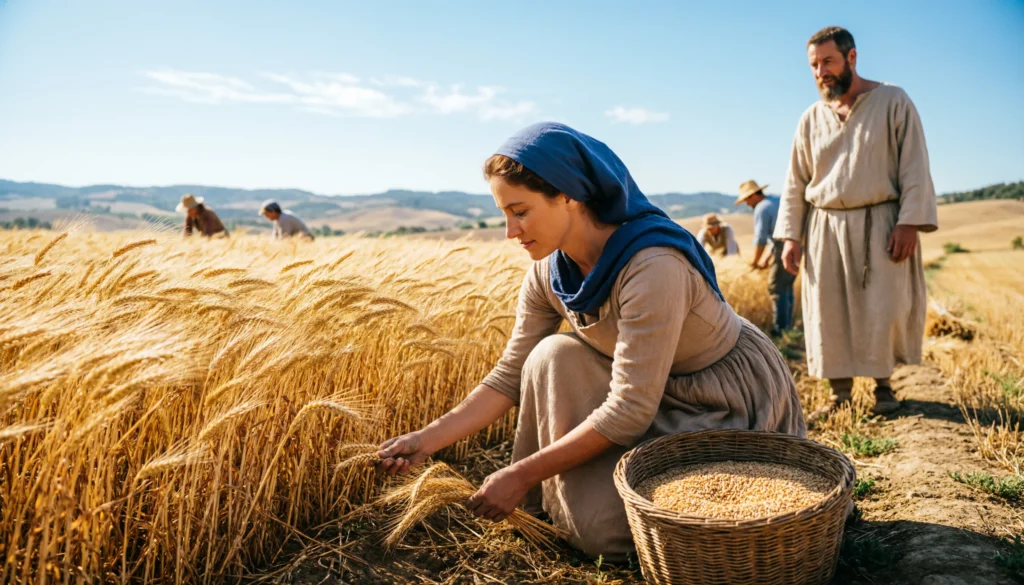
2. Ruth Gleaning in Boaz’s Field
- Ruth 2:2–3, 8–16 – Ruth, a widow from Moab, gleans in the field of Boaz, a relative of her deceased husband.
- Boaz ensures she gathers safely and abundantly, demonstrating kindness, protection, and God’s providence.
Spiritual Insight:
- Gleaning shows faith and trust in God’s provision.
- Boaz’s generosity points to God’s grace and care through others.
3. Symbolism in the Prophets
- Isaiah 17:5 – Gleaning is used metaphorically to show remnants left for preservation.
- Hosea 9:1 – Refers to gleaning as a sign of God’s judgment and mercy, leaving some for hope and restoration.
Gleaning in the New Testament
While the New Testament does not describe agricultural gleaning in detail, the concept carries over spiritually:
- Spiritual gleaning: Gathering leftover blessings, insights, or mercy from God’s work.
- John 4:36 – Jesus uses harvest language to describe spiritual labor and gathering souls, echoing the principle of gleaning for provision and growth.
- Galatians 6:9 – Though metaphorical, believers are encouraged not to grow weary in doing good, knowing they will “reap in due season,” similar to gleaning leftovers from God’s abundance.
Spiritual Meaning of Gleaning
Gleaning in the Bible represents more than an agricultural practice:
- God’s Provision – Gleaning shows that God provides for the needy and marginalized.
- Faith and Trust – Those who glean depend on God’s blessing and guidance.
- Generosity and Justice – Landowners’ willingness to leave leftovers reflects God’s call to share with the people of low income.
- Humility and Patience – Gleaners work hard for small portions, teaching perseverance.
- Redemption and Grace – Boaz’s care for Ruth symbolizes God’s mercy and redemption through human kindness.
Lessons from Ruth’s Gleaning
- Trust God’s Timing – Ruth waited and gleaned according to God’s plan.
- Honor God’s Commands – Observing laws about gleaning reflects obedience.
- Bless Others Through Your Position – Boaz shared his fields generously.
- Work Diligently – Ruth actively worked in the field, showing faith paired with effort.
- Look for God’s Providence – Even in difficult circumstances, God provides.
Gleaning vs Harvest
| Term | Meaning | Spiritual Implication |
|---|---|---|
| Harvest | The main collection of crops | Represents God’s primary blessings, success, and abundance |
| Glean | Collecting leftovers from the harvest | Represents God’s provision for the marginalized, grace, and mercy |
Gleaning emphasizes care for those who rely on God’s leftover blessings, while harvest emphasizes God’s abundant provision for all.
Modern Application of Gleaning
- Generosity: Share your resources with those in need.
- Faith: Trust that God provides even in scarcity.
- Humility: Accept help or small blessings without shame.
- Service: Protect and care for vulnerable people, as Boaz protected Ruth.
- Gratitude: Recognize God’s provision in every opportunity, big or small.
FAQs
What does glean mean in the Bible?
To gather leftover crops after the harvest, often for the people of low income, widows, or foreigners.
Who were allowed to glean?
Widows, orphans, foreigners, and the people of low income anyone in need.
Why did God command gleaning?
To show His care for the marginalized and teach generosity, justice, and mercy.
Who is an example of gleaning in the Bible?
Ruth, who gleaned in Boaz’s field.
What is the spiritual meaning of gleaning?
God’s provision, faith, humility, and divine grace.
Is gleaning still relevant today?
Yes, it teaches generosity, trust in God, and care for the vulnerable.
What lesson does Boaz teach through gleaning?
Generosity, protection, kindness, and reflection of God’s mercy.
How does gleaning relate to spiritual growth?
It symbolizes collecting God’s blessings, insights, and mercy with faith and diligence.
Conclusion
In the Bible, gleaning is both a practical and spiritual principle. It demonstrates God’s concern for the vulnerable, teaches believers about faith, generosity, and diligence, and highlights His providence in everyday life.
From Ruth gathering in Boaz’s fields to metaphorical gleaning of spiritual blessings, gleaning reminds us to trust God, share abundantly, and recognize His mercy in every aspect of life.
Gleaning is more than leftover crops it is a lesson in humility, patience, and divine provision that continues to inspire believers today.
Discover More Related Articles:
- Biblical Meaning of Alms: How and Why Christians Give in 2026
- Fish Symbol in Christianity: History, Meaning, and Significance in 2026

Laura Jackson is a writer at textroast.com, where she creates engaging articles that decode the meanings behind slang, phrases, and everyday expressions. Passionate about language and communication, she makes complex or confusing terms easy to understand, turning learning into a fun and relatable experience for readers around the world.