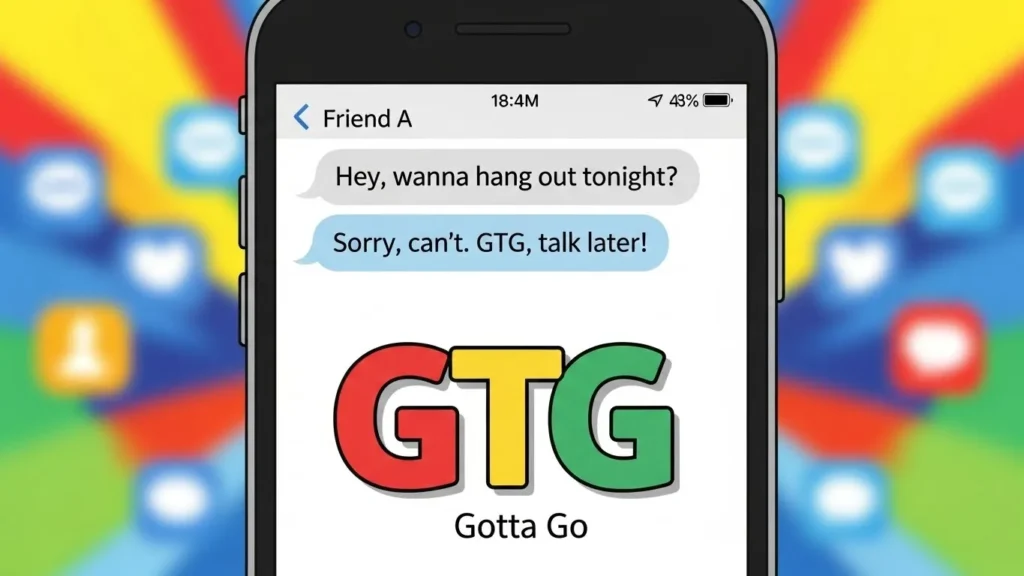
GTG (texting): GTG stands for “Got To Go”, a quick way to let someone know that you need to leave a conversation or step away. It’s commonly used in texting, online messaging apps, and social media chats to politely or casually end an interaction.
In the fast-paced world of digital communication, texting has its own language of abbreviations, acronyms, and slang. Some are easy to understand, while others leave you scratching your head. One abbreviation you’ve probably seen often is GTG.
If you’ve ever wondered “what does GTG mean in texting?”, you’re in the right place. In this guide, we’ll break down GTG’s meaning, its origin, how to use it correctly, examples across different contexts, and even professional alternatives. By the end, you’ll know exactly how to use GTG like a pro.
The Origin of GTG
GTG first appeared during the rise of SMS texting in the late 1990s and early 2000s. Back then, text messages had a strict 160-character limit, which encouraged people to create shorthand for commonly used phrases.
GTG quickly became popular because it was:
- Short and easy to type – only three letters.
- Clear and universally understood – no need for long explanations.
- Versatile – works in both friendly chats and semi-professional conversations.
Even today, with smartphones and unlimited texting, GTG remains widely used because it conveys a message efficiently and politely.
Why GTG Is So Popular
Several reasons explain GTG’s enduring popularity:
- Saves Time – Perfect when you’re in a hurry or multitasking.
- Polite Communication – You can leave a conversation without being abrupt.
- Widely Recognized – Nearly everyone familiar with English texting understands it.
- Flexible Tone – Can be friendly, neutral, or even slightly abrupt depending on context.
Whether you’re texting a friend, a family member, or a coworker, GTG lets you communicate clearly without extra words.
How to Use GTG in Texting
GTG is versatile, and how it comes across depends on tone, context, and punctuation.
Common Usage Examples
| Tone | Message Example | Explanation |
|---|---|---|
| Friendly | “GTG, dinner’s ready 😋. Chat later?” | Polite, casual, and warm. |
| Neutral | “GTG, meeting starts now.” | Factual, professional, and straightforward. |
| Abrupt | “GTG. Bye.” | Short, can seem dismissive depending on context. |
| Playful | “GTG, the cat’s on the laptop again 😅” | Adds humor and context to soften leaving. |
Tips for Effective Use:
- Include emojis in casual conversations to convey warmth.
- Pair GTG with a follow-up if leaving unexpectedly, like “GTG, talk soon!”
- Avoid using GTG in formal emails or official communications; use professional alternatives instead.
Real-World GTG Examples
Here’s how GTG is used in different contexts:
- Friend Chat
- Text: “GTG, the movie’s starting 🎬. Call you later!”
- Tone: Friendly, casual, and considerate.
- Work Chat
- Text: “GTG to a meeting, will reply after.”
- Tone: Professional, concise, and neutral.
- Family Group Chat
- Text: “GTG, kids are napping. Talk soon ❤️”
- Tone: Friendly, polite, and caring.
- Rushed or Abrupt
- Text: “GTG. Bye.”
- Tone: Can seem abrupt or dismissive if context is missing.
Notice that adding context, punctuation, or emojis can drastically change how your GTG message is perceived.
Comparison With Similar Texting Abbreviations
GTG isn’t the only way to leave a conversation. Let’s compare GTG with other popular abbreviations:
| Abbreviation | Meaning | Tone / Use Case | Difference from GTG |
|---|---|---|---|
| BRB | Be Right Back | Casual; temporary leave | Implies you’ll return soon, unlike GTG which may be indefinite. |
| G2G | Got to Go | Informal variant of GTG | Less standard, more casual internet slang feel. |
| TTYL | Talk To You Later | Casual, polite | Focuses on future conversation, not immediate departure. |
| AFK | Away From Keyboard | Casual, gaming/chat | Indicates being physically away from device. |
| BBL | Be Back Later | Informal | Similar to BRB, emphasizes return. |
Key takeaway: GTG is the quickest, most universal way to signal you need to leave a conversation.
Alternate Meanings of GTG
While GTG most often means “Got To Go”, there are other rare interpretations:
- Good To Go – Used in work, logistics, or sports to indicate readiness.
- Example: “The team is GTG for the match.”
- Go To Guy – Refers to a reliable person for a task.
- Example: “He’s my GTG for tech problems.”
In texting, however, “Got To Go” is by far the most common meaning.
Polite and Professional Alternatives to GTG
Sometimes GTG may seem too casual. In those cases, these alternatives work better:
- “I need to step out for a moment.”
- “I have to leave now; I’ll catch up later.”
- “Excuse me, I need to go.”
- “I’ll need to wrap this up; talk soon.”
These phrases maintain professionalism and courtesy while conveying the same message as GTG.
Usage Tips and Common Mistakes
Best Practices:
- Context Matters: Always give a reason if leaving unexpectedly.
- Use Emojis: Friendly emojis make GTG sound warmer.
- Follow Up: “GTG, talk later?” helps maintain politeness.
Common Mistakes:
- Using GTG in formal emails or official communications.
- Sending GTG abruptly without explanation, which can seem rude.
- Confusing GTG with BRB or AFK, which have different meanings.
Fun Examples of GTG in Modern Chats
Here’s a look at how GTG is being used creatively:
- Gaming Chat: “GTG, boss fight starts! 🎮”
- Study Group: “GTG, library closes soon 😅”
- Texting Friends: “GTG, Uber’s here! 🏃♂️💨”
Notice how emojis, context, and timing make GTG dynamic and expressive, even with only three letters.
Practical GTG Examples Table
| Message | Meaning | Tone | Notes |
|---|---|---|---|
| “GTG, dinner’s ready 😋” | Got To Go | Friendly | Polite, casual, and warm |
| “GTG, meeting now” | Got To Go | Neutral | Professional, concise |
| “GTG. Bye.” | Got To Go | Abrupt | Can seem rude if context is missing |
| “GTG for the project update” | Good To Go | Neutral | Alternate meaning, context-dependent |
| “He’s my GTG for tech issues” | Go To Guy | Informal | Rare usage, context-specific |
FAQs
1. What does GTG stand for in texting?
GTG = Got To Go, signaling that someone needs to leave the conversation.
2. Is GTG considered rude?
Not inherently. Tone, punctuation, and context determine whether it comes off as polite or abrupt.
3. Can GTG be used in work chats?
Yes, in casual or semi-professional messaging apps. Avoid in formal emails.
4. How is GTG different from BRB?
BRB = “Be Right Back” implies a temporary absence; GTG usually signals leaving immediately.
5. Which emojis pair well with GTG?
👋 (wave), 😊 (friendly), 😅 (apologetic), ⏰ (time-sensitive).
6. Can GTG mean “Good To Go”?
Yes, in work or sports contexts. But in texting, it usually means “Got To Go.”
7. How can I make GTG sound polite?
Add context, use a friendly emoji, or include a follow-up like “GTG, talk soon!”
8. Is GTG understood internationally?
Yes, among English-speaking texters worldwide. In non-English contexts, clarification may be needed.
Conclusion
GTG is one of the most practical abbreviations in texting, allowing users to quickly signal that they need to leave a conversation. In most texting contexts, GTG stands for “Got To Go”, and its tone can be influenced by context, punctuation, and the use of emojis.
For situations that require more formality or professionalism, polite alternatives exist that convey the same message without seeming abrupt. Additionally, related abbreviations like BRB, TTYL, and AFK offer nuanced ways to communicate temporary absences or departures.
Discover More Related Articles:
- PS Meaning in Text Messages: What It Really Stands For (2026)
- ND Meaning in Slang: What It Stands for and How to Use It (2026)

Daniel Moore is a content writer and language enthusiast at TextRoast.com, specializing in decoding slang, abbreviations, and trending text expressions. He creates engaging and informative articles that help readers understand the meaning behind everyday words and online communication.