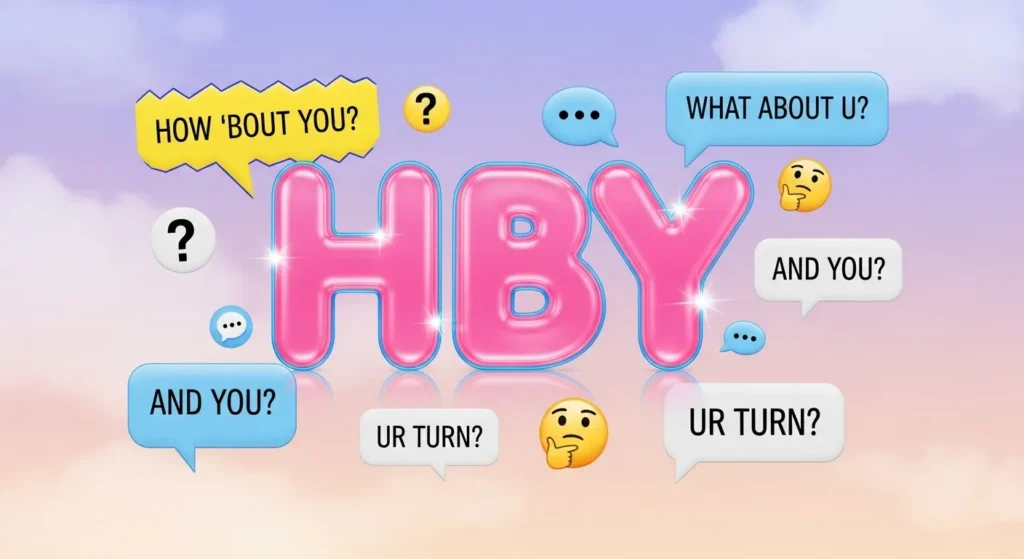
HBY means How About You in texting.
It is used to return a question to the other person and keep the conversation moving.
Texting has changed the way people communicate. Messages are shorter, faster, and more casual than ever before. Because of this, abbreviations have become a normal part of everyday conversation. One abbreviation that appears frequently in chats is HBY.
If you have seen HBY in a text and wondered what it means or how to use it correctly, this guide will explain everything in a clear and simple way.
In simple terms, HBY is a polite and casual way of asking someone the same question they just asked you.
Why HBY Is Common in Text Messages
People use HBY because texting is meant to be quick and effortless. Typing full sentences repeatedly can feel unnecessary, especially in casual conversations. HBY saves time while still showing interest in the other person.
HBY is popular because it:
Saves typing effort
Sounds natural and conversational
Keeps communication balanced
Shows basic courtesy and interest
It is especially common in friendly chats, social media messages, and everyday small talk.
Origin and Background of HBY
HBY comes directly from spoken English. The phrase “How about you” has always been used in conversations to return a question politely.
As texting became more informal, people began shortening common phrases. Just like “hru” for “how are you,” HBY developed naturally without any specific trend or viral moment. It simply became part of modern digital language.
How HBY Is Used in Real Conversations
HBY is usually used after answering a question. It prevents conversations from feeling one sided and helps both people stay engaged.
Common Situations Where HBY Is Used
Talking about mood or feelings
Discussing plans
Casual daily check ins
Getting to know someone
Light friendly conversations
HBY acts as a conversational bridge that keeps communication flowing smoothly.
Tone of HBY in Texting
HBY is generally friendly or neutral. It rarely sounds rude on its own, but tone can change depending on how it is used.
Tone Variations Explained
| Style | Example | How It Feels |
|---|---|---|
| Friendly | Doing great, hby 😊 | Warm and engaging |
| Casual | fine hby | Relaxed |
| Neutral | HBY | Straightforward |
| Dry | ok hby | Low effort |
| Polite | I am doing well, hby | Respectful |
Adding emotion or a small phrase before HBY usually improves how it is received.
HBY Text Examples With Context
Friendly Conversation
“I am feeling good today, hby 😊”
“Had a long day, hby”
Casual Small Talk
“Just watching a movie, hby”
“I am free later, hby”
Getting to Know Someone
“I like traveling and food, hby”
“I am from Lahore, hby”
In all these examples, HBY keeps the conversation balanced and open.
When HBY Can Feel Dry or Inappropriate
- Although HBY is not rude, it can feel uninterested if:
- It is used without context
- It follows a serious message
- No emotional response is given
Example that feels wrong:
“I am really stressed about work”
“Hby”
In emotional situations, it is better to show understanding before returning the question.
HBY Compared to Similar Texting Terms
Understanding similar abbreviations helps you choose the right wording.
Comparison Table
| Term | Meaning | Tone | Usage |
|---|---|---|---|
| HBY | How About You | Friendly neutral | Returning a question |
| HRU | How Are You | Friendly | Starting a conversation |
| And you | And you | Neutral | Slightly clearer |
| U | You | Very casual | Short replies |
| WYD | What You Doing | Casual | Asking about activity |
HBY is best when you want to politely pass the conversation back.
Capitalization and Emoji Use
Capitalization
HBY feels neutral
hby feels more relaxed and friendly
Emojis That Work Well
😊 🙂 😄 👍
Emojis help avoid dryness and make HBY feel warmer.
Alternate Meanings of HBY
HBY almost always means How About You. Other meanings are extremely rare and not commonly used in texting.
If the message follows a question and continues the conversation, the meaning is clear.
Is HBY Suitable for Professional Communication
HBY is informal and should not be used in professional settings such as work emails or formal messages.
Professional Alternatives
How about you
What about you
May I ask about you as well
These sound clearer and more respectful in formal communication.
Best Practices for Using HBY
When to Use HBY
Casual chats with friends
Social media conversations
Small talk and check ins
Getting to know someone
When to Avoid HBY
Serious discussions
Emotional conversations
Professional communication
Matching the tone of the conversation is the key to using HBY correctly.
HBY in Social Media and Messaging Apps
HBY is widely used on WhatsApp, Instagram, Snapchat, Facebook Messenger, and Discord.
Example:
“Doing fine today, hby 😄”
It fits naturally into fast paced online conversations.
FAQs
1. What does HBY mean in text?
HBY means How About You.
2. Is HBY slang?
Yes, it is informal texting slang.
3. Is HBY rude?
No, but it can feel dry if used without context.
4. Can I use HBY with friends?
Yes, it is very common in casual conversations.
5. Should HBY be capitalized?
Both uppercase and lowercase are acceptable.
6. Is HBY the same as HRU?
No, HRU asks a question while HBY returns one.
7. Can HBY be used while flirting?
Yes, it is often used in light and friendly chats.
8. What is a polite alternative to HBY?
How about you or And you.
Conclusion
HBY is a simple and useful texting abbreviation that helps keep conversations flowing naturally. It shows interest, encourages replies, and keeps communication balanced.
While it works well in casual and friendly chats, it should be avoided in emotional or professional situations.
Used correctly, HBY makes texting feel easy, natural, and engaging.
Discover More Related Articles:
- What Does KMG Mean in Texting? Abbreviation for Everyday Use (2026)
- IDTS Texting Meaning: How and When to Use It Correctly (2026)

Laura Jackson is a writer at textroast.com, where she creates engaging articles that decode the meanings behind slang, phrases, and everyday expressions. Passionate about language and communication, she makes complex or confusing terms easy to understand, turning learning into a fun and relatable experience for readers around the world.