
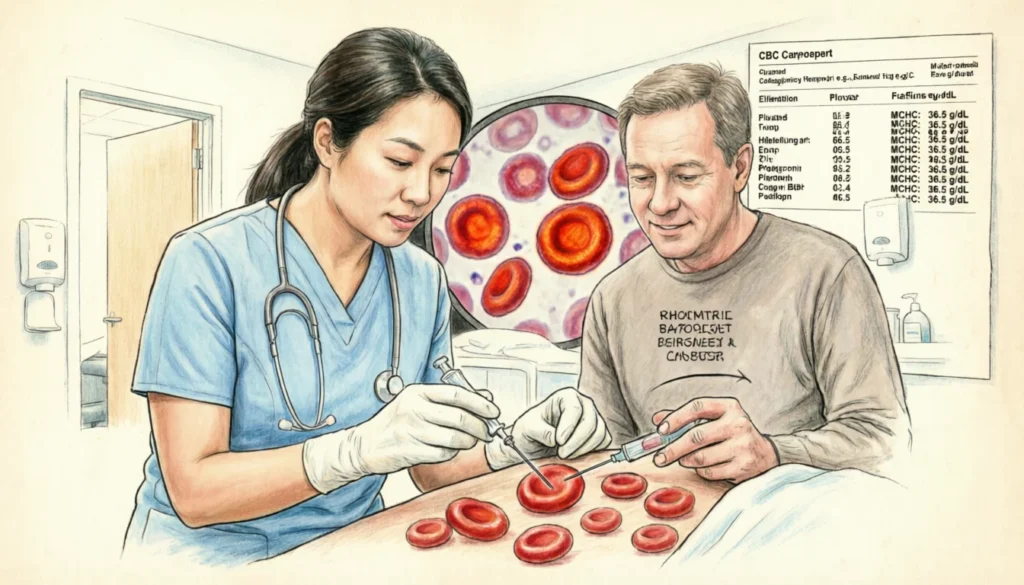
MCHC (Mean Corpuscular Hemoglobin Concentration) measures the average concentration of hemoglobin in red blood cells (RBCs). High MCHC indicates that the red blood cells contain more hemoglobin than normal, which can occur due to various medical conditions or laboratory factors.
If you’ve recently had a complete blood count (CBC), you may have seen MCHC listed in your results. Understanding what high MCHC means in a blood test is essential for interpreting your health and discussing results with your healthcare provider.
This article explains MCHC, what it measures, causes of high levels, symptoms, and next steps in a friendly and professional way.
Understanding MCHC
What Is MCHC?
- MCHC is part of a complete blood count (CBC) test.
- Hemoglobin is the protein in RBCs that carries oxygen from the lungs to tissues.
- MCHC reflects the hemoglobin concentration in each red blood cell, not the total hemoglobin in the blood.
Normal MCHC ranges:
- 32–36 g/dL (grams per deciliter) in adults
Values above this range are considered high (hyperchromic), while values below are low (hypochromic).
What High MCHC Indicates
High MCHC means the average concentration of hemoglobin in your red blood cells is elevated. It can result from actual changes in red blood cells or technical issues with the lab test.
Causes of High MCHC
- Hereditary Spherocytosis
- A genetic condition affecting the shape of red blood cells.
- RBCs become round (spherocytes) and carry more hemoglobin per cell.
- Often associated with anemia, jaundice, and enlarged spleen.
- Autoimmune Hemolytic Anemia (AIHA)
- The immune system destroys red blood cells prematurely.
- RBCs become more concentrated with hemoglobin before destruction.
- May cause fatigue, pallor, and jaundice.
- Severe Burns
- Can lead to dehydration of red blood cells, concentrating hemoglobin.
- Laboratory Errors
- Sample hemolysis or improper handling can falsely elevate MCHC.
- Spherocytosis From Other Causes
- Certain conditions or medications may produce spherocytes with high hemoglobin content.
Symptoms Associated with High MCHC
High MCHC itself may not cause symptoms but often accompanies conditions that affect red blood cells, such as:
- Fatigue and weakness
- Shortness of breath
- Jaundice (yellowing of skin and eyes)
- Enlarged spleen in hereditary spherocytosis
- Rapid heart rate
How High MCHC Is Diagnosed
- Complete Blood Count (CBC): Measures MCHC along with hemoglobin, hematocrit, and RBC count.
- Peripheral Blood Smear: Examines RBC shape and size.
- Additional Tests:
- Reticulocyte count (new RBC production)
- Direct antiglobulin test (for autoimmune hemolysis)
- Genetic tests for hereditary spherocytosis
Tip: Always discuss abnormal MCHC results with your doctor, as the meaning depends on other CBC parameters and clinical context.
High MCHC vs Low MCHC
| Parameter | High MCHC | Low MCHC |
|---|---|---|
| Meaning | RBCs contain more hemoglobin per cell | RBCs contain less hemoglobin per cell |
| Causes | Spherocytosis, AIHA, burns | Iron-deficiency anemia, chronic blood loss |
| Symptoms | Fatigue, jaundice, enlarged spleen | Fatigue, pallor, weakness |
| Treatment | Treat underlying condition | Iron supplementation, vitamin therapy, treat cause |
Treatment for High MCHC
Treatment depends on the underlying cause, not just the lab value:
- Hereditary Spherocytosis: May require folic acid, splenectomy, or supportive care.
- Autoimmune Hemolytic Anemia: Steroids, immunosuppressants, or blood transfusions.
- Burns or Dehydration: Fluid replacement and supportive care.
- Lab Error: Repeat testing may be necessary.
Important: High MCHC alone is rarely treated; the focus is always on the underlying condition.
Lifestyle and Monitoring Tips
- Maintain adequate hydration to prevent spurious lab results.
- Eat a balanced diet rich in iron, folate, and vitamins to support healthy RBCs.
- Monitor for symptoms of anemia or hemolysis.
- Follow up with your healthcare provider for repeat CBCs and additional testing if needed.
FAQs
What does high MCHC mean in a blood test?
It indicates that your red blood cells have a higher than normal concentration of hemoglobin.
Can high MCHC cause symptoms?
Not directly, but the underlying condition may cause fatigue, jaundice, or other symptoms.
Is high MCHC dangerous?
It can indicate serious conditions like spherocytosis or hemolytic anemia, which require medical evaluation.
Can dehydration affect MCHC?
Yes, dehydration can concentrate red blood cells and temporarily increase MCHC.
How is high MCHC treated?
Treatment targets the underlying cause, such as autoimmune disease, hereditary conditions, or blood loss.
Does high MCHC mean I have anemia?
Often, it is associated with certain types of anemia, such as hereditary spherocytosis or hemolytic anemia.
Should I be worried about high MCHC?
It warrants evaluation, especially if other CBC values are abnormal or if you have symptoms.
Can lab errors cause high MCHC?
Yes, hemolyzed samples or improper handling can produce falsely elevated results.
Conclusion
High MCHC in a blood test indicates that red blood cells have a higher concentration of hemoglobin than normal, which can be caused by genetic disorders, autoimmune conditions, dehydration, or lab errors.
While the value itself is important, doctors evaluate it alongside other blood parameters and clinical symptoms to diagnose the underlying issue.
Proper diagnosis, monitoring, and treatment of the root cause are essential for maintaining healthy red blood cells and overall health.
Discover More Related Articles:
- Biblical Meaning of 555: Change and God’s Guidance in 2026
- Monocytes Blood Test Meaning: Immune System and Disease Signals in 2026

David Brown is a content writer and language enthusiast at textroast.com, where he creates insightful articles that explain the meanings of words, slang, and phrases used in everyday life. His work helps readers decode modern language trends, understand cultural expressions, and make sense of online communication with clarity and fun.