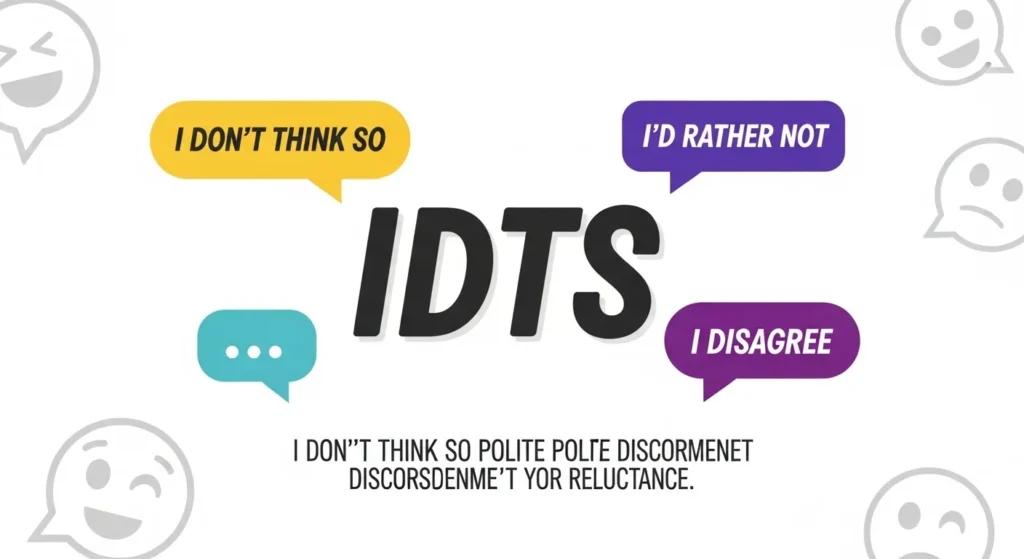
IDTS (texting slang): IDTS stands for “I Don’t Think So” in most casual texting contexts. It is a short, quick way to express disagreement, skepticism, or refusal without typing a full sentence.
In the world of texting and online messaging, abbreviations and acronyms make conversations quicker and more efficient. While some terms like LOL, BRB, and OMG are universally recognized, others like IDTS may leave you scratching your head.
If you’ve received a message with IDTS and weren’t sure what it means, this comprehensive guide will explain everything. You’ll learn what IDTS means in texting, its origin, tone, real-world usage, alternatives, and tips for using it effectively in casual conversations.
Example:
- “Do you think I can finish all this work today?”
- “IDTS 😅”
Meaning: I don’t think so, implying doubt in a casual and friendly tone.
Common Meanings of IDTS
IDTS is primarily used as a shorthand for I Don’t Think So, but context may slightly alter its meaning:
- I Don’t Think So – The most common and widely recognized usage, used in casual texting or online chat.
- Other Contexts – Rarely, it could appear in professional or academic settings as part of niche abbreviations, but these are uncommon.
In casual conversation, I Don’t Think So is the default and safest interpretation.
Origin of IDTS
IDTS originated from texting culture and online chat shorthand, where people sought ways to communicate longer phrases quickly.
- “I Don’t Think So” → “IDTS”
- First became popular in SMS texting, instant messaging, and social media apps like WhatsApp, Discord, and Facebook Messenger.
Abbreviations like IDTS reflect the modern need for speed and brevity in digital communication.
Tone and Emotional Meaning of IDTS
The tone of IDTS is generally casual and neutral, but it can shift depending on context, punctuation, and emojis.
Tone Variations
- Neutral: “IDTS.” → Simple disagreement or polite refusal
- Friendly: “IDTS 😅” → Lighthearted or joking disagreement
- Casual: “IDTS, maybe later?” → Relaxed, non-confrontational
- Slightly dismissive: “IDTS 🙄” → Expresses doubt or mild annoyance
Using punctuation and emojis helps convey the intended emotional tone, ensuring the message is received correctly.
IDTS vs Similar Texting Abbreviations
| Abbreviation | Meaning | Tone |
|---|---|---|
| IDTS | I Don’t Think So | Casual, skeptical, friendly |
| NTS | Not That Sure | Casual, uncertain |
| TBH | To Be Honest | Honest, casual |
| IMO | In My Opinion | Neutral, conversational |
| SMH | Shaking My Head | Disapproving, humorous or serious |
Key Insight: IDTS is unique because it conveys disagreement or doubt directly yet concisely, unlike TBH or IMO, which are more opinion-based.
When to Use IDTS
IDTS is best suited for informal, casual conversations, such as:
- Texting friends about plans or ideas
- Responding to questions or suggestions
- Online chats or social media interactions
- Group messaging where brevity is appreciated
Example Usage
- “Do you think we can finish this game in one hour?” → “IDTS 😅”
- “Should I go out in this weather?” → “IDTS 🌧️”
- “Will he agree with us?” → “IDTS 🤔”
In these examples, IDTS communicates skepticism or doubt in a friendly, concise way.
When Not to Use IDTS
IDTS is informal and should be avoided in professional, academic, or serious contexts.
Situations to Avoid
- Work emails or professional chats
- Academic submissions or formal discussions
- Serious or sensitive conversations
Polite Alternatives
- “I don’t believe so”
- “I’m not sure”
- “Probably not”
- “I doubt it”
These alternatives convey the same meaning while maintaining professionalism and clarity.
Real-Life Example Table
| Message | Meaning | Tone |
|---|---|---|
| “Do you think he will call?” → “IDTS 😅” | I don’t think so | Friendly, casual |
| “Will we make it on time?” → “IDTS 🙄” | I don’t think so | Slightly dismissive |
| “Is this a good idea?” → “IDTS” | I don’t think so | Neutral, polite |
| “IDTS, maybe we can try later?” | I don’t think so | Casual, flexible |
| “Do you think she liked it?” → “IDTS 🤔” | I don’t think so | Thoughtful, skeptical |
Common Mistakes When Using IDTS
- Using IDTS in professional or formal communication
- Overusing it in serious conversations, making it appear dismissive
- Assuming everyone understands the abbreviation
- Sending IDTS without context, which can confuse the recipient
Pro Tip: Add emojis or clarifying words to convey tone and avoid misunderstandings.
Tips for Using IDTS Correctly
- Use IDTS only in casual, informal conversations
- Add emojis to convey tone and friendliness
- Avoid professional or academic contexts
- Provide context when needed to prevent misunderstanding
- Combine IDTS with a follow-up statement or question for clarity
FAQs
1. What does IDTS mean in texting?
IDTS primarily means I Don’t Think So, used to express doubt or disagreement casually.
2. Can IDTS be used professionally?
No, it is informal. Use “I don’t think so” or “probably not” in professional communication.
3. Is IDTS slang?
Yes, it is casual texting slang commonly used in informal messaging.
4. Who uses IDTS the most?
Teens, young adults, and frequent texters commonly use IDTS in chat or social media conversations.
5. Can IDTS be playful?
Yes, combined with emojis, IDTS can express lighthearted or joking skepticism.
6. Is IDTS negative?
Not necessarily it expresses doubt or disagreement, but tone depends on context and emojis.
7. Can IDTS confuse people?
Yes, if the recipient is unfamiliar with texting abbreviations, context helps clarify the meaning.
8. Are there alternatives to IDTS?
Yes, alternatives include: “I don’t believe so,” “I’m not sure,” “Probably not,” or “I doubt it.”
Conclusion
IDTS is a short, casual texting abbreviation most commonly used to mean “I Don’t Think So.” It allows texters to express doubt, skepticism, or polite disagreement quickly and efficiently.
While it is informal, IDTS can be friendly, playful, or slightly dismissive depending on context, punctuation, and emojis.
When used thoughtfully, IDTS keeps conversations fast, expressive, and casual, making it ideal for modern texting culture.
Discover More Related Articles:
- LGHT Meaning in Texting: What It Stands For & How to Use It (2026)
- What Does MS Mean in Texting? Learn the Common Slang (2026)

David Brown is a content writer and language enthusiast at textroast.com, where he creates insightful articles that explain the meanings of words, slang, and phrases used in everyday life. His work helps readers decode modern language trends, understand cultural expressions, and make sense of online communication with clarity and fun.