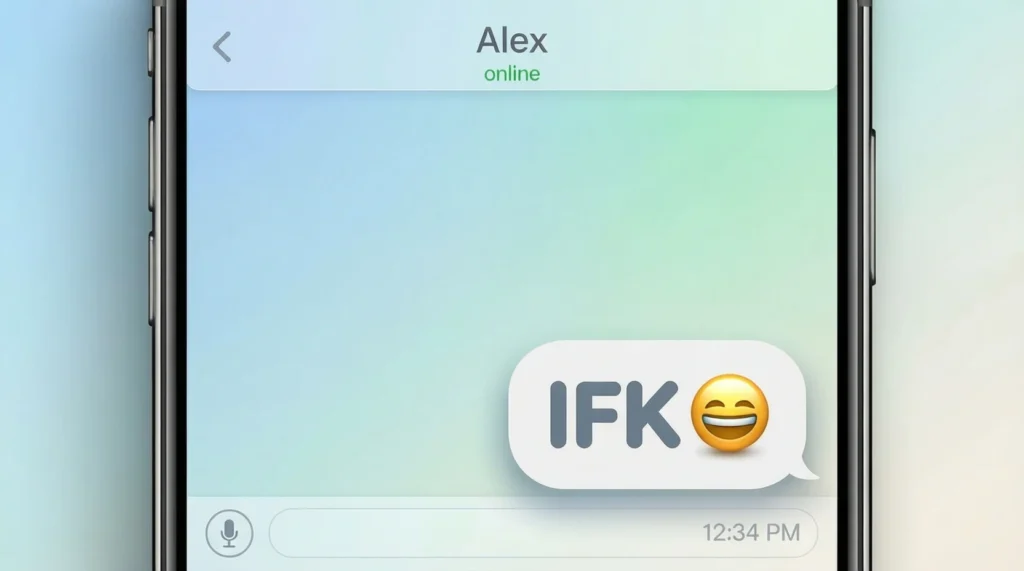
IFK means I Freaking Know in text messages.
It is used to show agreement, understanding, or mild frustration, depending on context.
Texting language changes fast. New abbreviations appear every year. Some become popular. Others stay confusing for many people. One abbreviation that often raises questions is IFK. You may see it in a message and pause, trying to figure out what the sender really means.
This article explains what IFK means in text messages, how people use it, the tone it carries, examples from real conversations, alternate meanings, and situations where it should or should not be used.
What Does IFK Mean in Texting
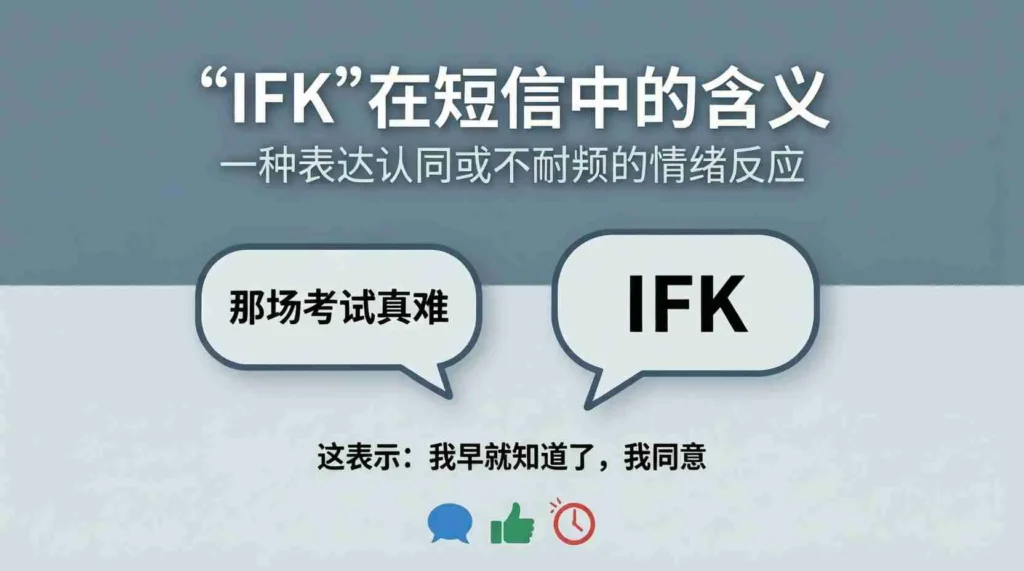
In texting, IFK is an emotional response. It shows that the sender already knows the information being shared. It can express agreement or impatience.
Example
“That exam was hard”
“IFK”
This means
I know already and I agree
Why People Use IFK in Text Messages
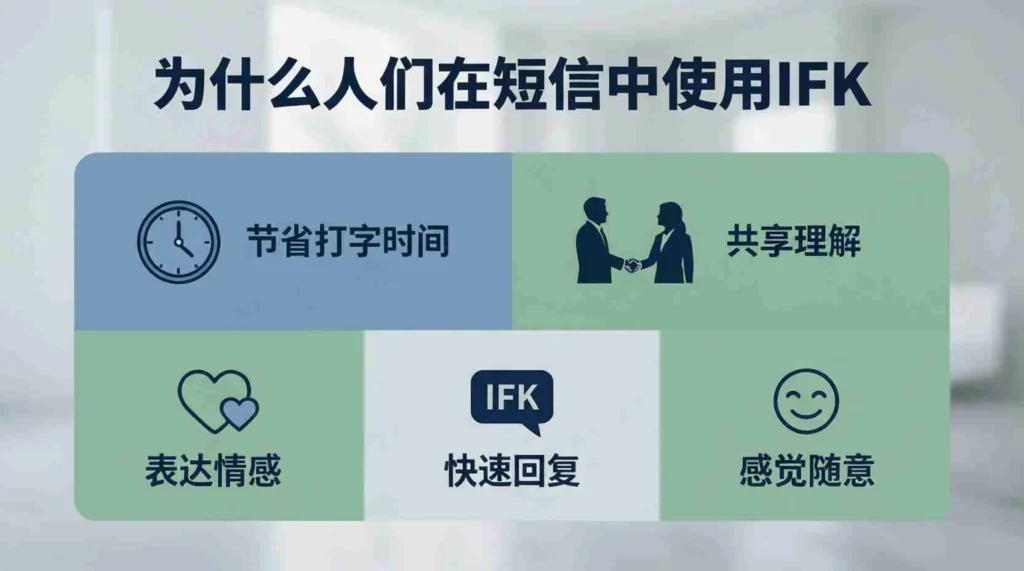
Texting is quick. People often reply with short reactions. IFK fits well in these moments.
Common reasons people use IFK
• Saves typing time
• Shows shared understanding
• Expresses emotion
• Feels casual
• Works as a quick reply
It is mainly used in informal conversations.
Origin of IFK
IFK comes from spoken language. People often say “I freaking know” out loud when reacting emotionally. Texting turned that phrase into an abbreviation.
It gained popularity through
• Casual texting
• Social media chats
• Online communities
• Group conversations
It is not new but still feels conversational.
How IFK Is Used in Conversations
IFK is usually used as a response. It can also appear at the beginning of a sentence.
Common usage patterns
• As a single reply
• Followed by an explanation
• Combined with emojis
• Used in group chats
It is rarely used in formal writing.
Examples of IFK in Text Messages
Agreement
“This traffic is terrible”
“IFK”
Meaning
I completely agree
Shared Frustration
“Prices keep going up”
“IFK it is exhausting”
Meaning
I know and I feel the same way
Casual Chat
“That show is addictive”
“IFK I stayed up all night”
Meaning
I already know and relate
Light Sarcasm
“You forgot your keys again”
“IFK 😅”
Meaning
I know and I admit it
Group Chat Reaction
“This assignment is confusing”
“IFK”
Meaning
Everyone feels the same
Tone of IFK in Texting
IFK can sound different depending on context.
| Tone | Example | Feeling |
|---|---|---|
| Agreement | IFK that makes sense | Understanding |
| Frustration | IFK it is annoying | Mild irritation |
| Playful | IFK lol | Light humor |
| Sarcastic | IFK right | Dry tone |
Tone depends on wording and emojis.
Is IFK Rude
IFK is not rude by default. It can sound rude if used sharply or without context.
Example
“I already told you”
“IFK”
This may sound dismissive.
Using emojis or extra words softens the tone.
IFK Compared to Similar Text Abbreviations
| Abbreviation | Meaning | Tone |
|---|---|---|
| IFK | I freaking know | Emotional |
| IK | I know | Neutral |
| IKR | I know right | Agreement |
| IDC | I do not care | Dismissive |
| TBH | To be honest | Honest opinion |
It shows stronger emotion than IK.
IFK vs IKR
Both show agreement. IFK focuses on knowledge. IKR focuses on shared opinion.
Example
“That movie was long”
“IFK”
I already know
“That movie was long”
“IKR”
I agree with you
Using IFK With Emojis
Emojis help clarify tone.
Example
“IFK 😭”
Shows emotional frustration
Example
“IFK 😂”
Shows humor
Emojis reduce misunderstanding.
When IFK Can Be Misunderstood
IFK may confuse people unfamiliar with slang. It can also sound aggressive in serious situations.
Avoid using IFK when
• Someone is upset
• Giving advice
• Speaking professionally
• Talking to as older people
Clear communication matters.
Professional Use of IFK
IFK is not suitable for professional settings. It sounds too casual and emotional.
Better alternatives include
• I understand
• I am aware
• I know
• That makes sense
These sound respectful.
Alternate Meanings of IFK
In texting, IFK almost always means I freaking know. In other contexts, it may stand for organizations or technical terms.
Outside texting examples
• International Football Knowledge
• Industry specific abbreviations
In casual chats, the slang meaning applies.
Who Commonly Uses IFK
IFK is more common among
• Younger texters
• Social media users
• Friends chatting casually
• Group conversations
Older users may prefer full phrases.
IFK in Social Media
IFK appears in comments and replies.
Example
“This update broke everything”
“IFK”
It shows shared frustration.
Common Mistakes When Using IFK
Mistakes include
• Using it in formal emails
• Using it with strangers
• Using it during serious talks
• Overusing it
Moderation helps.
Is IFK the Same as I Know
No. IFK carries emotion. I know is neutral.
Example
“I know”
Simple acknowledgment
“IFK”
Emotional agreement
Cultural and Age Differences
Not all cultures use IFK. Some may misinterpret it. Age also affects understanding.
Context helps clarity.
How Often Should You Use IFK
Occasional use works best. Overuse reduces impact and may sound careless.
FAQs
1. What does IFK mean in text messages?
It means I freaking know.
2. Is IFK slang?
Yes. It is informal slang.
3. Is IFK rude?
Not always. Tone matters.
4. Can IFK be used jokingly?
Yes. Often with emojis.
5. Is IFK professional?
No. Avoid it at work.
6. Is IFK stronger than IK?
Yes. It shows emotion.
7. Can IFK be used alone?
Yes. It works as a reaction.
8. Do all people understand IFK?
Not everyone. Younger users do.
Conclusion
IFK is a casual texting abbreviation that means I freaking know. IFK shows agreement, understanding, or mild frustration. It adds emotion to messages and helps express shared feelings. IFK works best in informal chats with friends.
Avoid it in professional or serious communication. Understanding abbreviations like IFK helps you read messages correctly and respond with the right tone.
Discover More Related Articles:
- What Does !! Mean in Text? Casual Text Messages (2026)
- What Does ~ Mean in Text? Casual Text Conversations (2026)

Daniel Moore is a content writer and language enthusiast at TextRoast.com, specializing in decoding slang, abbreviations, and trending text expressions. He creates engaging and informative articles that help readers understand the meaning behind everyday words and online communication.