I’ve noticed that modern slang moves incredibly fast. Words and phrases that once took full sentences are now shortened into just a few letters. One of the most common examples of this trend is ION. You’ll see it in text messages, TikTok comments, and social media captions, often replacing phrases like “I don’t know” or “I don’t care.”
Understanding what ion means in slang helps you keep up with online conversations and avoid confusion, especially when reading casual messages or interacting on social platforms.
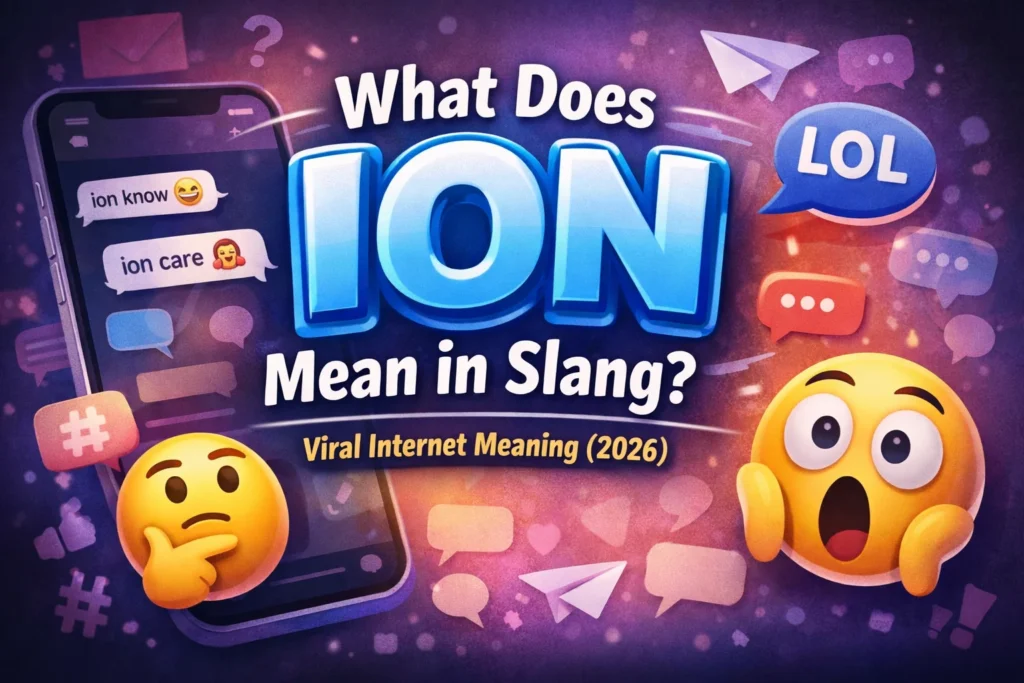
ION is a slang term that means “I don’t” or “I don’t know,” depending on how it is used in a sentence. It is commonly seen in casual texting, social media comments, and informal online conversations.
What Does ION Mean in Slang?
In slang usage, ION is a phonetic spelling of how “I don’t” sounds when spoken quickly. Its meaning depends on the words that follow it.
Most common meanings include:
- I don’t
- I don’t know
- I don’t care
- I don’t think
Common Examples
- Ion know what happened
- Ion care about that
- Ion think it’s true
- Ion like that idea
The tone and intent become clear from the rest of the sentence.
Origin of ION Slang
Where It Comes From
ION originated from spoken English, especially informal speech where “I don’t” is pronounced quickly and sounds like “ion.” This pronunciation was later written exactly as it sounds in text messages.
The term is strongly associated with African American Vernacular English (AAVE) and urban speech patterns, but it has since spread widely across the internet.
How It Became Popular
ION became popular through:
- Social media platforms like Twitter (X) and TikTok
- Casual texting culture
- Music lyrics and captions
- Online communities focused on fast, conversational language
Its simplicity and natural sound made it easy to adopt.
How ION Is Used in Everyday Conversations
ION is always informal. It is best suited for relaxed, personal communication.
You will often see it used in:
- Text messages
- Social media comments
- Group chats
- Casual online discussions
You should avoid using it in:
- Professional emails
- Academic writing
- Business communication
- Formal situations
ION Usage by Tone With Examples
Friendly or Casual Tone
Used among friends or people you are comfortable with.
- Ion know if I can come later.
- Ion mind helping you out.
- Ion think it’s a bad idea.
Neutral Tone
Used to share information casually without strong emotion.
- Ion have the details yet.
- Ion remember his name.
Dismissive or Negative Tone
Can sound rude or uninterested depending on context.
- Ion care what they say.
- Ion got time for this.
Tone matters a lot when using ION, especially in short messages.
ION in Context: Example Table
| Sentence | Meaning | Tone |
|---|---|---|
| Ion know about that | I don’t know about that | Neutral |
| Ion care anymore | I don’t care anymore | Dismissive |
| Ion think it’s funny | I don’t think it’s funny | Serious |
| Ion mind helping | I don’t mind helping | Friendly |
| Ion got time today | I don’t have time today | Direct |
Comparison With Similar Slang Terms
| Slang Term | Meaning | Usage Style |
|---|---|---|
| ION | I don’t / I don’t know | Very casual |
| IDK | I don’t know | Casual and widely accepted |
| IDC | I don’t care | Casual and direct |
| NGL | Not gonna lie | Informal emphasis |
| IMO | In my opinion | Semi-casual |
Key Difference
ION mimics spoken language, while terms like IDK are more neutral and broadly accepted across age groups.
Alternate Meanings of ION
Although slang is the most common online usage, ion has other meanings in different fields.
Science and Chemistry
An ion is an atom or molecule that carries an electrical charge.
Physics
Ions are used in studies involving electricity, energy, and plasma.
These meanings are completely separate from slang usage and are easy to distinguish by context.
Is ION Proper English?
No, ION is not considered proper or standard English. It is intentionally informal and phonetic.
Why It Is Not Formal
- It does not follow grammar rules
- It is based on pronunciation, not spelling
- It is meant for casual communication only
Using ION in formal writing can appear unprofessional.
Polite and Professional Alternatives to ION
If you want to sound respectful or professional, consider these alternatives:
| Slang Phrase | Professional Alternative |
|---|---|
| Ion know | I’m not sure |
| Ion care | It doesn’t concern me |
| Ion think so | I don’t believe so |
| Ion got time | I’m currently unavailable |
Tips for Using ION Correctly
- Use it only in casual conversations
- Make sure the other person understands slang
- Avoid it in professional or academic settings
- Be careful with tone to avoid sounding rude
- Add context to prevent misunderstanding
Conclusion
ION is a modern slang term that reflects how people naturally speak in casual conversation. It is quick, informal, and widely used online, especially in texting and social media.
- ION means “I don’t” or “I don’t know”
- It is informal and conversational
- Tone depends on context
- Avoid using it in formal situations
Understanding slang like ION helps you stay fluent in digital communication, even if you choose not to use it yourself.
FAQs
What does ion mean in slang texting?
ION means “I don’t” or “I don’t know” in casual text messages.
Is ion short for I don’t know?
Yes, in many cases “ion know” directly means “I don’t know.”
Is ion slang rude?
Not by default, but it can sound dismissive depending on tone and context.
Who commonly uses ion slang?
It is most commonly used by younger people on social media.
Can ion be used in professional writing?
No, it should be avoided in professional or business communication.
Is ion part of AAVE?
Yes, it originates from spoken patterns found in AAVE.
How do you pronounce ion in slang?
It is pronounced the same way as a fast, casual “I don’t.”
What is the difference between ion and idk?
ION can mean “I don’t” or “I don’t know,” while IDK only means “I don’t know.”
Read More Related Article:
- Texting Decoded: What Does DWAI Mean in Text Messages Explained (2026)
- TP Meaning in Text: Everything You Need to Know (2026)

Laura Jackson is a writer at textroast.com, where she creates engaging articles that decode the meanings behind slang, phrases, and everyday expressions. Passionate about language and communication, she makes complex or confusing terms easy to understand, turning learning into a fun and relatable experience for readers around the world.