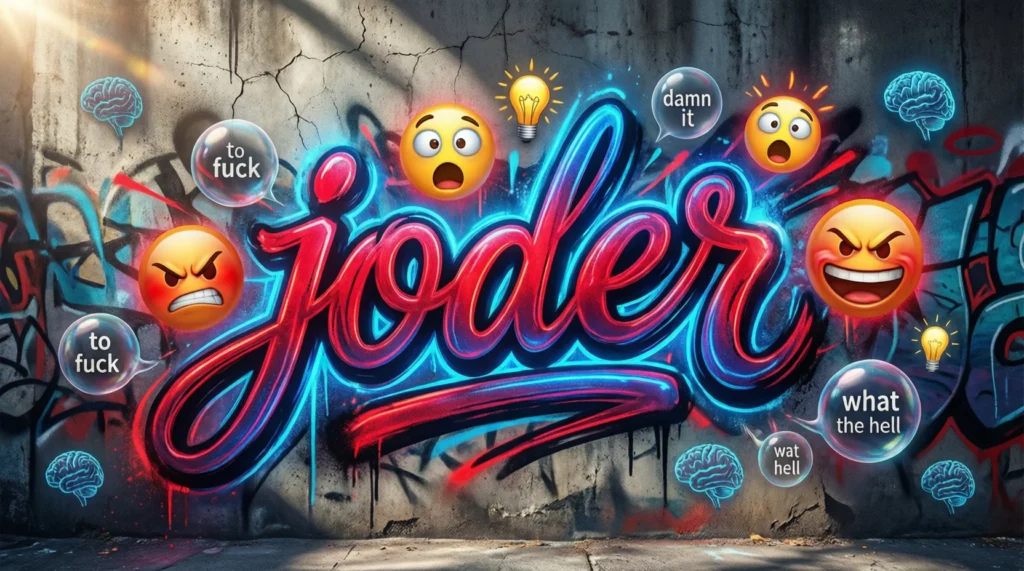
Joder is a Spanish vulgar verb that literally means to have sex, but it is widely used as an expletive to express frustration, surprise, anger, annoyance, or intensity depending on context and tone.
If you’ve ever watched Spanish movies, listened to music, or spent time in Spain or Latin America, you may have come across the word joder. This word is one of the most versatile, commonly used, and colorful words in Spanish, but it is also considered vulgar, which makes understanding its meaning, tone, and context crucial.
In this article, you’ll learn what joder means in Spanish, its origins, literal and slang uses, regional differences, emotional tones, examples in real-life conversation, polite alternatives, and mistakes learners should avoid. By the end, you will fully understand this iconic Spanish term.
Literal Meaning of Joder
Originally, joder literally refers to sexual intercourse.
Example:
Ellos van a joder
They are going to have sex
Joder as an Expletive or Curse Word
In Spain and some Latin American countries, joder is the equivalent of the English f* or damn, depending on intensity.
Examples:
- ¡Joder!
F***! / Damn! - ¡Joder, qué calor!
F***, it’s so hot! - No me jodas
Don’t f*** with me / You’ve got to be kidding me
Notice how context, tone, and body language determine the strength and meaning.
Joder to Express Frustration
One of the most common uses of joder is frustration.
Example:
¡Joder! Perdí mi cartera
Damn! I lost my wallet
Here it’s an emotional release similar to saying “ugh” or “damn” in English.
Joder to Express Surprise or Shock
Joder can also indicate astonishment or disbelief.
Example:
¡Joder! No me lo puedo creer
F***! I can’t believe it
Tone: Shocked, emphatic, casual among friends
Joder to Express Anger or Annoyance
When angry, joder intensifies complaints.
Example:
¡Joder, siempre llegas tarde!
F***, you’re always late!
In this usage, it can be quite strong and potentially rude if said to someone not familiar.
Joder as an Intensifier
Joder is often added to adjectives or verbs to intensify meaning.
Example:
Es jodidamente difícil
It’s f***ing difficult
No me jodas con eso
Don’t f*** me with that / Don’t mess with me about that
This shows the word’s versatility.
Joder in Phrases
Some common phrases with joder include:
- Me cago en la joder – Very strong curse, literally “I sh*t on…”
- ¡Vete a joder! – Go f*** yourself
- Joderse – To get screwed over or mess up
Example:
Me jodí con el examen
I screwed up the exam / I got screwed on the test
Emotional Tone of Joder
Tone is everything with joder.
- Angry tone: Complaint or insult
- Playful tone: Teasing among friends
- Shocked tone: Surprise or disbelief
Depending on your delivery, joder can range from mildly informal to highly offensive.
Joder in Spanish Speaking Countries
- Spain: Extremely common and versatile; used in nearly all informal settings.
- Mexico & Latin America: Understood but less frequently used; regional slang may replace it.
- Argentina: Less frequent; similar expressions may be used instead.
Spain is the cultural epicenter of joder usage.
Can Non-Spanish Speakers Use Joder?
Generally, it’s not recommended to use joder unless you are confident with the tone, audience, and context.
It can easily offend strangers, coworkers, or elders. Listening and understanding is safer than speaking it.
Joder vs Mierda vs Carajo
Comparison table:
| Word | Meaning | Tone | Vulgarity |
|---|---|---|---|
| Joder | F*** / screw / damn | Frustration, anger, surprise | Strong |
| Mierda | Sh*t / crap | Frustration, disappointment | Moderate |
| Carajo | Damn / hell | Annoyance, surprise | Moderate-Strong |
It is more versatile than the others and often more intense.
Joder in Music and Pop Culture
Joder appears in songs, movies, and social media in Spain, giving it cultural flavor.
It conveys emotion naturally, often humor or rebellion.
Pronunciation of Joder
Joder is pronounced:
ho-DEHR
The “j” is a throaty Spanish sound (like Scottish “loch”), and the stress is on the second syllable.
Polite Alternatives to Joder
If you want to avoid vulgarity:
- ¡Caramba! – Gosh!
- ¡Vaya! – Wow! / Oh man!
- ¡Rayos! – Darn!
- ¡Diablos! – Heck! / Darn!
These convey similar emotion without being offensive.
Common Mistakes Learners Make
- Using joder with strangers or in formal settings
- Misjudging tone and offending someone
- Overusing it in casual conversation
- Assuming it’s the same everywhere in Latin America
FAQs
Is joder offensive?
Yes, it is considered vulgar in most contexts.
Can joder be used in all Spanish speaking countries?
Yes, but usage frequency and intensity vary.
What is the polite alternative to joder?
Caramba, vaya, rayos, diablos are safe alternatives.
Is joder used in movies and songs?
Yes, especially in Spain, often to convey strong emotions.
Can joder mean “screw up”?
Yes, in reflexive form joderse, it can mean to mess up or get screwed over.
Is joder the same as f* in English?**
It is similar in intensity and flexibility but culturally Spanish.
How do you pronounce joder?
It is pronounced ho-DEHR, with a throaty “j” and stress on the second syllable.
Conclusion
So what does joder mean in Spanish? Joder is a versatile, strong, and highly expressive word that can mean to have sex, screw up, annoy, or simply emphasize frustration, surprise, or intensity depending on tone and context. While it is common in Spain and some Latin American countries, it is considered vulgar and should be used carefully, especially by non native speakers.
Understanding joder is essential for comprehension of casual Spanish, movies, songs, and real-life conversations, but using it requires cultural awareness and sensitivity.
Discover More Related Articles:
- También in Spanish: Pronunciation, and Common Uses for 2026
- Chingar in Spanish: Meaning, Variations, and Common Phrases for 2026
- What Does Nemo Mean in Latin? Cultural Significance in 2026

David Brown is a content writer and language enthusiast at textroast.com, where he creates insightful articles that explain the meanings of words, slang, and phrases used in everyday life. His work helps readers decode modern language trends, understand cultural expressions, and make sense of online communication with clarity and fun.