
Mañana is a Spanish word that means tomorrow, the morning, or later, depending on context, and it can also reflect a relaxed attitude toward time in some Spanish speaking cultures.
If you are learning Spanish or have heard Spanish speakers use the word mañana, you may think it simply means tomorrow. While that is true, mañana carries much more meaning than most learners realize. Depending on context, tone, and culture, mañana can refer to time, attitude, flexibility, or even a laid back approach to life.
In this complete article, you will learn what mañana means in Spanish, its different uses, cultural significance, common expressions, examples in real life, and how it differs from its English translation.
Basic Meaning of Mañana

The most direct meaning of mañana is tomorrow.
Example
Voy mañana
I am going tomorrow
However, that is only one of its meanings.
Mañana Meaning as Tomorrow
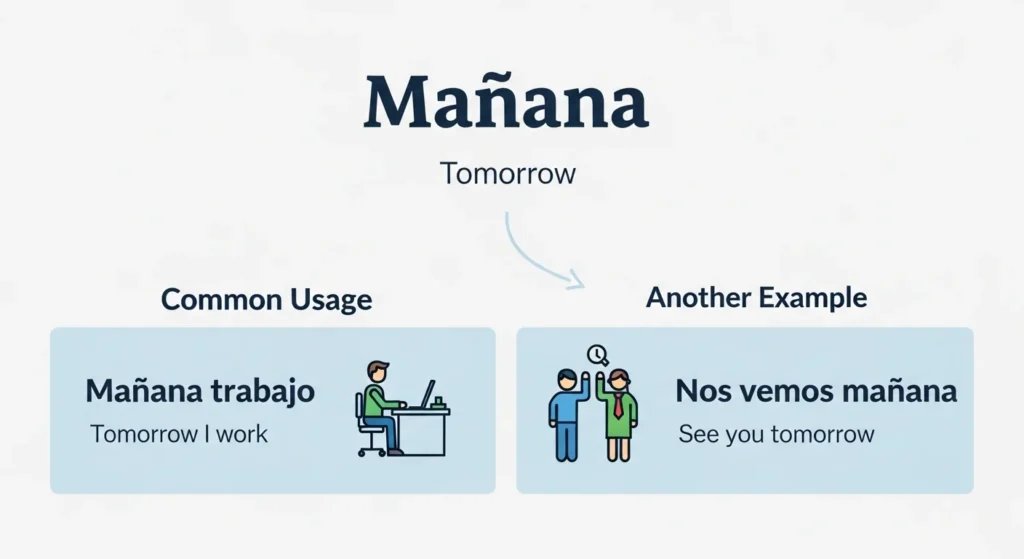
This is the most common and literal use.
Examples
Mañana trabajo
Tomorrow I work
Nos vemos mañana
See you tomorrow
In these cases, mañana clearly refers to the next day.
Mañana Meaning as Morning
Mañana can also mean morning when referring to a time of day.
Examples
Por la mañana
In the morning
Esta mañana
This morning
Context tells you whether it means morning or tomorrow.
Mañana Meaning as Later or Not Now
In casual speech, mañana can mean later or not right now.
Example
Lo hago mañana
I will do it later
In this sense, it does not always mean the next day.
Cultural Meaning of Mañana
In many Spanish speaking cultures, mañana is associated with flexibility rather than strict scheduling.
This does not mean people are lazy. It reflects
Less rigid time pressure
More focus on relationships
Adaptability
The so called mañana mentality emphasizes patience.
The Mañana Stereotype
English speakers often use the phrase mañana culture.
This stereotype suggests things will be done later rather than immediately.
While sometimes humorous, it can be misleading. In professional settings, deadlines are still respected.
Mañana vs Hoy
Hoy means today.
Example
Hoy no puedo mañana sí
I cannot today but tomorrow yes
These words are often used together.
Mañana vs Tarde
Tarde means afternoon or late.
Mañana refers only to
Morning
Tomorrow
They are not interchangeable.
Pronunciation of Mañana
Mañana is pronounced
ma NYA na
The ñ makes a ny sound like in canyon.
This sound is essential for correct pronunciation.
Why the Ñ Matters in Mañana
Without the ñ the word changes meaning.
Mana means something completely different.
Always include the ñ when writing.
Common Expressions With Mañana
Mañana is used in many everyday expressions.
Hasta mañana
See you tomorrow
De la mañana a la noche
From morning to night
Mañana mismo
Tomorrow for sure
Por la mañana temprano
Early in the morning
Emotional Tone of Mañana
The tone of mañana depends on context.
Neutral
Simply referring to time
Relaxed
No urgency
Avoidant
Postponing something
Listening to tone helps understand intention.
Mañana in Written Spanish
Mañana appears in
Messages
Emails
Books
Signs
It is standard Spanish and not slang.
Is Mañana Formal or Informal
Mañana itself is neutral.
It works in
Formal writing
Casual speech
Context defines formality.
Mañana in Professional Contexts
In work environments mañana usually means
The next day
A scheduled time
It rarely means indefinite delay.
Mañana in Songs and Movies
Mañana often appears in music to express
Hope
Waiting
Romance
It symbolizes future possibility.
Common Mistakes With Mañana
Learners often confuse
Tomorrow vs morning
Spelling without ñ
Assuming it always means delay
Context is key.
Mañana Compared to English Tomorrow
Spanish uses mañana for
Tomorrow
Morning
English uses separate words.
This makes mañana more flexible.
Can Mañana Mean Never
Sometimes jokingly.
When someone says mañana repeatedly it can imply delay but not literally never.
Polite Alternatives to Avoid Confusion
If clarity is needed use
Mañana por la mañana
Mañana temprano
Mañana a las nueve
This removes ambiguity.
FAQs
What does mañana mean in Spanish?
Mañana means tomorrow or the morning depending on context.
Does mañana always mean tomorrow?
No it can also mean morning or later.
What is por la mañana?
It means in the morning.
Is mañana formal or informal?
It is neutral and works in all contexts.
Why is ñ important in mañana?
Without ñ the word changes meaning.
Can mañana mean later?
Yes informally it can mean not now.
Is mañana used in professional Spanish?
Yes especially to mean the next day.
Is mañana a stereotype word?
Yes but its cultural meaning is often misunderstood.
Conclusion
So what does mañana mean in Spanish Mañana is a versatile word that can mean tomorrow the morning or later depending on context. Beyond time it reflects cultural attitudes toward flexibility patience and balance.
Understanding the multiple meanings of mañana helps you interpret Spanish conversations accurately and use the word naturally. With context and correct pronunciation mañana becomes an easy and essential part of your Spanish vocabulary.
Discover More Related Articles:
- What Does Shiza Mean in German? Translation and Context in 2026
- What Does GPI Mean in Spanish? Full Cultural Context in 2026

Laura Jackson is a writer at textroast.com, where she creates engaging articles that decode the meanings behind slang, phrases, and everyday expressions. Passionate about language and communication, she makes complex or confusing terms easy to understand, turning learning into a fun and relatable experience for readers around the world.