Have you ever stumbled upon the word maru while watching anime, reading manga, or exploring Japanese culture and wondered what it really means? You’re not alone. While it might seem simple at first, maru carries multiple layers of meaning depending on context.
In Japan, symbols are incredibly importantspacethey convey emotion, judgment, and identity all at once. The humble maru, or circle, is no exception. From marking correct answers in school to adding charm to ship names, this small word has made a big impact.
By the end of this guide, you’ll understand what maru truly means, how it’s used in everyday life, and even how to use it correctly in writing or conversation.
Definition:
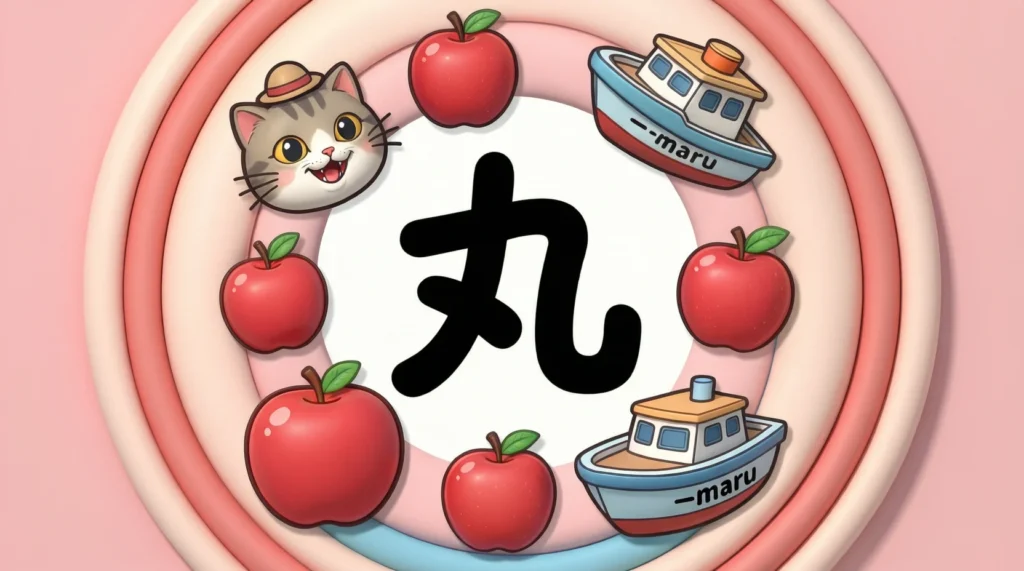
Maru (丸) is a Japanese word that literally means “circle” or “round.” It is commonly used in various contexts, from indicating correctness like a checkmark, forming part of names, to symbolizing completeness or perfection.
Origin of Maru in Japanese
Maru (丸) comes from classical Japanese and Chinese kanji, where circles often represented perfection, unity, and wholeness.
- Kanji: 丸
- Pronunciation: ma-ru
- Literal meaning: circle, round, or sphere
Historically, maru was used in ancient Japan as a suffix for ship names, castles, and even sword names. This usage is tied to the idea of protection and completeness, as the circle is a symbol of safety and perfection in Japanese culture.
Many samurai-era swords and castles still have “maru” in their names, such as Himeji-jo’s Nishi-no-Maru, meaning “Western Circle.”
How Maru Is Used in Modern Japanese
Indicating Correctness
One of the most common uses of maru today is in schools or quizzes:
- ○ (maru) = correct / yes
- × (batsu) = incorrect / no
Example:
| Question | Answer | Teacher Mark |
| 5 + 3 = 8 | 8 | ○ |
| Capital of Japan | Kyoto | × |
Think of maru as the Japanese equivalent of a green checkmark. It’s a quick way to say “right” or “approved.”
In Names
Adding maru as a suffix to names is traditional, especially in ships and boats, but also historically for male names or animals such as pets.
Examples:
- Ship Names: Yamato-maru, Sakura-maru
- Pets: Taro-maru, Koko-maru
Here, maru conveys protection, affection, and completeness.
Symbol of Roundness or Completeness
In daily conversation, maru can describe something round in shape or full.
Examples:
- りんごは丸い (Ringo wa marui) → The apple is round
- 丸い顔 (Marui kao) → A round face
The adjective form marui comes from maru, meaning “round.”
Friendly or Positive Tone
In informal writing, especially in letters, messages, or manga, a maru at the end of a sentence can make it friendlier or softer.
Example:
- 今日も頑張ろう丸! → Let’s do our best today
This usage adds a playful touch without changing the sentence’s meaning.
Negative or Dismissive Usage
While less common, in some playful or sarcastic contexts, maru can exaggerate correctness ironically, similar to a “yeah, right” in English. Tone and context matter a lot here.
Comparison With Related Terms
| Term | Meaning | Usage Example | Tone/Feeling |
| Maru (丸) | Circle, correct, complete, cute | ○ marks a correct answer | Positive / Neutral |
| Batsu (×) | Incorrect, wrong | × marks a wrong answer | Negative / Neutral |
| En (円) | Circle, yen (currency) | 日本円 = Japanese yen | Neutral |
| Marui (丸い) | Round (adjective) | 丸いテーブル = Round table | Neutral |
Alternate Meanings of Maru
Besides its core meanings, maru can appear in:
- Stationery or Gaming: Circles marking selected items
- Japanese Calligraphy: Symbol of harmony or balance
- Emoji Usage: Representing circles or positivity in online chat
Polite or Professional Alternatives
If you want to convey the same meaning as maru but in formal or professional contexts, consider:
- 正しい (tadashii) → correct, proper
- 完璧 (kanpeki) → perfect, complete
- 円形 (enkei) → circular, round-shaped
Example:
- In a school report: “This answer is correct” → この答えは正しいです
- In design: “The table is circular” → テーブルは円形です
Examples of Maru in Different Contexts
| Context | Example (Japanese) | Translation / Meaning | Tone |
| Correct answer | その答えは丸です | That answer is correct | Neutral |
| Pet name | タロ丸 | Taro-maru (cute pet name) | Friendly |
| Ship name | さくら丸 | Sakura-maru (ship name) | Traditional |
| Round object | 丸いボール | Round ball | Neutral |
| Friendly sentence | 今日も頑張ろう丸 | Let’s do our best today | Friendly |
Tips for Using Maru Correctly
- Know the context: literal circle, correctness mark, or suffix for names
- Check the tone: friendly vs formal usage
- Use alternatives for professional writing: 正しい or 完璧
- Think symbolism: Maru often conveys perfection, safety, or friendliness
Conclusion
Maru means circle, correctness, completeness, or friendliness
- Its origins trace back to classical Japanese, Chinese kanji, and samurai-era naming traditions
- Widely used in schools, names, ships, pets, and digital communication
- Context mattersspacetone can range from formal to playful
Professional alternatives like 正しい or 完璧 are safer for formal settings
Understanding maru will help you read Japanese text accurately and give insight into cultural nuance, symbolism, and casual communication.
FAQs
1. What does maru mean in anime?
Indicates correctness, cuteness, or part of character/ship names. Friendly tone is common.
2. Why are Japanese ships called -maru?
Adding maru symbolizes protection and completeness for the vessel.
3. Is maru used for boys’ names?
Yes, traditionally, but today it is more common for pets and fictional characters.
4. How is maru different from en (円)?
Maru is symbolic or emotional; en is literal, meaning circle or currency.
5. Can maru be negative?
Rarely, in a sarcastic tone it can exaggerate correctness ironically.
6. What is the plural of maru?
Japanese nouns generally don’t have plural forms; context determines number.
7. How do I write maru in kanji?
丸
8. Can maru be used in digital communication?
Yes, it is common in chats, messages, and social media to add friendliness.

Laura Jackson is a writer at textroast.com, where she creates engaging articles that decode the meanings behind slang, phrases, and everyday expressions. Passionate about language and communication, she makes complex or confusing terms easy to understand, turning learning into a fun and relatable experience for readers around the world.