In texting, ~ is used to show a soft tone, playfulness, friendliness, or emotional warmth. It can also suggest approximation or a relaxed attitude depending on context.
Texting has its own language. Words are shortened. Symbols are reused. Meanings change based on context. One symbol that often confuses people is the tilde, written as ~. You may see it at the end of a message or between words and wonder what it actually means.
This article explains what ~ means in text messages, how people use it, what tone it shows, and when it should or should not be used.
What the Tilde Means in Texting
The tilde symbol is not used for grammar in texting. It is used for emotion and tone. People add it to messages to make them sound softer or more playful.
When used in text, ~ changes how a message feels, not what it literally says.
Without the tilde
“Okay”
With the tilde
“Okay~”
The second version sounds lighter and friendlier.
Why People Use ~ in Text Messages
Text lacks voice and facial expression. Messages can sound cold without emotion. The tilde helps add feeling.
People use ~ because
• It softens the message
• It adds friendliness
• It removes seriousness
• It shows casual mood
• It feels playful
It is common in informal texting.
Origin of the Tilde in Texting
The tilde existed long before texting. It was used in math and writing to mean approximation. Online chat culture gave it a new meaning.
Early internet forums and messaging apps changed how symbols were used. Over time, ~ became a tone marker rather than a technical symbol.
It is now common in
• Casual chats
• Social media messages
• Online gaming chats
• Friendly conversations
Main Meanings of ~ in Text
The tilde does not have one fixed meaning. Context matters.
1. Soft or Friendly Tone
This is the most common meaning.
Example
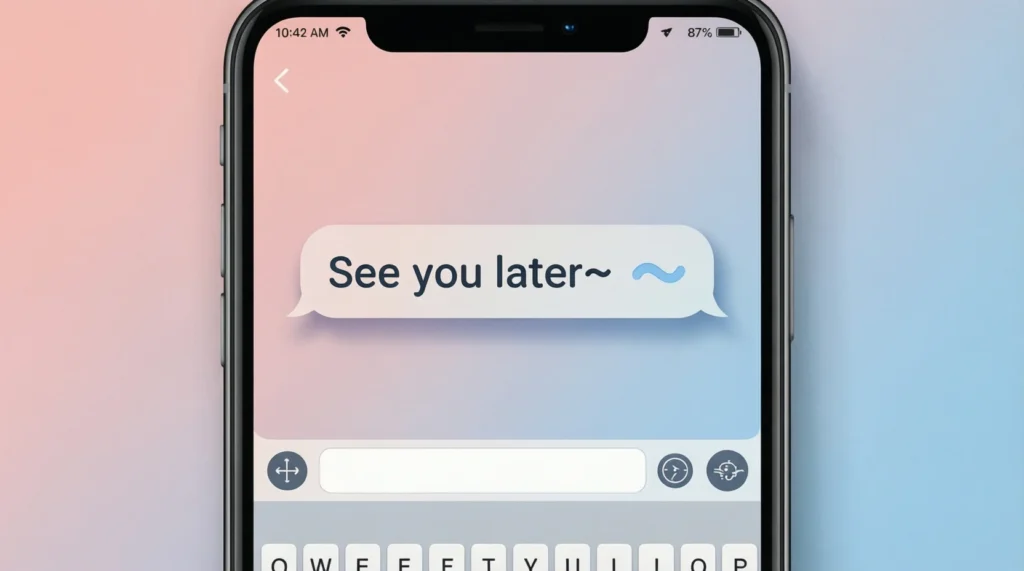
“See you later~”
The tilde makes the message sound warm.
2. Playful or Flirty Mood
The tilde often adds flirtation.
Example
“Miss you~”
It sounds affectionate rather than serious.
3. Relaxed or Casual Feeling
It removes pressure from a statement.
Example
“Maybe tomorrow~”
This feels flexible and calm.
4. Approximation or Vagueness
Sometimes ~ means around or about.
Example
“I will be there at 6~”
This means not exact.
Examples of ~ in Text Messages
Friendly Tone
“Thanks for helping me~”
Shows appreciation with warmth.
Playful Tone
“Stop teasing me~ 😄”
Sounds light and fun.
Flirty Tone
“Good night~ 💕”
Feels affectionate.
Casual Tone
“I guess that works~”
Relaxed response.
Approximate Meaning
“It took 10 minutes~”
Means roughly ten minutes.
How ~ Changes Message Tone
The tilde changes emotional tone more than meaning.
| Without ~ | With ~ | Feeling |
|---|---|---|
| Okay | Okay~ | Softer |
| Sure | Sure~ | Friendly |
| Bye | Bye~ | Warm |
| Fine | Fine~ | Relaxed |
This is why it is popular in casual chats.
When ~ Can Be Misunderstood
Not everyone understands texting symbols. Some people may find ~ confusing or unnecessary.
It may cause confusion when
• Used in professional messages
• Sent to older users
• Overused in one message
• Used without context
Professional example to avoid
“Please send the report today~”
This sounds unprofessional.
Who Commonly Uses ~
The tilde is more common among
• Younger texters
• Social media users
• Online communities
• Anime and gaming fans
It is less common in formal communication.
~ Compared to Similar Symbols
| Symbol | Purpose | Tone |
|---|---|---|
| ~ | Softens tone | Friendly |
| 🙂 | Shows happiness | Positive |
| … | Suggests pause | Thoughtful |
| ! | Shows excitement | Strong |
| ?? | Shows confusion | Direct |
The tilde is subtle compared to emojis.
Using ~ with Emojis
The tilde and emojis often appear together.
Example
“Good luck~ 🍀”
This increases warmth.
Using both can make messages feel more personal.
When You Should Avoid Using ~
Avoid the tilde when
• Writing emails
• Talking to clients
• Sending formal instructions
• Giving serious feedback
It can make messages seem unprofessional.
Polite Alternatives to ~
If you want warmth without symbols, use words.
Alternatives
• Thanks so much
• I appreciate it
• Sounds good
• That works for me
These keep clarity and professionalism.
FAQs
1. What does ~ mean in texting?
It shows a soft, friendly, or playful tone.
2. Is ~ flirty?
It can be, depending on context.
3. Is ~ rude?
No. It usually makes messages gentler.
4. Can ~ mean approximate?
Yes. It can mean about or roughly.
5. Is ~ professional?
No. It is informal.
6. Why do people use ~ instead of emojis?
It feels subtle and less obvious.
7. Do all people understand ~?
Not everyone. Context matters.
8. Can ~ be used at the end of sentences?
Yes. That is the most common use.
Conclusion
The tilde symbol ~ is a tone marker in texting. ~ adds warmth, softness, and playfulness to messages. It helps text feel more human.
It works best in casual chats with people who understand texting culture. Avoid it in formal communication. Understanding symbols like ~ helps you read messages correctly and respond with the right tone.
Discover More Related Articles:
- What Does KMG Mean in Texting? Abbreviation for Everyday Use (2026)
- What Does SA Mean in Text? Examples and Alternatives (2026)

Laura Jackson is a writer at textroast.com, where she creates engaging articles that decode the meanings behind slang, phrases, and everyday expressions. Passionate about language and communication, she makes complex or confusing terms easy to understand, turning learning into a fun and relatable experience for readers around the world.