
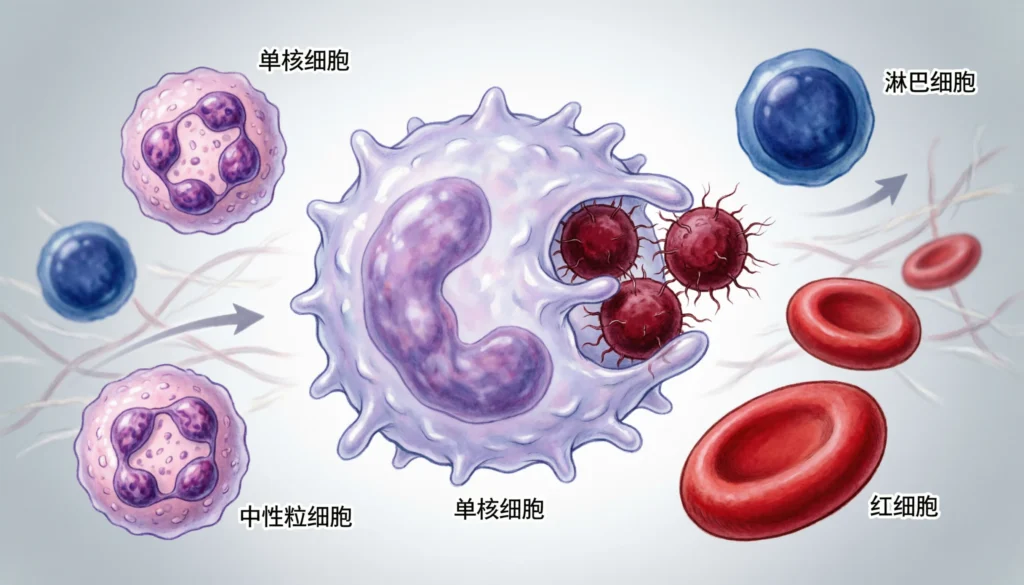
Monocytes are a type of white blood cell (WBC) that help your body fight infections, remove dead cells, and support immune system function. They are part of the body’s first line of defense and play a key role in inflammation and tissue repair.
If you’ve ever had a complete blood count (CBC) test, you might have noticed the term monocytes on your lab report. Understanding what monocytes mean in a blood test can help you interpret your results and gain insight into your immune system and overall health.
This article provides a friendly, clear, and professional guide to monocytes, their role in the body, normal ranges, causes of high or low counts, and what your results may indicate.
What Are Monocytes?
- Type: White blood cell (WBC)
- Origin: Produced in the bone marrow
- Function:
- Engulf and digest bacteria, viruses, and dead or damaged cells (a process called phagocytosis)
- Present antigens to other immune cells to activate the adaptive immune system
- Release signaling molecules (cytokines) that regulate inflammation
Monocytes are large, single-nucleus cells and typically make up 2–8% of your total white blood cells.
Normal Monocyte Count
Monocyte levels are measured in a CBC with differential. Normal ranges may slightly vary depending on the lab, but typically:
- Absolute monocyte count: 0.2–0.8 x 10⁹/L (200–800 cells/µL)
- Percentage of total WBCs: 2–8%
Types of Monocytes
Monocytes can be classified based on their function and surface markers:
- Classical Monocytes:
- Largest group, primary responders to infection
- Intermediate Monocytes:
- Participate in antigen presentation and inflammation
- Non-classical Monocytes:
- Patrol blood vessels and help repair tissue
Causes of High Monocyte Count (Monocytosis)
High monocyte levels can indicate an active immune response or underlying condition. Common causes include:
- Infections: Tuberculosis, viral infections, bacterial infections
- Inflammatory conditions: Rheumatoid arthritis, inflammatory bowel disease
- Blood disorders: Leukemia or myelodysplastic syndromes
- Recovery phase after acute infection – Monocyte counts may rise temporarily
Example: A CBC shows monocytes at 12% of total WBCs. This may suggest your body is fighting an infection or inflammation.
Causes of Low Monocyte Count (Monocytopenia)
Low monocyte levels are less common but can occur due to:
- Bone marrow suppression: From chemotherapy or radiation
- Certain infections: HIV or overwhelming bacterial infections
- Autoimmune diseases: Lupus
- Stress or steroid therapy – Can temporarily reduce monocyte levels
Note: Mild fluctuations are normal and often not a cause for concern.
Interpreting Monocyte Results
When reviewing monocyte results, consider:
- Absolute count vs. percentage: Absolute count is more accurate than percentage alone.
- Other WBCs: Monocyte levels should be interpreted alongside lymphocytes, neutrophils, and other white blood cells.
- Clinical context: Symptoms, recent infections, medications, and chronic conditions matter.
Tip: A single abnormal reading is not usually cause for alarm; trends over time are more meaningful.
Monocytes vs Other White Blood Cells
| White Blood Cell | Function | Typical Percentage |
|---|---|---|
| Neutrophils | Fight bacterial infections | 50–70% |
| Lymphocytes | Produce antibodies, fight viruses | 20–40% |
| Monocytes | Remove debris, fight chronic infection | 2–8% |
| Eosinophils | Combat parasites, allergic reactions | 1–4% |
| Basophils | Release histamine during allergic responses | 0.5–1% |
Tips for Maintaining Healthy Monocyte Levels
- Eat a balanced diet rich in vitamins and minerals
- Stay hydrated and maintain regular exercise
- Get adequate sleep to support immune function
- Manage stress, as chronic stress can affect WBC counts
- Avoid unnecessary exposure to infections or toxins
When to See a Doctor
Consult a healthcare provider if your monocyte count is:
- Significantly high or low without explanation
- Persistent over time
- Accompanied by symptoms like fever, fatigue, unexplained weight loss, or infections
Your doctor may recommend additional tests to identify the underlying cause.
FAQs
What are monocytes in a blood test?
They are a type of white blood cell that fight infections, remove dead cells, and regulate inflammation.
What is a normal monocyte count?
0.2–0.8 x 10⁹/L (200–800 cells/µL) or 2–8% of total WBCs.
What does a high monocyte count mean?
It may indicate infection, inflammation, or certain blood disorders.
What causes low monocyte count?
Bone marrow suppression, certain infections, autoimmune conditions, or steroid use.
Are monocytes the same as lymphocytes?
No. Lymphocytes produce antibodies and fight viruses, while monocytes remove debris and fight chronic infections.
Can monocyte levels change quickly?
Yes, they fluctuate during infection, recovery, stress, or medication use.
How are monocytes measured?
Through a complete blood count (CBC) with differential, reporting absolute numbers and percentages.
Do I need treatment for abnormal monocyte levels?
Not always. Treatment depends on the underlying cause identified by your doctor.
Conclusion
Monocytes are vital white blood cells that play a crucial role in protecting the body, removing debris, and supporting the immune system. Elevated monocyte counts may indicate infection or inflammation, while low counts could reflect issues with the bone marrow or a suppressed immune system.
It is important to understand your monocyte results in the context of a complete blood count (CBC) and your overall health. If your monocyte levels are abnormal or you experience concerning symptoms, you should always consult a healthcare professional for proper evaluation and guidance.
Discover More Related Articles:
- Biblical Meaning of Abomination: Evil and God’s Judgment in 2026
- Israel in Hebrew: Name Meaning, History, and Spiritual Lessons in 2026

Daniel Moore is a content writer and language enthusiast at TextRoast.com, specializing in decoding slang, abbreviations, and trending text expressions. He creates engaging and informative articles that help readers understand the meaning behind everyday words and online communication.