
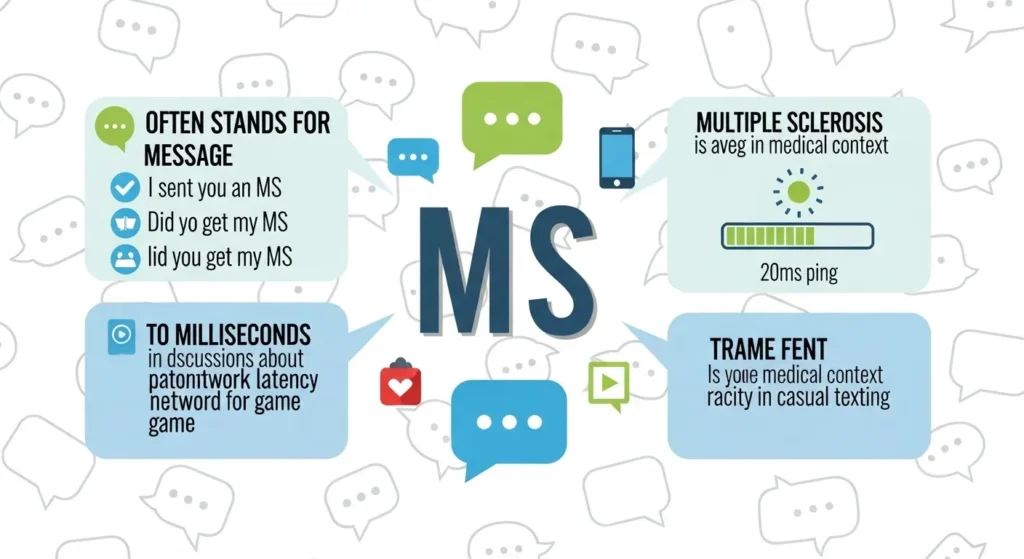
MS (texting slang): MS usually means “miss” in casual texting. It is used to express longing, affection, or emotional absence. Depending on the context, MS can also stand for milliseconds, manuscript, Microsoft, or multiple sclerosis, but “miss” is the most common usage in everyday texting.
Texting has become one of the fastest and most popular ways to communicate in our daily lives. To save time and make messages shorter, people often use abbreviations and slang. While common shortcuts like LOL, BRB, or BTW are widely recognized, some abbreviations, such as MS, can leave many people confused.
If you have seen MS in a text message and wondered whether it is positive, negative, or even technical, this guide will explain everything. You will learn what MS means in texting, its different meanings, tone, usage examples, comparisons with similar abbreviations, alternatives, and tips to use it effectively.
Example:
- “I MS you already 😢”
Meaning: I miss you already.
What Does MS Mean in Text Messages?
In informal texting, MS is most commonly used as a shorthand for “miss.” People shorten words by removing vowels or letters to type faster, especially when sending frequent messages or expressing emotion quickly.
MS is context-dependent, which means the meaning may change depending on who you are talking to and what the conversation is about.
Most Common Meaning: Miss
MS is usually used to express:
- Emotional longing
- Affection for someone
- Missing a person or place
Examples
- “I MS you so much ❤️”
- “MS u already 😢”
- “Gonna MS this place when I leave”
In these examples, MS conveys emotional attachment or sentiment, and emojis often strengthen the message.
Other Meanings of MS
Although “miss” is the most frequent meaning in casual texting, MS can also have several other interpretations depending on the conversation:
1. Milliseconds
In gaming, tech, or technical contexts, MS often refers to milliseconds, usually related to ping, response time, or latency.
Example:
- “Ping is 50 MS”
Meaning: The network delay is 50 milliseconds.
2. Manuscript
In writing, publishing, or academic discussions, MS can mean manuscript.
Example:
- “The MS is ready for review”
Meaning: The manuscript is ready.
3. Multiple Sclerosis
In medical contexts, MS may refer to the autoimmune disease multiple sclerosis.
Example:
- “She was diagnosed with MS”
4. Microsoft
In professional or tech-related conversations, MS can refer to Microsoft.
Example:
- “MS Word keeps crashing”
Tip: Always consider context to understand which meaning is intended.
Origin of MS as Slang
MS comes from the texting trend of vowel removal. People began shortening words to save time and fit character limits in SMS messages. This trend has continued in online messaging, social media, and mobile chats.
Examples of similar shorthand include:
- Thx → Thanks
- Pls → Please
- Msg → Message
“Miss” becomes MS by dropping vowels, creating a short, fast way to express longing or emotional attachment.
Tone and Emotional Meaning of MS
When MS means “miss,” it usually carries an emotional or affectionate tone, but this can vary depending on the context or additional words and emojis.
Tone Variations
- Emotional: “I MS you so much 😢” – shows longing
- Casual: “MS u already” – quick acknowledgment
- Lighthearted: “Gonna MS the party lol” – playful tone
- Neutral: “MS this place” – factual or nostalgic
Unlike abbreviations like LGHT or OK, MS is often emotional and personal rather than neutral.
MS Compared to Similar Texting Abbreviations
| Term | Meaning | Tone |
|---|---|---|
| MS | Miss | Emotional, affectionate |
| Miss | Miss | Clear, direct |
| Miss u | Miss you | Emotional, personal |
| IMY | I miss you | Emotional, personal |
| LGHT | Alright | Neutral, casual |
| OK | Okay | Neutral |
Key difference: MS is shorter and faster than “miss,” but it can be ambiguous without context. Adding emojis or extra words can clarify the meaning.
Is MS Positive or Negative?
MS is generally positive and affectionate when used as “miss.” It is rarely negative or rude, but confusion can occur if:
- The context is unclear
- The abbreviation is used in technical or professional discussions
- Emojis or words that clarify tone are missing
Adding a heart, smile, or sad emoji can make the message warmer and more understandable.
When Should You Avoid Using MS?
Because MS has multiple meanings, it is not always suitable for every conversation. Misunderstanding is common when context is missing.
Avoid Using MS in:
- Professional emails
- Academic papers or writing
- Technical discussions without clarification
- Serious or sensitive conversations
Professional Alternatives
Instead of using MS, you can write:
- Miss
- I miss you
- Missing
- Milliseconds (when relevant)
- Manuscript or Microsoft (fully spelled out)
Writing full words prevents confusion and ensures clarity.
Real-Life Examples of MS in Texting
| Message | Meaning | Tone |
|---|---|---|
| “I MS you” | I miss you | Emotional, affectionate |
| “MS u already 😢” | Miss you already | Emotional, affectionate |
| “Ping is 30 MS” | Milliseconds | Technical |
| “Working on the MS” | Manuscript | Professional |
| “MS Word is freezing” | Microsoft | Technical |
Common Mistakes When Using MS
- Using MS without context, which can confuse the recipient
- Using it in professional or academic messages
- Assuming everyone knows the intended meaning
- Overusing MS in serious or emotional conversations
Tip: When clarity is important, it is better to write the full word.
Tips for Using MS Correctly
- Use MS only in casual chats
- Add emojis to clarify tone
- Avoid using it in professional or technical conversations without explanation
- Consider the context to prevent misunderstanding
- Use full words if the conversation is formal or serious
FAQs
- What does MS mean in texting?
Most commonly, MS means miss. - Is MS slang?
Yes, it is informal texting slang. - Can MS mean something else?
Yes. Depending on context, MS can mean milliseconds, multiple sclerosis, manuscript, or Microsoft. - Is MS emotional?
When it means miss, it is usually emotional and affectionate. - Is MS rude?
No, MS is generally positive or neutral. - Who uses MS in texting?
Mostly younger users and people familiar with texting slang. - Should I use MS at work?
No. Use full words like “miss,” “milliseconds,” or “manuscript” to avoid confusion. - How can I avoid misunderstandings with MS?
Add context, emojis, or write the full word when clarity is required.
Conclusion
MS is a short, casual texting abbreviation most commonly used to mean “miss,” making it a quick and convenient way to express emotion in informal conversations. However, depending on the context, MS can also stand for milliseconds, manuscript, Microsoft, or multiple sclerosis.
The key points to remember are that MS usually conveys a feeling of longing or affection in casual texting, context is essential for accurate interpretation, and it is best avoided in professional or formal communication. Adding emojis or extra words can help clarify the intended meaning and prevent misunderstandings.
Discover More Related Articles:
- What Does ) Mean in Texting? How It’s Used in Messages & Chats (2026)
- What Does FOMF Mean in Text? Here’s What It Really Means in Texts (2026)

David Brown is a content writer and language enthusiast at textroast.com, where he creates insightful articles that explain the meanings of words, slang, and phrases used in everyday life. His work helps readers decode modern language trends, understand cultural expressions, and make sense of online communication with clarity and fun.