
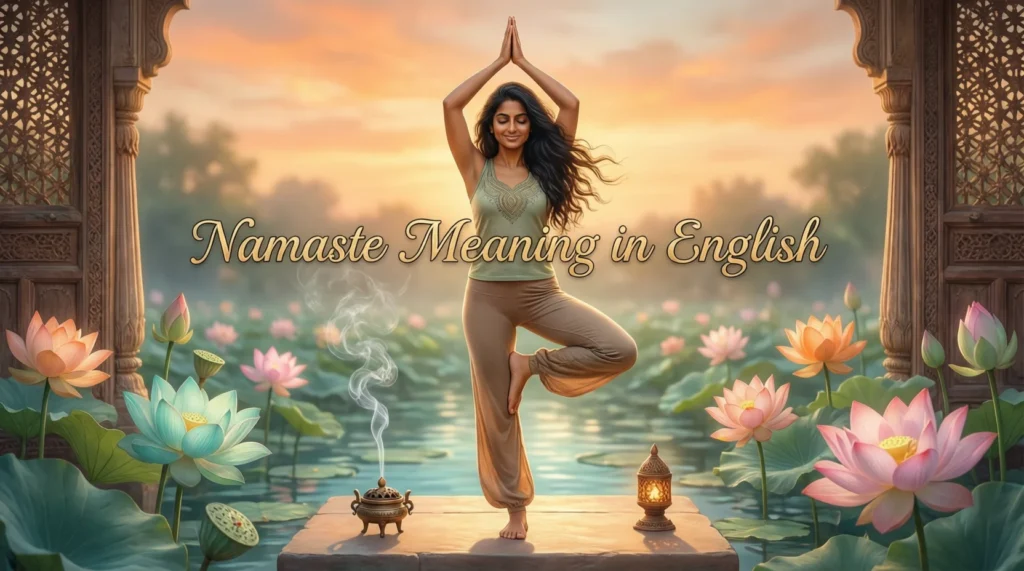
Have you ever walked into a yoga class, met someone in India, or scrolled through social media posts about mindfulness, only to see people say “Namaste”? You might have wondered: what does this word really mean in English?
While it’s often casually translated as “hello,” the truth is that Namaste carries layers of cultural, spiritual, and social significance. Understanding it fully is more than just memorizing a translationspaceit’s about appreciating a gesture that conveys respect, acknowledgment, and a recognition of shared humanity.
In this article, we’ll break down everything you need to know about Namaste: its origin, cultural significance, real-world usage, examples, comparisons with other greetings, polite alternatives, and more. By the end, you’ll not only know what it means but also when and how to use it appropriately.
Definition:
Namaste is a respectful greeting originating from India, often translated into English as “I bow to you” or “The divine in me honors the divine in you.” It is commonly used both as a hello and a goodbye, accompanied by a slight bow and hands pressed together in a prayer-like gesture.
Origin of Namaste
Historical Roots
Namaste comes from the Sanskrit words:
- Nama – meaning bow, obeisance, or salutation
- Te – meaning to you
Put together, it literally means “I bow to you.”
This greeting has been a part of Indian culture for thousands of years, traditionally used in Hindu, Buddhist, and Jain communities. Beyond just a greeting, it embodies a deep sense of respect, reverence, and spiritual acknowledgment of another person.
Cultural Significance
In India and neighboring countries like Nepal, Namaste is more than a casual hellospaceit is a gesture that signifies:
- Respect for elders and teachers
- Politeness in social interactions
- Spiritual recognition of the divine or life force in others
It is often paired with Anjali Mudra, the prayer-like gesture of hands pressed together near the heart, accompanied by a gentle bow. This combination visually reinforces the message of respect and mindfulness.
Why Namaste Became Popular Globally
Namaste has spread worldwide, largely due to:
- Yoga and Meditation Culture
Yoga instructors and practitioners use Namaste at the beginning and end of sessions as a sign of respect and gratitude. - Spiritual and Mindfulness Movements
In Western wellness communities, Namaste is seen as a mindful, conscious greeting that goes beyond casual “hello.” - Cultural Exchange and Travel
International travelers to India or South Asia often adopt the greeting, appreciating its respectful tone.
How Namaste Is Used in Real Life
The context of Namaste can be friendly, formal, or spiritual. Here’s a breakdown:
| Tone / Context | Meaning in English | Usage Example |
| Friendly | Hello / Hi | “Namaste! It’s so great to see you today!” |
| Formal / Professional | Respectful greeting | “Namaste, sir. Thank you for joining the meeting.” |
| Spiritual | Acknowledging the divine in others | “Namaste. May the light within you shine brightly.” |
| Goodbye | Farewell | “It was lovely meeting youspaceNamaste!” |
| Casual | Neutral greeting | “Namaste, everyone!” |
Key Notes on Usage
- Traditionally,human beings may slightly bow their heads while joining hands.
- In informal Western contexts, a simple Namaste without a gesture is also accepted.
- Avoid overusing it sarcastically or in dismissive tonesspaceit can feel disrespectful.
Examples of Namaste in Context
Friendly Tone
- “Namaste, Rina! How was your weekend?”
(Here, it’s just a polite, friendly greeting.)
Neutral or Formal Tone
- “Namaste, Dr. Patel. It’s an honor to meet you today.”
(Used in professional or formal settings.)
Spiritual Tone
- “Namaste. I see the light in you and honor it.”
(Used in yoga, meditation, or spiritual gatherings.)
Misused or Dismissive Tone
- “Oh, Namaste… I see you’re back again.”
(Here, the word loses its respectfulness and becomes sarcastic.)
Comparison with Other Greetings
| Greeting | Origin | Tone / Usage | English Equivalent |
| Namaste | India / Nepal | Respectful, spiritual | I bow to you |
| Hello | English | Casual, friendly | Hi, greetings |
| Salaam | Arabic / Islamic cultures | Respectful | Peace be upon you |
| Konnichiwa | Japan | Neutral / casual | Good afternoon |
| Shalom | Hebrew | Respectful / friendly | Peace |
Alternate Meanings of Namaste
Though its primary meaning is “I bow to you”, some sources interpret Namaste as:
- “The divine in me honors the divine in you”
- “I honor the soul within you”
- A symbolic gesture of humility, gratitude, or reverence
These interpretations are more common in spiritual or yoga circles than in everyday casual use.
Polite and Professional Alternatives to Namaste
If you want to convey respect but not use Namaste, you can try:
- “Good morning / afternoon / evening”
- “Greetings”
- “Respectfully” (in emails)
- “Hello” (formal)
These alternatives maintain politeness in professional or cross-cultural settings without invoking spiritual meaning.
Practical Tips for Using Namaste Correctly
- Combine the verbal greeting with a gentle bow for authenticity.
- Avoid overusing it in contexts where it may seem forced or insincere.
- Recognize the setting space use it in yoga classes, formal meetings, or cultural exchanges.
- Pair it with a smile to reinforce friendliness and respect.
Conclusion
Namaste is far more than a simple “hello.” It is a multi-layered greeting expressing respect, acknowledgment, and even spiritual recognition. Understanding its origin, tone, and appropriate usage can help you:
- Use it authentically in social, professional, and spiritual contexts.
- Avoid cultural missteps or misinterpretations.
- Appreciate its deeper meaning beyond casual greetings.
Whether in India, a yoga studio, or a mindful online community, saying Namaste is a small gesture with a big impact honoring both others and yourself.
FAQs
1. Is Namaste only used in India?
No. While its origin is Indian, it is widely used globally in yoga, mindfulness, and spiritual communities.
2. What is the correct gesture for Namaste?
Hands pressed together in front of the chest, fingers pointing upwards, with a slight bow of the head.
3. Can I say Namaste in casual conversations?
Yes, it’s acceptable among friends or informal settings, especially if the other person understands it.
4. Is Namaste a religious greeting?
Not necessarily. While it has roots in Hinduism and other Indian religions, it can be used culturally or socially without religious intent.
5. What does Namaste mean in English in spiritual contexts?
“It recognizes the divine within each person, honoring their soul and consciousness.”
6. Can I use Namaste in emails or messages?
Yes. Many professionals use it to convey respect, especially in India or in cross-cultural communication.
7. Is it okay to use Namaste sarcastically?
It’s not recommended. Using it sarcastically can be disrespectful, as it is meant to show reverence.
8. What is the difference between Namaste and Namaskar?
Both are respectful Indian greetings. Namaskar is slightly more formal, while Namaste is widely used in everyday interactions.

Laura Jackson is a writer at textroast.com, where she creates engaging articles that decode the meanings behind slang, phrases, and everyday expressions. Passionate about language and communication, she makes complex or confusing terms easy to understand, turning learning into a fun and relatable experience for readers around the world.