

Nena is a Spanish word that literally means little girl but is commonly used as a term of affection similar to baby sweetie or darling depending on context.
If you have ever heard Spanish speakers use the word nena you may have wondered what does nena mean in Spanish and it is romantic friendly or even offensive. This short word carries different meanings depending on context tone and relationship between speakers which makes it especially interesting for language learners.
In this full article you will learn the literal meaning of nena how it is used in everyday conversation cultural nuances across Spanish speaking countries when it is affectionate and when it should be avoided. By the end you will clearly understand how nena works in real Spanish.
Literal Meaning of Nena in Spanish
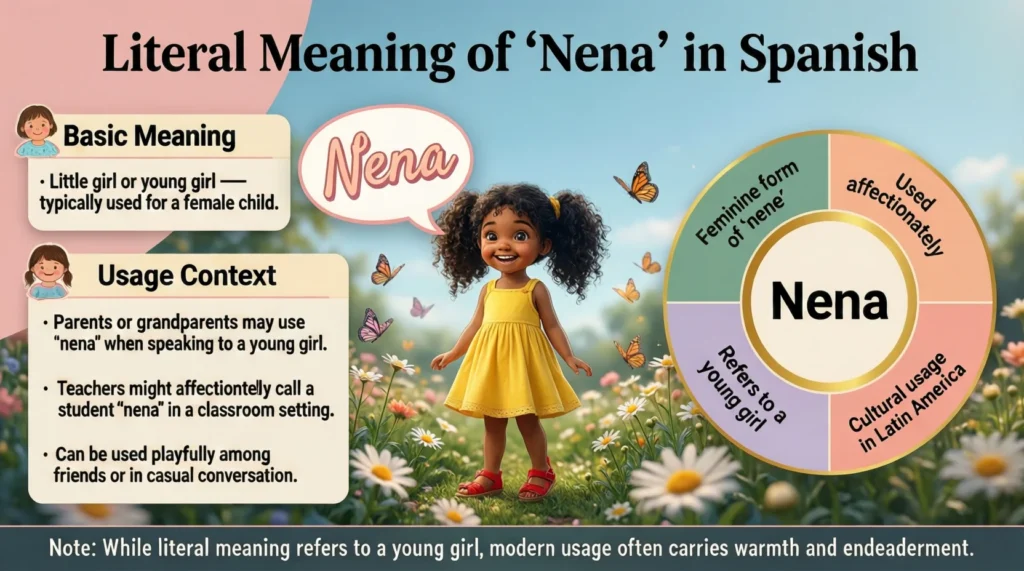
The word nena is the feminine form of nene.
Literal translation
Nena means little girl or young girl.
In its basic sense it refers to a female child. For example parents grandparents or teachers may use nena when talking to a young girl.
However this literal meaning is only one part of how the word is used today.
What Nena Really Means in Everyday Spanish
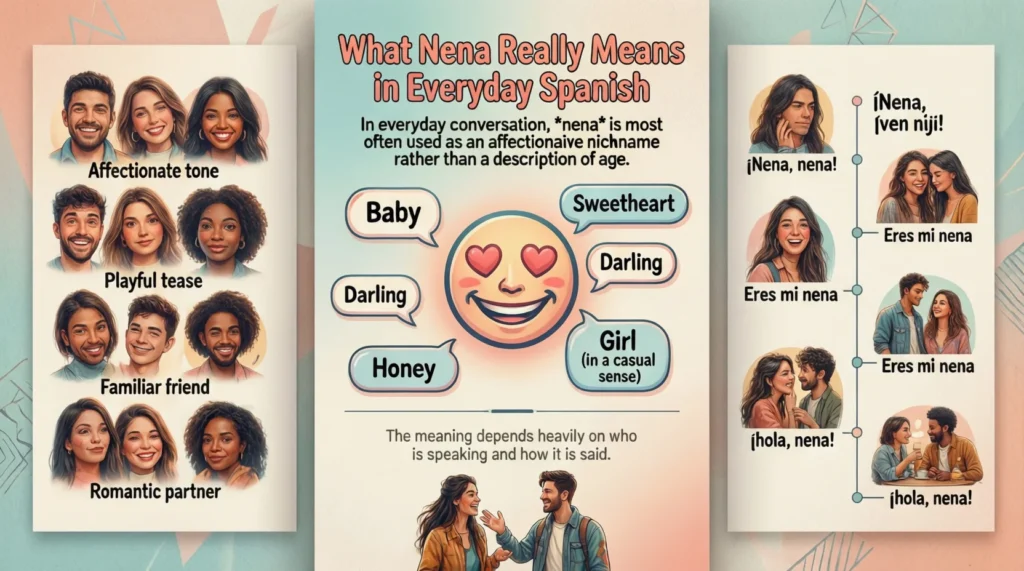
In everyday conversation nena is most often used as an affectionate nickname rather than a description of age.
It can mean
Baby
Sweetheart
Darling
Honey
Girl in a casual sense
The meaning depends heavily on who is speaking and how it is said.
Emotional Tone of Nena
Tone is everything with this word.
Affectionate tone
Sounds warm loving and caring.
Playful tone
Sounds light casual and friendly.
Romantic tone
Sounds intimate and flirty.
Condescending tone
Can sound rude or dismissive if said sharply.
Understanding tone helps you understand the true meaning.
Common Ways Nena Is Used
As a Term of Endearment
This is the most common usage.
Couples often use nena as a loving nickname.
Example
Buenos días nena
Good morning baby
Toward Children
Parents and relatives commonly call young girls nena.
Example
Ven aquí nena
Come here little girl
Among Friends
Friends may use nena casually similar to girl in English.
Example
Oye nena vamos
Hey girl lets go
In Flirting or Romance
In romantic contexts nena can sound charming and intimate.
Example
Tranquila nena todo está bien
Relax baby everything is fine
Is Nena Always Romantic
No nena is not always romantic.
It can be
Parental
Friendly
Playful
Romantic
The relationship between speakers defines the meaning.
When Nena Can Sound Rude
Nena can feel offensive if used incorrectly.
It may sound disrespectful when
Said to a stranger
Used in a professional setting
Spoken in a condescending tone
For example saying escucha nena to a woman you do not know can sound patronizing.
Cultural Use of Nena by Region
Mexico
Common and affectionate. Used with children partners and friends.
Spain
Used but sometimes sounds informal or playful rather than romantic.
Argentina
Frequently used in casual speech especially among couples.
Caribbean Countries
Often used flirtatiously or affectionately.
Cultural comfort with the word varies but it is widely understood.
Nena vs Niña
Although both refer to females they are not the same.
| Word | Meaning | Usage |
|---|---|---|
| Nena | Little girl or affectionate nickname | Informal emotional |
| Niña | Girl child | Neutral literal |
Niña is more neutral while nena feels more personal.
Nena vs Bebé
Bebé is another common term of affection.
Nena feels more casual and playful
Bebé feels more intimate and romantic
Both are common in relationships.
Nena in Music and Pop Culture
Nena appears frequently in
Spanish songs
Latin pop lyrics
Reggaeton and bachata
Movies and TV shows
In music it almost always carries a romantic or flirty meaning.
Pronunciation of Nena
Nena is pronounced
NEH nah
Both syllables are soft and evenly stressed.
Is Nena Formal or Informal
Nena is informal.
It should not be used in
Workplace communication
Professional emails
Academic settings
Speaking to authority figures
It belongs to casual spoken language.
Can Language Learners Use Nena
Yes but carefully.
If you are learning Spanish
Use it with friends or partners
Avoid strangers
Listen to native usage first
Using it incorrectly can feel awkward or disrespectful.
Alternate Meanings of Nena
In some contexts nena can simply mean girl without affection especially in casual storytelling.
Example
La nena estaba jugando
The girl was playing
But even here it sounds informal.
Polite Alternatives to Nena
If you want safer options try
Amiga
Señorita
Cariño
Querida
These are more flexible and polite depending on context.
Examples of Nena in Context
Affectionate
Te extraño nena
I miss you baby
Parental
Duerme bien nena
Sleep well little one
Friendly
Vamos nena apúrate
Come on girl hurry up
Negative tone
Escucha nena ya basta
Listen girl thats enough
This can sound rude
Common Misunderstandings About Nena
Nena does not always mean child
Nena is not automatically romantic
Nena can be rude in the wrong tone
Nena is not formal Spanish
Understanding context avoids confusion.
Comparison With English Words
Nena is similar to
Baby
Sweetie
Honey
Girl
Just like in English these words can sound loving or insulting depending on tone.
FAQs
What does nena mean in Spanish?
It means little girl or an affectionate nickname like baby.
Is nena romantic?
It can be romantic but not always.
Can I call a woman nena?
Only if you know her well.
Is nena used for children?
Yes very commonly.
Is nena rude?
It can be if used incorrectly.
Is nena formal Spanish?
No it is informal.
Is nena used in songs?
Yes often romantically.
What is the masculine form of nena?
Nene.
Conclusion
So what does nena mean in Spanish While it literally means little girl its real meaning depends on context tone and relationship. Nena is commonly used as a term of affection meaning baby sweetheart or darling but it can also sound rude or patronizing if used carelessly.
Understanding how nena works helps you sound more natural respectful and confident in Spanish. Like many affectionate words its power comes from who says it and how it is said.
Discover More Related Articles:
- What Does Olé Mean in Spanish? Why Fans Shout It in 2026
- What Does Bella Ciao Mean in English Full Cultural Explanation in 2026
- What Does a Draw Mean in Boxing? How It Happens in 2026

Laura Jackson is a writer at textroast.com, where she creates engaging articles that decode the meanings behind slang, phrases, and everyday expressions. Passionate about language and communication, she makes complex or confusing terms easy to understand, turning learning into a fun and relatable experience for readers around the world.