
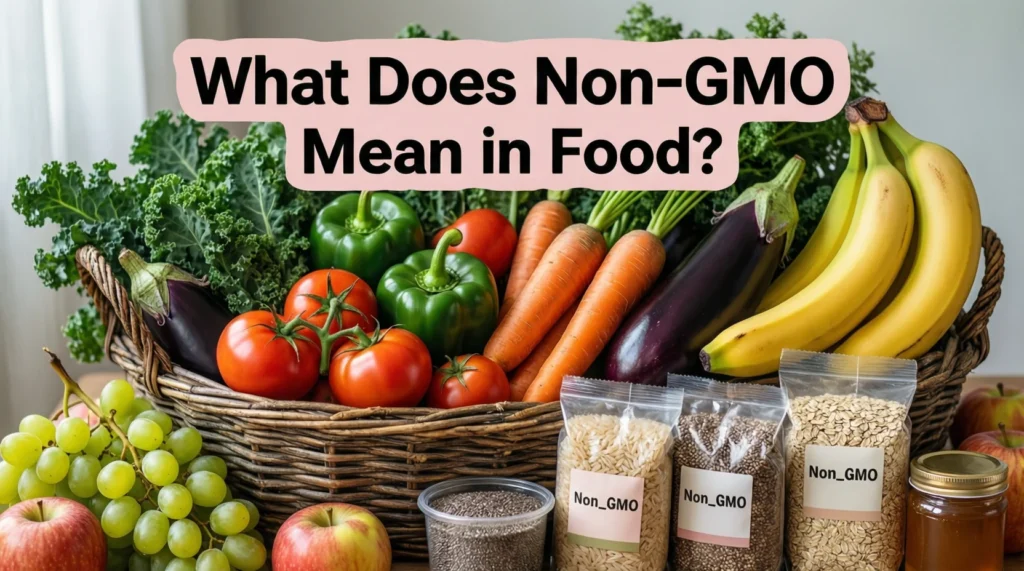
If you’ve ever noticed labels on your groceries stating “Non-GMO Project Verified” or “Made without GMOs,” you might have wondered what it truly means, why it matters, and how it compares to other labels like organic. This article will break it all down for you in a friendly, informative way. What Does Non-GMO Mean in Food?
Definition
Non-GMO in food refers to products that are made without ingredients derived from genetically modified organisms (GMOs). In other words, non-GMO foods come from plants or animals whose genetic material has not been artificially altered in a lab, ensuring a more “natural” or traditional form of production.
The Origin of the Non-GMO Label
The concept of Non-GMO food labeling emerged in the late 1990s and early 2000s, coinciding with the rise of genetically engineered crops like corn, soy, and canola. Consumers began demanding transparency about how their food was grown, creating a market for certified non-GMO products.
Key milestones:
- 1994 – First genetically modified food approved in the U.S. (Flavr Savr tomato)
- 2000s – Non-GMO Project founded, offering third-party verification
- 2010s – Surge in consumer demand for non-GMO products in supermarkets
The label became a symbol of natural, minimally manipulated food, giving consumers confidence in their choices.
Why Non-GMO Foods Are Popular
Non-GMO foods are popular for several reasons:
- Health concerns: Some consumers worry about potential long-term effects of GMOs
- Environmental impact: Non-GMO farming often uses less chemical intervention and supports biodiversity
- Ethical reasons: Preference for traditional farming practices
- Transparency: Shoppers want to know exactly what’s in their food
Fun fact:
In the U.S., about 39% of grocery shoppers actively seek non-GMO products, highlighting the strong consumer trend toward “clean eating.
How Non-GMO Labels Are Verified
Not every “Non-GMO” label is equal. Verification usually involves:
- Third-party certifications such as the Non-GMO Project Verified
- Testing ingredients for major GMO crops like soy, corn, and canola
- Supply chain checks to ensure no cross-contamination during production
Example Table: Common Non-GMO Labels
| Label / Seal | Meaning | Notes |
| Non-GMO Project Verified | Product is tested and verified as non-GMO | Most widely recognized in the U.S. |
| USDA Organic | Automatically prohibits GMOs | Focused on organic practices too |
| GMO-Free / No GMOs | Manufacturer claim | May not be third-party verified |
Examples of Non-GMO Foods
Here’s how non-GMO labeling appears in real life:
- Friendly/Positive Context
- “I love this almond milk! It’s Non-GMO Project Verified, so I feel safe knowing it’s free from genetically modified soy or almonds.” 🌱
- “I love this almond milk! It’s Non-GMO Project Verified, so I feel safe knowing it’s free from genetically modified soy or almonds.” 🌱
- Neutral Context
- “This cornmeal is labeled non-GMO. It’s a simple way to avoid GMO corn without worrying too much about other factors.”
- “This cornmeal is labeled non-GMO. It’s a simple way to avoid GMO corn without worrying too much about other factors.”
- Negative / Skeptical Context
- “Non-GMO label? Honestly, it’s mostly marketing. The science behind GMOs is generally safe.”
- “Non-GMO label? Honestly, it’s mostly marketing. The science behind GMOs is generally safe.”
Examples of Non-GMO Ingredients
- Corn, soy, canola (if non-GMO)
- Vegetables like carrots, spinach, lettuce
- Fruits such as apples and strawberries
- Animal products from non-GMO-fed livestock
Comparison With Related Terms
It’s easy to confuse non-GMO with other food labels.
| Term | Meaning | Difference from Non-GMO |
| Organic | Grown without synthetic pesticides, fertilizers, and GMOs | Organic automatically prohibits GMOs |
| GMO-Free | Claim that no GMOs are used | May not be third-party verified |
| Natural | Minimally processed | Does not guarantee non-GMO |
| Kosher / Halal | Religious dietary standards | Unrelated to GMOs |
Tip: If you want to be sure, look for Non-GMO Project Verified, as it provides third-party confirmation.
Alternate Meanings of Non-GMO
While primarily used in food, the term non-GMO may occasionally appear in:
- Supplements such as vitamins or protein powders
- Animal feed labeled non-GMO to attract ethical consumers
- Seeds / Plants for gardening or heirloom planting
Polite and Professional Alternatives
When describing non-GMO foods in professional writing, you can use:
- “Produced without genetically engineered ingredients”
- “Grown using traditional breeding methods”
- “Free from genetic modification”
These alternatives avoid marketing-heavy language while remaining clear and professional.
Common Misconceptions About Non-GMO Foods
- Misconception 1: Non-GMO = organic
- Reality: Non-GMO foods can still be grown conventionally with pesticides
- Reality: Non-GMO foods can still be grown conventionally with pesticides
- Misconception 2: GMOs are unsafe
- Reality: Most scientific research shows GMOs are safe for human consumption
- Reality: Most scientific research shows GMOs are safe for human consumption
- Misconception 3: Non-GMO is healthier
- Reality: Nutritional content may be similar; the main difference is genetic modification status
Practical Tips for Choosing Non-GMO Foods
- Check labels carefully – Look for trusted verification seals
- Know the common GMO crops – Corn, soy, canola, sugar beets, papaya
- Buy organic when possible – Organic certification ensures non-GMO compliance
- Support local farmers – Farmers markets often offer non-GMO produce
- Consider your budget – Non-GMO can be more expensive, so prioritize key foods
Conclusion
Non-GMO foods are produced without genetically modified ingredients. In conclusion, the Non-GMO label appeals to consumers who value transparency, tradition, and minimal manipulation in the foods they choose. However, it’s important to remember that Non-GMO does not automatically mean organic or healthier.
When selecting products, look for trusted certifications, educate yourself about common GMO crops, and consider the environmental and ethical impact of your choices. Ultimately, choosing Non-GMO is a personal decision, reflecting your own values and priorities rather than guaranteed health benefits.
FAQs
1. Are non-GMO foods healthier?
Not necessarily. Non-GMO status refers to the genetic origin of ingredients, not overall nutrition.
2. Is organic the same as non-GMO?
Organic foods are automatically non-GMO, but non-GMO foods may not be organic.
3. Can non-GMO foods contain GMOs?
If verified by a trusted third-party, like the Non-GMO Project, the risk is extremely low.
4. Why do people prefer non-GMO foods?
Reasons include health, environmental concerns, ethical farming practices, and transparency.
5. Are non-GMO foods more expensive?
Often, yes. Non-GMO verification and careful supply chains can raise production costs.
6. What foods are commonly GMO?
Corn, soy, canola, sugar beets, papaya, and some zucchini are frequently genetically modified.
7. How can I identify non-GMO foods?
Look for the Non-GMO Project Verified seal, “GMO-Free” claims, or USDA Organic certification.
8. Are non-GMO diets better for the environment?
Potentially. Non-GMO farming may use fewer chemicals and promote biodiversity, but the impact varies.
Discover More About

Daniel Moore is a content writer and language enthusiast at TextRoast.com, specializing in decoding slang, abbreviations, and trending text expressions. He creates engaging and informative articles that help readers understand the meaning behind everyday words and online communication.