
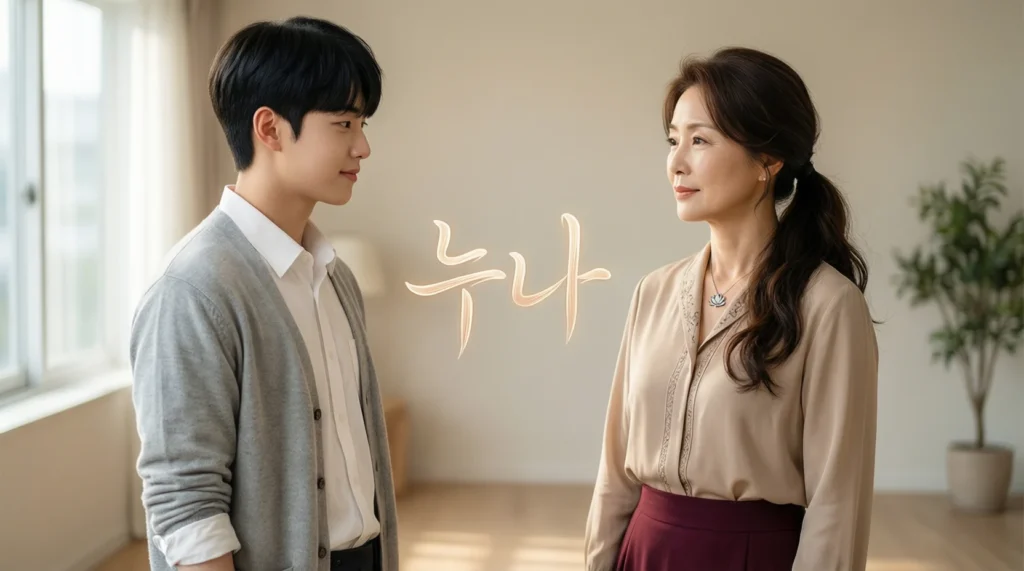
Nuna in Korean means older sister when used by a male speaker to address or refer to a woman who is older than him. It is both a family term and a social honorific used to show respect familiarity and emotional closeness.
If you have watched Korean dramas listened to K pop or interacted with Korean culture online you have probably heard the word nuna many times. It often appears in romantic scenes friendly conversations and even emotional moments which makes people curious about its exact meaning. So what does nuna mean in Korean and why is it so important in Korean language and culture
This article gives you a complete clear and human friendly explanation of the word nuna including its definition cultural role emotional tone correct usage mistakes comparisons examples and a detailed FAQ section exactly as requested.
What Does Nuna Mean Literally
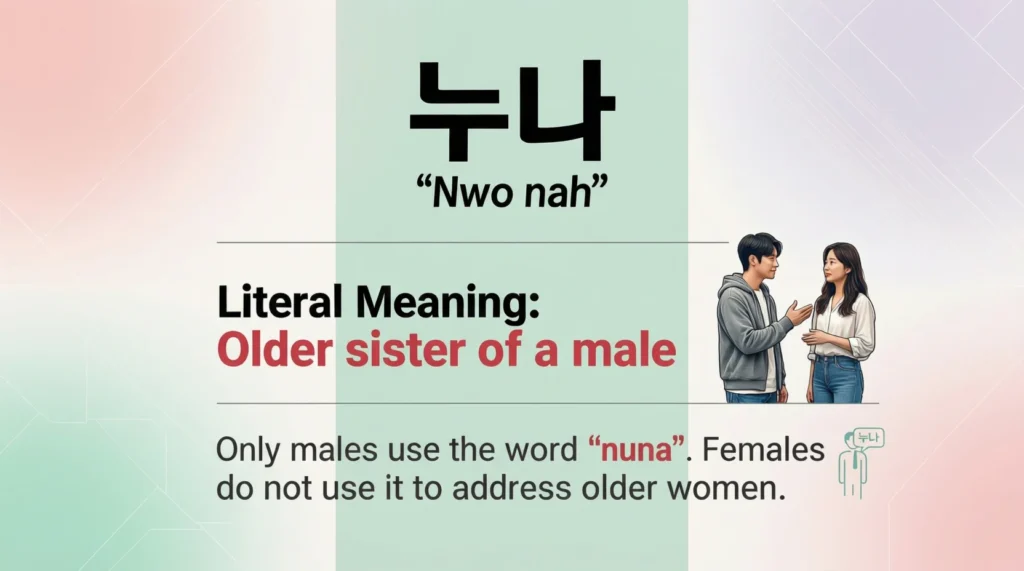
In Korean the word is written as
누나
Pronunciation
Noo nah
Literal meaning
Older sister of a male
Only males use the word nuna. Females do not use it to address older women.
Who Can Use the Word Nuna
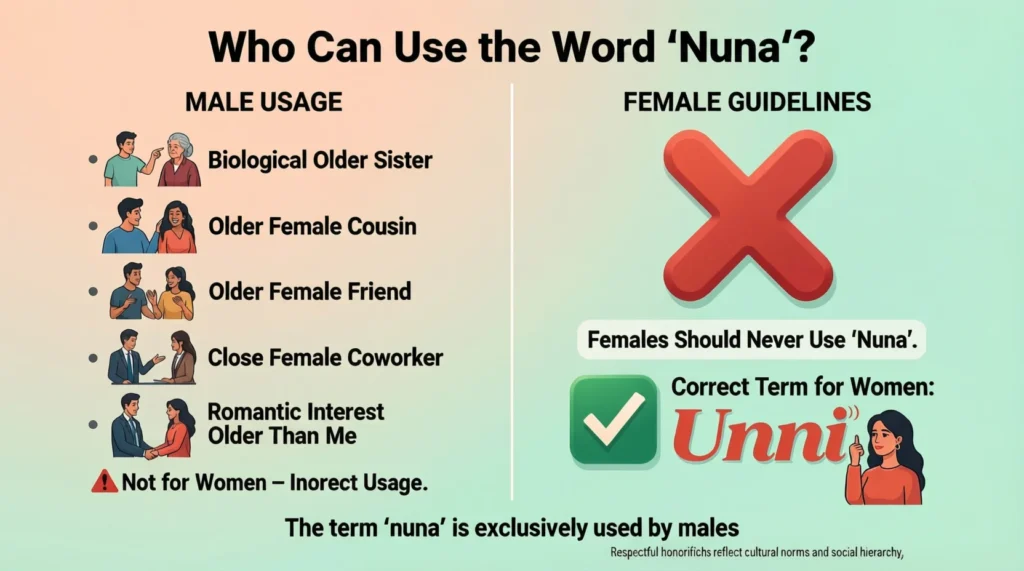
The usage of nuna depends on gender age and relationship.
A male can call
His biological older sister
An older female cousin
An older female friend
A female coworker he is close with
A romantic interest older than him
A female should never use nuna. For women the correct term is unni.
Nuna as a Family Term
Originally nuna was strictly a family term.
Example
나는 누나가 있어요
I have an older sister
In families it is respectful affectionate and completely normal.
Nuna as a Social Term
Over time Korean culture expanded family terms into social life.
Nuna is now used for
Friends
Neighbors
Colleagues
Classmates
As long as the woman is older and the speaker is male.
Emotional Meaning of Nuna
Nuna carries emotional warmth.
It can express
Respect
Trust
Closeness
Affection
Admiration
In many cases it feels warmer than calling someone by their name.
Nuna in Korean Dramas
K dramas made nuna famous worldwide.
When a younger man calls a woman nuna it often suggests
Comfort
Care
Emotional connection
Sometimes romantic tension
This is why international fans associate nuna with romance.
Nuna in Romantic Context
Nuna can be romantic but it is not automatically romantic.
Romantic when
There is emotional chemistry
Tone is soft or playful
Context suggests affection
Non romantic when
Used casually
In professional settings
With no emotional subtext
Tone and context matter.
Is Nuna Flirty
It can be flirty but not always.
Friendly tone
Respectful and safe
Playful tone
Can sound charming
Overuse
May feel childish or awkward
It depends on delivery.
Nuna vs Name Usage
Calling someone nuna instead of their name shows closeness.
Name usage
More neutral
Nuna usage
More personal
However using nuna without permission can feel uncomfortable.
When Not to Use Nuna
Avoid using nuna when
You just met someone
In formal workplaces
With strangers
If the woman dislikes it
Always observe or ask politely.
Nuna vs Unni vs Noona
| Term | Who Uses It | Refers To |
|---|---|---|
| Nuna | Male | Older woman |
| Unni | Female | Older woman |
| Hyung | Male | Older man |
| Oppa | Female | Older man |
Noona is simply an alternate Romanization of nuna.
Nuna vs Oppa Popularity
International fans often know oppa first.
Oppa is used by women
Nuna is used by men
Both show respect and closeness.
Nuna in K Pop Culture
Idols sometimes call older female staff nuna.
Fans may hear idols say nuna during interviews or live streams.
It reinforces hierarchy and politeness.
Cultural Importance of Nuna
Korean society values age hierarchy.
Nuna helps
Maintain respect
Avoid rudeness
Clarify social roles
Ignoring age titles can feel disrespectful.
Can Foreigners Use Nuna
Yes foreigners can use nuna but carefully.
Safe situations
With Korean friends
After permission
Casual settings
Unsafe situations
Formal environments
Professional meetings
Strangers
Many Koreans appreciate respectful effort.
Common Mistakes With Nuna
Using nuna as a female speaker
Calling younger women nuna
Using it too soon
Assuming it is romantic
Understanding context avoids embarrassment.
Nuna in Casual Speech Examples
Friendly
누나 오늘 뭐 해요
Nuna what are you doing today
Grateful
고마워요 누나
Thank you nuna
Concerned
누나 괜찮아요
Are you okay nuna
Nuna Tone Variations
Warm tone
Affectionate
Neutral tone
Respectful
Teasing tone
Playful
Harsh tone
Rare and inappropriate
Tone shapes meaning.
Nuna Compared to English Terms
English has no exact equivalent.
Closest ideas
Big sister
Older sister
Miss plus familiarity
English lacks age based honorifics.
Polite Alternatives to Nuna
If unsure use
Name plus ssi
Job title
Formal honorifics
These are safer.
Nuna and Age Gap
Small age gap
Very common
Large age gap
Can feel odd unless close
Always follow social cues.
Writing Nuna Correctly
Korean script
누나
Romanization
Nuna
Noona
Both are acceptable in English writing.
Nuna in Online Conversations
Often used by
K drama fans
K pop communities
Language learners
Sometimes used playfully or jokingly.
Can Nuna Sound Disrespectful
Rarely but possible if
Used sarcastically
Used mockingly
Used intentionally wrong
Respectful intent is key.
FAQs
What does nuna mean in Korean?
It means older sister used by a male speaker.
Is nuna romantic?
It can be but is not automatically romantic.
Can a woman say nuna?
No women should say unni instead.
Is nuna formal or informal?
It is informal but respectful.
Can foreigners use nuna?
Yes with close Korean friends.
Is nuna the same as noona?
Yes different spelling same meaning.
Can I call my girlfriend nuna?
Yes if she is older and comfortable.
What is the polite alternative to nuna?
Name plus ssi or job title.
Conclusion
So what does nuna mean in Korean Nuna means older sister and is used by men to address women older than them. It is a powerful word that carries respect warmth closeness and cultural significance. While it can feel romantic friendly or affectionate its true meaning depends on context tone and relationship.
Understanding nuna helps you understand Korean culture better and communicate more naturally. When used correctly it builds connection. When used carelessly it can feel awkward. Respect age hierarchy observe social cues and you will use nuna confidently and correctly.
Discover More Related Articles:
- What Does Oppa Mean? Korean Word Often Mistaken for Japanese in 2026
- What Does ONA Mean in Anime and How It’s Different From TV Series in 2026
- What Does Mota Mean in Spanish? Everything You Need to Know in 2026

David Brown is a content writer and language enthusiast at textroast.com, where he creates insightful articles that explain the meanings of words, slang, and phrases used in everyday life. His work helps readers decode modern language trends, understand cultural expressions, and make sense of online communication with clarity and fun.