
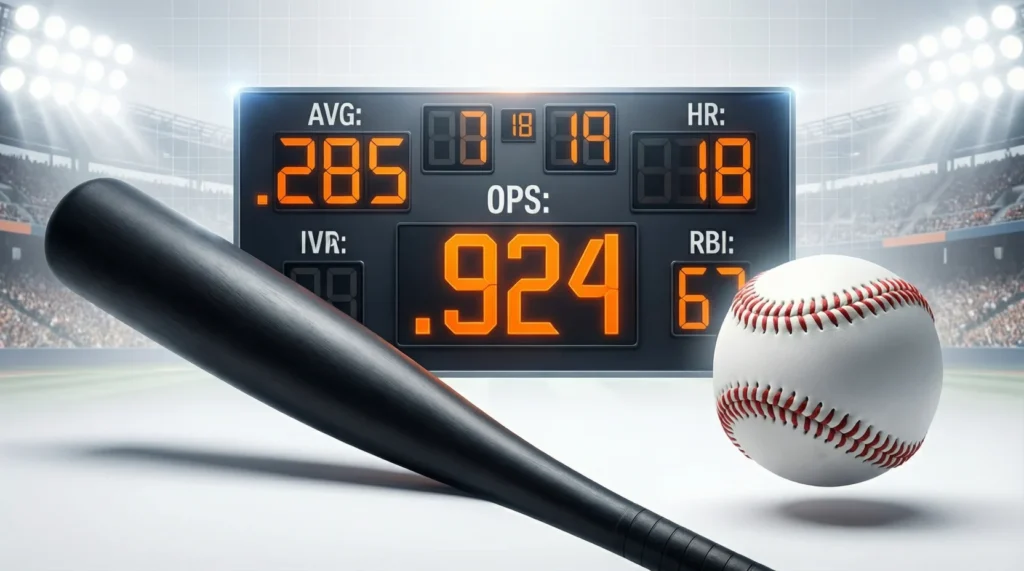
OPS in baseball stands for On-base Plus Slugging.
It is a statistic that combines a player’s ability to get on base and hit for power by adding on-base percentage and slugging percentage.
Baseball is full of numbers, and for new fans, advanced statistics can feel confusing at first. One stat you will see often in box scores, player profiles, and broadcasts is OPS. That leads many fans to ask a simple question: what does OPS mean in baseball stats?
This guide explains OPS in clear, everyday language. You will learn what OPS stands for, how it is calculated, why it matters, and how to read it when comparing players.
What Does OPS Mean in Baseball Stats?
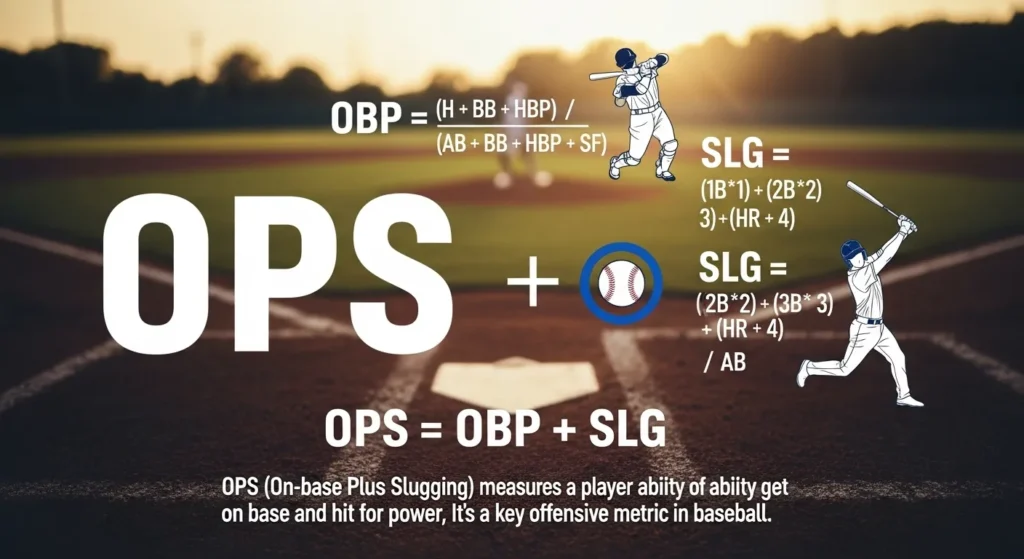
OPS is a single number designed to measure a hitter’s overall offensive performance. Instead of looking at multiple stats separately, OPS gives fans a quick way to understand how effective a player is at the plate.
The stat combines two important skills. The first is getting on base through hits, walks, or being hit by a pitch. The second is hitting for power, including doubles, triples, and home runs.
By combining these two elements, OPS shows how often a player reaches base and how much damage they do when they hit the ball.
The OPS Formula Explained Simply
OPS is calculated using this basic formula:
OPS equals on-base percentage plus slugging percentage.
On-base percentage measures how often a player reaches base.
Slugging percentage measures how many total bases a player averages per at-bat.
When you add these two numbers together, you get OPS.
Why OPS Is Important in Baseball
OPS became popular because it tells a more complete story than traditional stats like batting average.
Batting average only measures hits and ignores walks and power. OPS includes both. This makes it especially useful when comparing players with different hitting styles.
OPS is widely used by coaches, analysts, front offices, and fans. It is often shown during TV broadcasts and listed on baseball stat websites because it is easy to understand and meaningful.
How to Read OPS Numbers
OPS is shown as a three-digit decimal number. Higher numbers indicate better offensive performance.
Here is a general guide to understanding OPS levels.
An OPS around .700 is considered average.
It around .800 is very good.
An OPS around .900 is excellent.
An OPS above 1.000 is elite and usually MVP level.
This scale helps fans quickly judge how productive a hitter is.
Example OPS Table
| Player Type | Typical OPS |
|---|---|
| Below Average Hitter | .650 |
| Average MLB Hitter | .720 |
| Above Average Hitter | .800 |
| All-Star Level | .850 |
| Elite Slugger | .950 or higher |
This table shows why OPS is useful for quick comparisons.
OPS vs Batting Average
One of the most common questions fans ask is why OPS is better than batting average.
Batting average only shows how often a player gets a hit. It does not include walks or extra base hits properly.
OPS includes both. A player who walks often and hits home runs may have a lower batting average but a much higher OPS. That player is usually more valuable offensively.
This is why modern baseball analysis relies more on OPS than batting average alone.
OPS vs OBP and SLG
OPS is not a replacement for on-base percentage or slugging percentage. Instead, it combines them.
On-base percentage shows discipline and consistency.
Slugging percentage shows power and extra base ability.
OPS blends both into one easy number.
While OPS is simple, more advanced stats exist, but OPS remains popular because it balances simplicity and insight.
Real Game Examples of OPS Usage
During a broadcast, you might hear an announcer say a hitter has an OPS over .900 against left-handed pitchers. That tells viewers the player is very dangerous in that matchup.
Fans often use OPS when debating who should bat higher in the lineup or who deserves an award. Analysts use it to support arguments about offensive value.
The tone around OPS is usually neutral or positive, as it is a respected and widely accepted stat.
Does OPS Have Any Limitations?
OPS is useful, but it is not perfect.
OPS values on-base percentage and slugging percentage equally, even though getting on base is slightly more important.
It does not account for ballpark effects.
It does not include baserunning or defense. Despite these limitations, OPS remains one of the best quick stats for evaluating hitters.
Alternate Meanings of OPS
Outside baseball, OPS can mean other things depending on context. In baseball discussions, however, OPS almost always means on-base plus slugging.
Professional Alternatives to OPS
In more advanced analysis, you may see stats like weighted on-base average or OPS plus. These adjust for league averages and ballpark factors.
However, OPS remains popular because it is easy to understand and widely recognized.
FAQs
What does OPS stand for in baseball?
OPS stands for on-base plus slugging.
Is a higher OPS always better?
Yes, a higher OPS indicates better overall offensive performance.
What is a good OPS in MLB?
An OPS around .800 is considered very good, while .900 or higher is excellent.
Why do analysts prefer OPS over batting average?
OPS includes walks and power, giving a more complete view of hitting.
Does OPS include walks?
Yes, walks are included through on-base percentage.
Is OPS used for pitchers?
OPS can be used to measure how pitchers perform against hitters, often called OPS against.
Is OPS used in all baseball leagues?
Yes, OPS is used at all levels, including MLB, minor leagues, and college baseball.
Is OPS the best hitting stat?
OPS is one of the best simple stats, though more advanced metrics exist.
Conclusion
So, what does OPS mean in baseball stats? It means on-base plus slugging, a stat that combines a hitter’s ability to reach base and hit for power. OPS has become popular because it is easy to read, easy to compare, and far more informative than batting average alone.
For fans who want a quick and reliable way to judge offensive performance, OPS is one of the most useful numbers in baseball.
Discover More Related Articles:
- What Does SMT Mean In Texting? Slang Meaning With Examples (2026)
- What Does JK Mean in Texting? When People Actually Use It (2026)

Laura Jackson is a writer at textroast.com, where she creates engaging articles that decode the meanings behind slang, phrases, and everyday expressions. Passionate about language and communication, she makes complex or confusing terms easy to understand, turning learning into a fun and relatable experience for readers around the world.