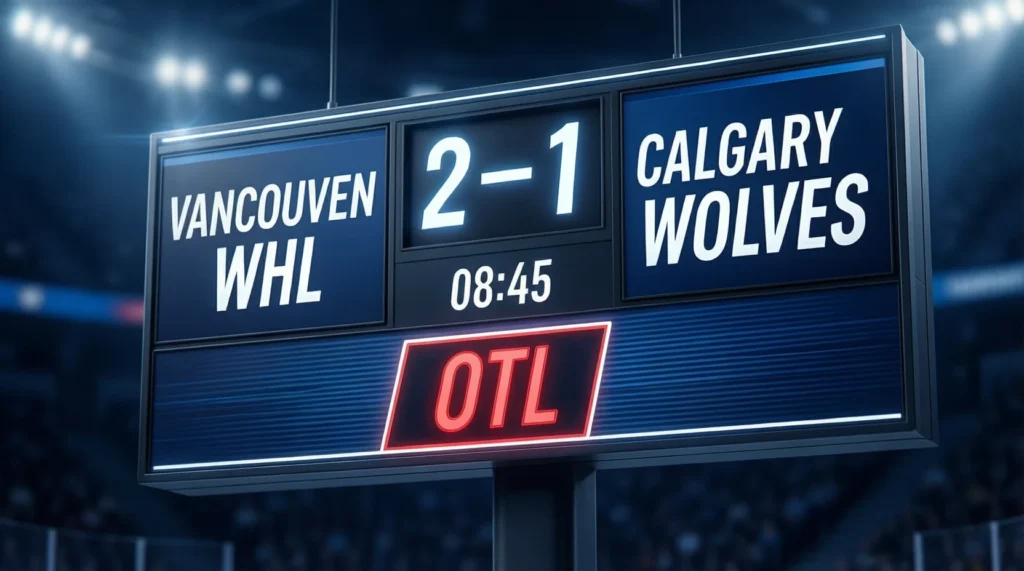
OTL in hockey means “Overtime Loss.”
It refers to a game a team loses in overtime or a shootout after the score was tied at the end of regulation time. The losing team still earns one point in the standings.
If you are new to hockey or recently started following NHL standings, you may have noticed the abbreviation OTL next to team records. It often raises a simple but important question: what does OTL mean in hockey? Understanding this term makes it much easier to follow standings, playoff races, and game results.
This article explains the meaning of OTL in hockey in a clear, friendly, and professional way. You will learn what it stands for, why it exists, how it affects standings, and how it compares to other hockey terms.
What Does OTL Mean in Hockey?
In hockey, games are played for three periods, also known as regulation time. If the score is tied after regulation, the game continues into overtime. If one team scores during overtime or wins the shootout, the game ends.
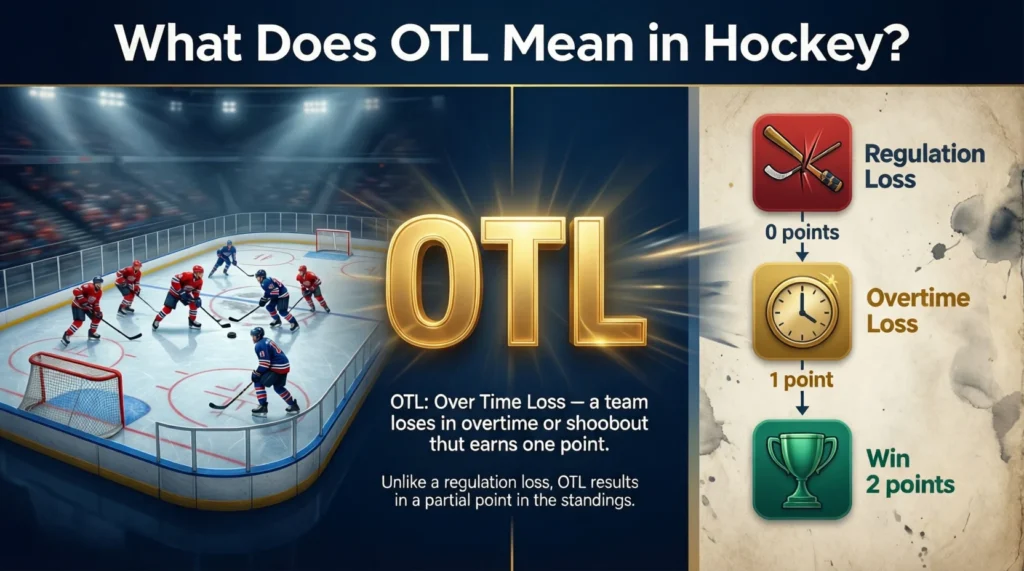
When a team loses at this stage, the loss is recorded as an OTL, or overtime loss. Unlike a regulation loss, an overtime loss still rewards the team with one standings point.
This system is most commonly used in the NHL and several other professional leagues.
Why OTL Exists in Hockey
The overtime loss rule was introduced to make games more exciting and competitive. Before this rule existed, tied games could end without a winner. Teams often played cautiously near the end of games to protect a tie.
By adding overtime and rewarding teams with a point for reaching it, leagues encouraged teams to play harder late in games. The result was more scoring chances, more excitement for fans, and clearer outcomes in the standings.
How OTL Works During a Game
Here is how a typical regular season game works in leagues like the NHL.
First, the game is played in regulation time. If one team is ahead after three periods, that team wins and earns two points.
If the game is tied, it goes to overtime. In the regular season, overtime is usually five minutes long and played with fewer skaters on the ice to increase scoring chances.
If no one scores in overtime, the game is decided by a shootout. Each team takes turns trying to score one on one against the goalie.
If a team loses during overtime or the shootout, it is recorded as an OTL and earns one point.
Points System Explained
The modern hockey points system works like this:
A win, whether in regulation, overtime, or a shootout, earns two points.
An overtime loss earns one point.
A regulation loss earns zero points.
This is why standings often show three columns for results: wins, losses, and OTL.
Example Table Showing OTL Impact
| Team | Wins | Losses | OTL | Total Points |
|---|---|---|---|---|
| Team A | 35 | 25 | 10 | 80 |
| Team B | 36 | 28 | 4 | 76 |
Even though Team B has more wins, Team A has more points because of additional overtime losses.
Why OTL Matters in Standings
OTL can play a major role in playoff races. Teams that consistently push games into overtime can stay competitive even if they do not win every close game.
Late in the season, a few extra overtime loss points can be the difference between making the playoffs or missing them. That is why coaches and players often focus on at least getting the game to overtime when trailing late.
Common Examples of OTL Usage
In everyday hockey conversations, OTL is often used casually.
Fans might say that the team lost in overtime but still earned a point.
Commentators may mention that overtime losses are keeping a team alive in the playoff race.
Analysts sometimes criticize teams for having too many OTLs instead of regulation wins.
The tone can range from neutral to frustrated, depending on how the season is going.
OTL vs Regulation Loss
A regulation loss happens when a team loses within the standard three periods. In this case, the team earns no points.
An overtime loss happens after regulation and earns one point. That single point is the key difference and the main reason OTL is tracked separately.
OTL Compared to Similar Hockey Terms
OTL is sometimes confused with other abbreviations.
A shootout loss is included under OTL in most league standings.
A tie is an older result that no longer exists in most professional leagues.
A regulation win or loss refers only to games decided within three periods.
Understanding these differences helps make sense of standings and statistics.
Is OTL Used in All Hockey Leagues?
No, OTL is not used everywhere. The NHL and many North American professional leagues use this system. Some international and amateur leagues use different point structures or do not award points for overtime losses.
It is always a good idea to check the specific league rules when following hockey outside the NHL.
Alternate Meanings of OTL
Outside of hockey, OTL can have other meanings depending on context. However, in hockey discussions, standings, and broadcasts, OTL almost always means overtime loss.
Professional Alternatives to Using OTL
In formal writing or broadcasting, instead of using the abbreviation OTL, you may see phrases like:
Lost in overtime
Defeated after regulation
Earned one point in an overtime defeat
These alternatives are clearer for audiences unfamiliar with hockey abbreviations.
FAQs
What does OTL stand for in hockey?
OTL stands for overtime loss.
Does an OTL count as a loss?
Yes, it counts as a loss but still earns one point in the standings.
Is a shootout loss the same as OTL?
Yes, shootout losses are included under OTL.
Why do teams get a point for an overtime loss?
To reward teams for reaching overtime and encourage competitive play.
Can teams make the playoffs with many OTLs?
Yes, overtime loss points often help teams stay competitive in tight races.
Was OTL always part of hockey?
No, it was introduced in the late 1990s and early 2000s.
Do playoff games have OTL?
No, playoff games continue with overtime until a goal is scored and do not award OTL points.
Is OTL important for fans to understand?
Yes, it helps fans understand standings, rankings, and playoff chances.
Conclusion
So, what does OTL mean in hockey? It means overtime loss, a loss that occurs after regulation time and still earns the team one point in the standings.
Understanding OTL helps you read hockey standings correctly, follow playoff races more closely, and appreciate the strategy teams use late in games. Once you know what it means, that extra column in the standings finally makes sense.
Discover More Related Articles:
- What Does CB Mean in Football? Everything Fans Should Know (2026)
- What Does Dink Mean in Pickleball? Complete Beginner’s Guide (2026)

David Brown is a content writer and language enthusiast at textroast.com, where he creates insightful articles that explain the meanings of words, slang, and phrases used in everyday life. His work helps readers decode modern language trends, understand cultural expressions, and make sense of online communication with clarity and fun.