In the Bible, Pentecost refers to the day when the Holy Spirit was poured out on the disciples of Jesus, empowering them to preach the Gospel boldly. It marks the birth of the Christian Church and occurs 50 days after Easter, following the Jewish Feast of Weeks.
Pentecost is one of the most important events in the Christian calendar and a pivotal moment in the history of the Church.
This in-depth article explains the biblical meaning of Pentecost, its Jewish roots, its fulfillment in the New Testament, the role of the Holy Spirit, and the practical lessons Christians can draw from this momentous event.
Origin of Pentecost
The word Pentecost comes from the Greek Pentēkostē (πεντηκοστή), meaning “fiftieth.”
- It originally referred to the Jewish Feast of Weeks (Shavuot), celebrated 50 days after Passover.
- Shavuot commemorated the giving of the Law to Moses at Mount Sinai and the harvest season.
- Early Christians adopted the term to describe the outpouring of the Holy Spirit on the disciples 50 days after Jesus’ resurrection.
Thus, Pentecost is both a Jewish festival with roots in Israelite tradition and a Christian celebration of the Holy Spirit.
Pentecost in the Old Testament
While the specific event of Pentecost is in the New Testament, the Old Testament provides the background:
1. Feast of Weeks (Shavuot)
- Exodus 34:22 – Israelites were commanded to present offerings at the Feast of Weeks.
- Leviticus 23:15–21 – It was a festival of thanksgiving for the firstfruits of the harvest.
- The feast reminded the people of God’s covenant, the Law, and His faithfulness.
2. Connection to God’s Covenant
Pentecost symbolized obedience, gratitude, and reliance on God, setting the stage for the New Testament fulfillment when the Holy Spirit would come.
Pentecost in the New Testament
The Outpouring of the Holy Spirit
The most famous biblical account of Pentecost is in Acts 2:1–4:
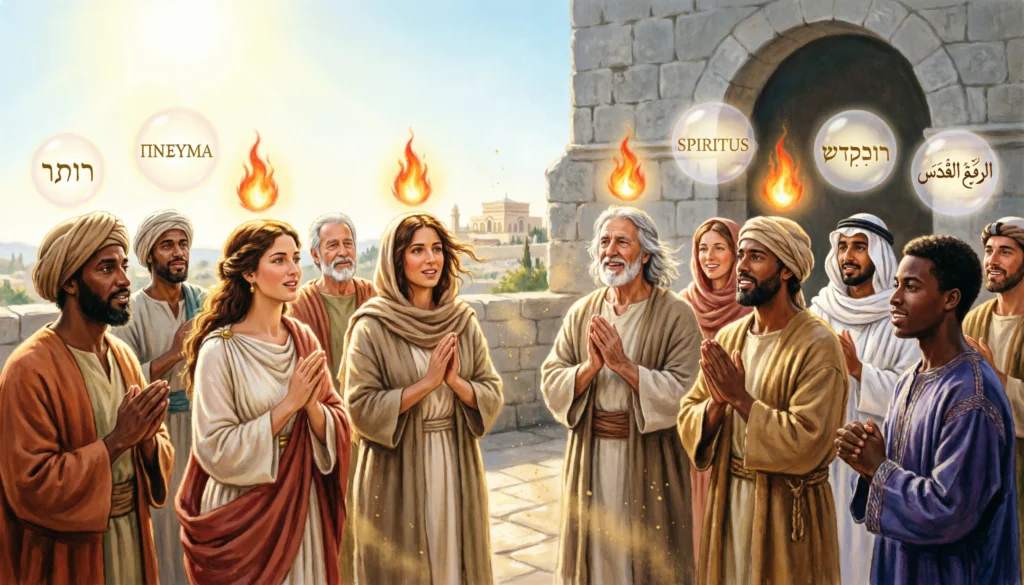
- The disciples were gathered in Jerusalem during the Jewish festival.
- Suddenly, a sound like a mighty rushing wind filled the house.
- Tongues of fire appeared and rested on each of them.
- They were all filled with the Holy Spirit and began to speak in other languages.
This marked the beginning of the Church’s mission and empowered ordinary believers to boldly proclaim the Gospel.
Significance of the Holy Spirit at Pentecost
The Holy Spirit did several important things on Pentecost:
- Empowered believers – Gave courage to speak boldly (Acts 2:14–41).
- Unified the Church – Believers from different nations could understand each other.
- Fulfilled prophecy – Joel 2:28–32 predicted the outpouring of God’s Spirit.
- Began global evangelism – 3,000 people were baptized that day.
Pentecost signifies that God’s Spirit is active in the world, guiding, transforming, and uniting believers.
The Spiritual Meaning of Pentecost
Pentecost carries profound spiritual lessons:
- God empowers His people – The Holy Spirit equips believers for service, ministry, and bold witness.
- Unity in diversity – Pentecost showed that God’s message is for all nations, transcending language, culture, and social status.
- Fulfillment of prophecy – The coming of the Spirit confirms God’s promises in the Old Testament.
- Birth of the Church – Pentecost marks the start of organized Christian witness.
Pentecost and Christian Life
Believers today draw practical lessons from Pentecost:
- Boldness in witness – Pentecost inspires courage to share faith.
- Community and fellowship – Unity and mutual understanding are central to the Church.
- Prayer and preparation – The disciples were gathered in prayer before receiving the Spirit, highlighting the importance of spiritual readiness.
Pentecost vs Other Christian Festivals
| Festival | Meaning | Biblical Context | Timing |
|---|---|---|---|
| Easter | Resurrection of Jesus | New Testament, Matthew 28 | Spring |
| Pentecost | Outpouring of the Holy Spirit | Acts 2 | 50 days after Easter |
| Christmas | Birth of Jesus | Matthew 1, Luke 2 | December 25 |
| Good Friday | Crucifixion of Jesus | Matthew 27 | Friday before Easter |
It is specifically celebrates empowerment and the global mission of the Church, unlike Easter which celebrates the resurrection.
Pentecost in Symbolism
Several symbols are associated with Pentecost:
- Wind – Power and presence of God
- Fire – Purification, transformation, and divine inspiration
- Dove – Peace and the Holy Spirit
- Languages – Unity and the universality of God’s message
Each symbol conveys a spiritual truth about God’s work through the Spirit.
Biblical Lessons from Pentecost
- Obedience and Preparation – The disciples were waiting as Jesus instructed.
- Power Comes from God – Human effort alone cannot accomplish God’s mission.
- Spiritual Gifts Are for Service – The Spirit equips for ministry and helping others.
- God’s Plan is Universal – The Gospel is for all nations and peoples.
Modern Christian Observance
- Pentecost Sunday – Celebrated 50 days after Easter in most Christian denominations.
- Liturgical Colors – Red symbolizes the fire of the Holy Spirit.
- Focus – Prayer for the Holy Spirit, evangelism, and renewal of faith.
Many churches use Pentecost as a time to encourage believers to seek a fresh outpouring of the Holy Spirit in their lives.
FAQs
What does Pentecost mean in the Bible?
It marks the outpouring of the Holy Spirit on Jesus’ disciples, 50 days after Easter.
Why is Pentecost important in Christianity?
It represents the birth of the Church and the empowerment of believers by the Holy Spirit.
When is Pentecost celebrated?
Fifty days after Easter, typically in May or June.
Is Pentecost mentioned in the Old Testament?
Yes, it originates from the Feast of Weeks (Shavuot), 50 days after Passover.
Why is red used for Pentecost?
Red symbolizes the tongues of fire that rested on the disciples and the power of the Holy Spirit.
What spiritual lesson does Pentecost teach?
Dependence on God, boldness in faith, unity in diversity, and obedience to God’s plan.
Conclusion
In the Bible, Pentecost is a day of empowerment, spiritual awakening, and the birth of the Church. It reminds believers that the Holy Spirit is alive and active, equipping them to live faithfully, preach boldly, and serve others with love.
Pentecost teaches that God’s presence transforms ordinary lives, fosters unity among His people, and fulfills His promises from the Old Testament.
Celebrating Pentecost today encourages Christians to seek the Spirit’s guidance, embrace spiritual gifts, and live empowered lives in God’s mission.
Discover More Related Articles:
- 11:11 in the Bible: Coincidence or Divine Reminder? in 2026
- Biblical Definition of Vain: Why God Warns Against It in 2026

David Brown is a content writer and language enthusiast at textroast.com, where he creates insightful articles that explain the meanings of words, slang, and phrases used in everyday life. His work helps readers decode modern language trends, understand cultural expressions, and make sense of online communication with clarity and fun.