
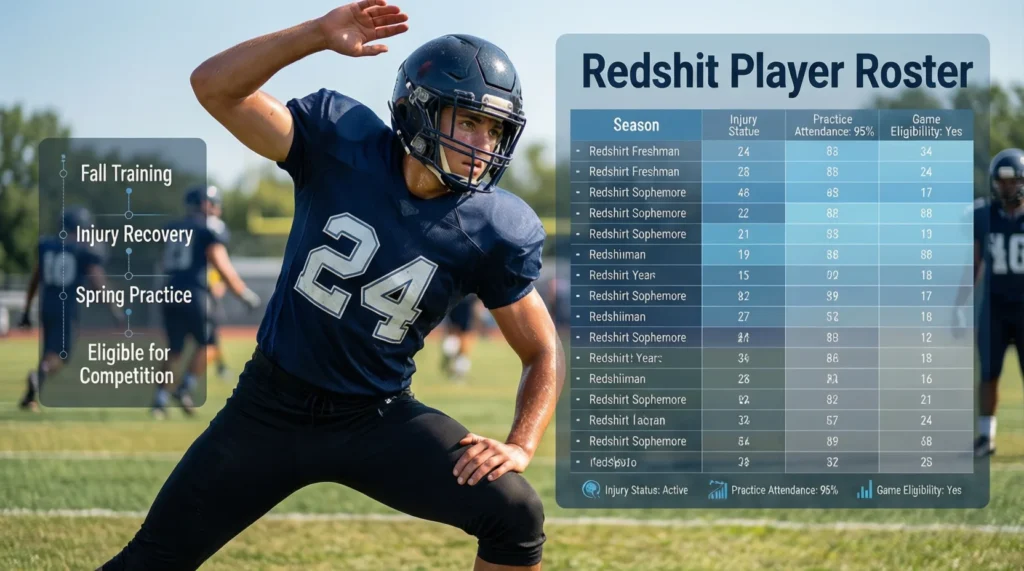
In college football a redshirt refers to a season in which a player does not compete in most games so they can preserve a year of eligibility allowing them to play four seasons over five academic years.
If you follow college football you have probably heard coaches announcers or fans mention that a player was redshirted or is a redshirt freshman. For many people especially new fans this raises a simple but important question what does redshirt mean in football
This article explains the meaning of redshirt in football in a clear friendly and professional way. You will learn how redshirting works why teams use it how it affects eligibility and how it shapes a players college career.
What Does Redshirt Mean in Football
In football the term redshirt is mainly used in college athletics. A redshirt player is an athlete who remains part of the team practices trains and attends school but does not play in games that count toward eligibility for most or all of a season.
The purpose of redshirting is to delay the use of one of the four seasons a player is allowed to compete. This gives the athlete extra time to develop physically mentally and academically while staying within eligibility rules.
Why Is It Called a Redshirt
The term redshirt comes from early college sports traditions. Teams would dress non competing players in a different colored practice jersey often red to identify them during practice. Over time the term redshirt became shorthand for a player sitting out competition for development purposes.
Today the jersey color no longer matters but the term redshirt remains widely used.
How Eligibility Works in College Football
College football players operate under a five year eligibility window. During those five years they are allowed to play in four seasons of competition.
A redshirt year does not count as one of those four playing seasons. Instead it allows the player to spread their four seasons of competition across five years.
This is why redshirting is so valuable in college football.
Can Redshirt Players Practice and Travel
Yes redshirt players are full members of the team.
They attend practices
They lift weights and train
They learn the playbook
They may travel with the team
They receive coaching and medical care
The only major difference is limited or no game participation.
Modern Redshirt Rules Explained Simply
Under current college football rules a player can appear in a limited number of games during a season and still maintain redshirt status.
This rule gives coaches flexibility to use younger players in emergencies or special situations without costing them a full year of eligibility.
Once a player exceeds the allowed game limit that season counts as a year of competition.
Types of Redshirts in Football
True Redshirt
A true redshirt is a player who does not play in games or only plays within the allowed limit during a season. This is the most common type of redshirt.
Redshirt Freshman
A redshirt freshman is a player in their second year of college who did not compete during their first season. They still have four full seasons of eligibility remaining.
Medical Redshirt
A medical redshirt also called a hardship waiver applies when a player suffers a season ending injury early in the year. If approved the season does not count against eligibility.
Greyshirt
A greyshirt delays full enrollment until later in the academic year. This allows a player to postpone the start of their eligibility clock before ever joining the team fully.
Why Coaches Redshirt Players
Redshirting is a strategic decision that benefits both players and teams.
Common reasons include
Physical development for younger players
Time to learn complex systems
Crowded depth charts at certain positions
Injury recovery
Long term roster planning
Many successful college and professional players benefited from a redshirt year early in their careers.
Does Redshirting Help a Player Long Term
In many cases yes.
A redshirt year allows players to
Gain strength and size
Improve skills without pressure
Adjust to college life
Compete at a higher level later
Players who redshirt often enter their first playing season more prepared and confident.
Redshirt vs Playing Immediately
Here is a simple comparison.
| Status | Plays Games | Uses Eligibility |
|---|---|---|
| Redshirt | No or limited | No |
| Non redshirt | Yes | Yes |
This shows why many coaches prefer redshirting freshmen if possible.
Common Misunderstandings About Redshirts
Redshirt does not mean the player is not good
Redshirt players still practice every day
Redshirt is not a punishment
Most players redshirt only once
Redshirt applies mostly to college football
Understanding these points clears up much confusion.
Redshirt in Other Sports
While redshirt is most commonly associated with football the concept also exists in other college sports such as basketball soccer and baseball. The rules are similar but may vary slightly by sport.
FAQs
What does redshirt mean in football?
It means a player delays competing in games to preserve eligibility.
Can a redshirt player play at all?
Yes under modern rules limited game appearances are allowed.
Does a redshirt year count toward eligibility?
No that is the main purpose of redshirting.
Is redshirt only for freshmen?
No but it is most common in a players first year.
Can a player redshirt more than once?
Usually no unless a medical redshirt is granted.
Do redshirt players still practice?
Yes they practice train and attend meetings like everyone else.
Does redshirt affect scholarships?
No scholarships typically remain active.
Is redshirt used in professional football?
No it applies only to college athletics.
Conclusion
So what does redshirt mean in football It refers to a season where a college football player does not fully compete in games in order to preserve a year of eligibility. Redshirting allows athletes extra time to develop learn and prepare for long term success.
It is one of the most important concepts in college football and understanding it helps fans better follow rosters player development and team strategy.
Discover More Related Articles:
- What Does Redshirt Mean in College? Redshirt Year Explained in 2026
- What Does TKO Mean in Boxing? When a Fight Is Stopped in 2026

Laura Jackson is a writer at textroast.com, where she creates engaging articles that decode the meanings behind slang, phrases, and everyday expressions. Passionate about language and communication, she makes complex or confusing terms easy to understand, turning learning into a fun and relatable experience for readers around the world.