
Definition
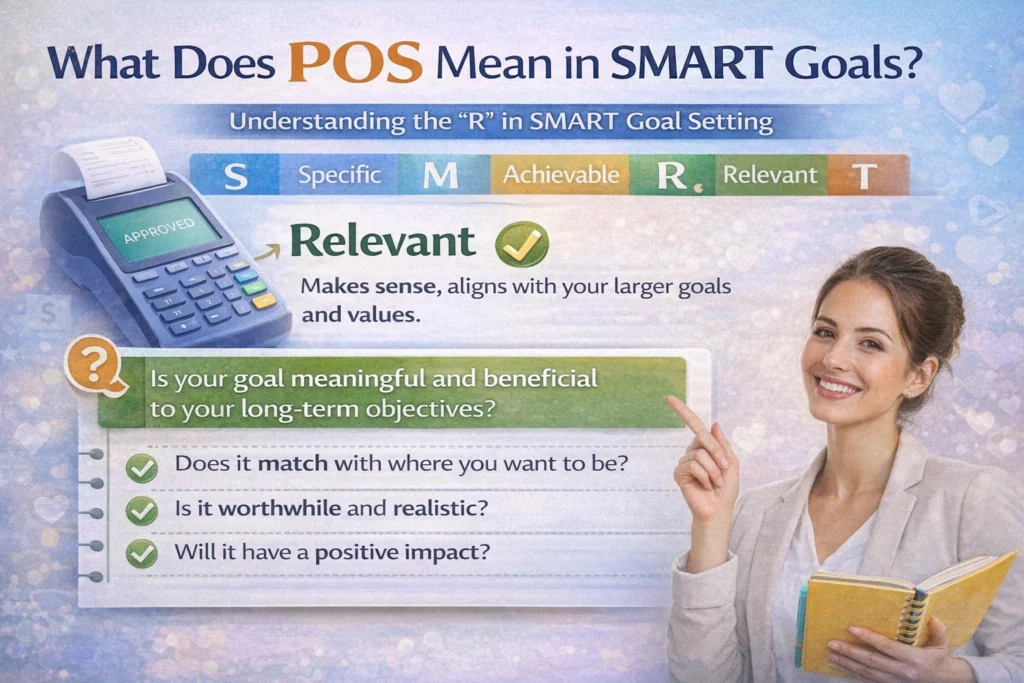
Relevant in SMART goals means that your goal aligns with your broader objectives, values, and long-term plans, ensuring it is meaningful and worth pursuing.
When setting goals, you’ve probably come across the term SMART goals. SMART is an acronym that helps you create clear and effective objectives. Each letter represents a key criterion: Specific, Measurable, Achievable, Relevant, and Time-bound.
But what does Relevant mean in SMART goals? Why is it important? How can you ensure your goals are truly relevant to your bigger vision?
This article provides a comprehensive guide to understanding relevance in SMART goals, with examples, tips, and FAQs for clarity.
In simple terms:
A goal is relevant if it truly matters to you or your organization and contributes to your overall success.
Understanding Relevance in SMART Goals
Relevance is about alignment. A goal can be specific, measurable, achievable, and time-bound, but if it’s not relevant, it may not advance your personal, professional, or organizational objectives.
Example:
- You want to learn a new programming language.
- If your long-term career goal is becoming a web developer, this goal is relevant.
- If your career goal is becoming a chef, it is less relevant.
Relevance ensures that your effort produces meaningful outcomes instead of wasting time on tasks that don’t matter.
Why Relevance Matters in SMART Goals
- Focus on Priorities – Helps you dedicate energy to what truly matters.
- Boost Motivation – Relevant goals feel purposeful and drive commitment.
- Aligns with Vision – Ensures daily actions contribute to your bigger plans.
- Reduces Waste – Prevents chasing goals that don’t bring value.
- Enhances Success – Increases the likelihood of achieving impactful outcomes.
Questions to Determine if a Goal Is Relevant
Before committing, ask yourself:
- Does this goal align with my long-term objectives?
- Will achieving this goal move me closer to my career, personal, or organizational vision?
- Is this the right time for this goal?
- Does it match my values and priorities?
- Will this goal have meaningful impact once completed?
Answering yes to these questions confirms the goal’s relevance.
Examples of Relevant Goals
1 Example: Career Development
- Goal: Complete an advanced project management certification within 6 months.
- Relevance: High – if your current role or promotion requires project management skills.
2 Example: Health and Fitness
- Goal: Exercise 30 minutes daily, five days a week for 3 months.
- Relevance: High – if your long-term goal is improving overall health and fitness.
3 Example: Financial Planning
- Goal: Save $5,000 for an emergency fund in 12 months.
- Relevance: High – if your objective is to build financial security and reduce debt.
4 Example: Business Strategy
- Goal: Launch a new marketing campaign targeting millennials.
- Relevance: High – if your company’s vision is to expand market share among younger consumers.
Relevance vs Other SMART Criteria
| SMART Criteria | Focus | How Relevance Fits |
|---|---|---|
| Specific | Clear and well-defined goal | Relevance ensures the goal aligns with broader objectives |
| Measurable | Quantifiable indicators | Relevance ensures the measurement contributes to meaningful outcomes |
| Achievable | Realistic and attainable | Relevance ensures effort is worth pursuing |
| Relevant | Alignment with vision | Core purpose: ensures the goal matters |
| Time-bound | Set deadline | Relevance makes timely goals impactful |
Relevance is what connects all the other criteria to your overarching vision.
How to Make a Goal More Relevant
- Align with Core Values – Ensure your goal reflects personal or organizational principles.
- Connect to Long-Term Objectives – Each goal should advance your bigger picture.
- Assess Impact – Choose goals that create meaningful change.
- Prioritize – Focus on goals that contribute most to success.
- Review Regularly – Reassess relevance as circumstances and priorities evolve.
Signs Your Goal May Not Be Relevant
- You feel indifferent or unmotivated.
- It doesn’t contribute to career, personal growth, or organizational success.
- You’re pursuing it only because others suggested it.
- Completion won’t create meaningful benefits.
If any of these signs appear, reconsider the goal or adjust it for better alignment.
Example Table: Relevant vs Irrelevant Goals
| Goal | Relevant? | Reason |
|---|---|---|
| Learn advanced Excel for a finance role | ✅ Yes | Supports career advancement |
| Learn painting while career is software development | ❌ No | Not aligned with professional objectives |
| Exercise 30 minutes daily | ✅ Yes | Improves health and energy for long-term goals |
| Attend random online seminars unrelated to career | ❌ No | No direct benefit or alignment |
| Save $5,000 emergency fund | ✅ Yes | Supports financial security |
| Spend money on luxury items instead of debt repayment | ❌ No | Contradicts financial priorities |
Relevance in Team and Organizational Goals
For businesses, relevant goals:
- Align with company mission and vision
- Support team objectives
- Maximize resources and productivity
- Create measurable impact on growth and performance
Example:
A marketing team sets a goal to increase Instagram engagement by 20% in 3 months.
- Relevant if the company strategy focuses on social media growth.
- Irrelevant if the company is shifting focus to email marketing.
FAQs
What does relevant mean in SMART goals?
It means the goal aligns with your broader objectives, values, or priorities, ensuring it is meaningful and impactful.
Why is relevance important in goal setting?
It ensures your effort contributes to long-term success, keeps you motivated, and prevents wasted time.
Can a goal be SMART but not relevant?
Yes. A goal can be specific, measurable, achievable, and time-bound but may not align with your bigger vision.
How do I check if a goal is relevant?
Ask if it aligns with your values, long-term objectives, and priorities. Also, assess its impact and timing.
Can relevance change over time?
Yes. Priorities evolve, so regularly review goals to ensure continued relevance.
Does relevance matter for personal goals too?
Absolutely. Relevant personal goals create motivation and meaningful life improvements.
How does relevance affect motivation?
Relevant goals are aligned with values and vision, making it easier to stay committed.
Can an irrelevant goal ever be useful?
It might develop secondary skills or experiences, but it won’t contribute directly to your main objectives.
Conclusion
The “R” in SMART goals Relevant is more than just a checklist item. It ensures that every goal you pursue creates meaningful progress toward your personal or professional vision.
By focusing on relevance, you prioritize efforts that matter, stay motivated, and avoid wasting time on goals that don’t support your objectives. Remember: a goal may be SMART in structure, but only a relevant goal truly moves you forward.
Discover More Related Articles:
- EMD Matters in Real Estate Contracts: Buyer and Seller Guide in 2026
- PC in Law Explained: What It Stands for and Why It Matters in 2026

Daniel Moore is a content writer and language enthusiast at TextRoast.com, specializing in decoding slang, abbreviations, and trending text expressions. He creates engaging and informative articles that help readers understand the meaning behind everyday words and online communication.