

Salve is a formal Italian greeting meaning hello or greetings and is used in polite professional or respectful situations regardless of the time of day.
If you have ever heard someone say salve in an Italian movie formal conversation or historical setting you may have wondered what it actually means and when it should be used. Salve is a fascinating Italian word because it sounds simple yet carries history formality and cultural depth. It is not something you hear every day like ciao but when used correctly it sounds elegant respectful and very Italian.
In this complete article you will learn what salve means in Italian where it comes from how Italians use it today when it sounds natural or awkward how it compares to ciao and buongiorno and how non native speakers can use it properly.
Basic Meaning of Salve in Italian
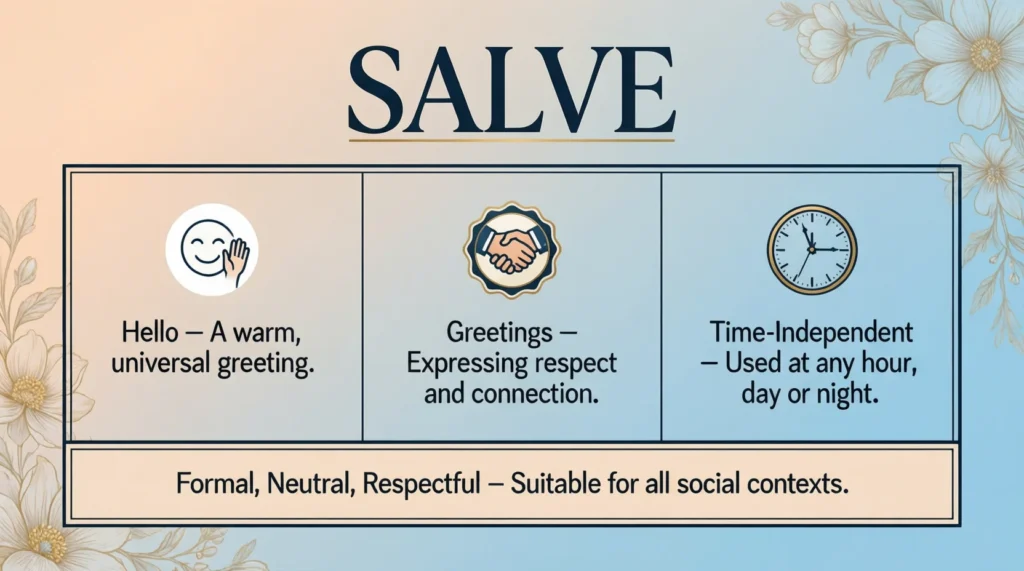
Salve is an Italian greeting that can mean
Hello
Greetings
Unlike many greetings salve does not depend on the time of day. You can use it in the morning afternoon or evening.
It is formal neutral and respectful.
Origin of the Word Salve
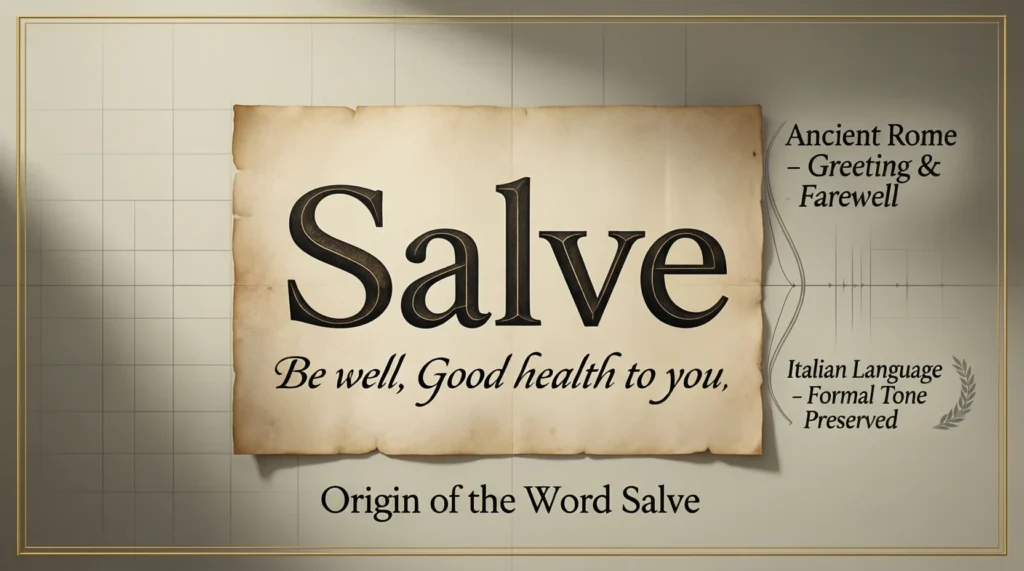
Salve comes from Latin.
In Latin salve meant
Be well
Good health to you
It was commonly used in ancient Rome as a greeting and farewell. Over time Italian inherited the word and preserved its formal tone.
Is Salve Formal or Informal
Salve is considered formal or semi formal.
It sits between
Ciao which is informal
Buongiorno and buonasera which are polite but common
Salve sounds more refined and distant.
When Italians Use Salve
Salve is typically used in
Professional emails
Formal meetings
Customer service
Speaking to strangers
Official settings
It is less common in casual daily conversations.
Examples of Salve in Real Life
Formal greeting
Salve come posso aiutarla
Hello how can I help you
Customer service
Salve grazie per averci contattato
Greetings thank you for contacting us
Professional email opening
Salve
Le scrivo per informarla
Can Salve Be Used as Goodbye
Yes salve can be used as both
Hello
Goodbye
However as a goodbye it sounds very formal and is less common in modern speech.
Salve vs Ciao
Ciao is friendly casual and warm.
Salve is polite neutral and distant.
You would say
Ciao to friends family classmates
Salve to strangers professionals or clients
Using salve with close friends can sound stiff or sarcastic.
Salve vs Buongiorno and Buonasera
Buongiorno and buonasera are polite and widely used.
Salve is more neutral and slightly more formal.
Many Italians use salve when they are unsure which greeting fits best.
Why Italians Sometimes Avoid Salve
Some Italians feel salve sounds
Too formal
Old fashioned
Cold
That is why it is used selectively rather than daily.
Salve in Written Italian
Salve is very common in writing.
Especially in
Emails
Letters
Online forms
It is often used when you do not know the recipient personally.
Salve in Customer Service and Business
Businesses often use salve because
It is neutral
It avoids informality
It sounds professional
It is safe and respectful.
Pronunciation of Salve
Salve is pronounced
SAL veh
The e at the end is soft and short.
Correct pronunciation makes it sound natural.
Can Non Native Speakers Use Salve
Yes and it is often a good choice.
Salve is safer than ciao when
Speaking to strangers
Writing emails
Being polite
Just avoid using it with close friends.
Salve in Modern Italian Culture
Today salve is associated with
Professionalism
Politeness
Distance
It is not outdated but it is not trendy either.
Salve in Historical and Literary Context
Salve appears often in
Historical films
Books
Classical references
It adds a sense of tradition and respect.
Salve vs Ehilà vs Pronto
Ehilà is very informal and friendly.
Pronto is used mainly on the phone.
Salve remains formal and neutral.
Emotional Tone of Salve
Salve has a calm neutral tone.
It does not express
Warmth
Excitement
But it does express
Respect
Professional distance
Common Mistakes When Using Salve
Using it with friends
Using it sarcastically
Overusing it in casual speech
Understanding context prevents awkwardness.
Polite Alternatives to Salve
Depending on the situation you can also use
Buongiorno
Buonasera
Gentile signore or signora in writing
These sound natural and respectful.
Salve in Emails Example
Opening
Salve
La contatto per informazioni
Closing
Cordiali saluti
This is very standard Italian.
Cultural Meaning Behind Salve
Salve reflects Italian values of
Respect
Formality
Social boundaries
It helps maintain polite distance.
Is Salve Old Fashioned
Not exactly.
It is classical rather than outdated.
It still appears in modern Italian especially in writing.
Salve Compared to English Greetings
Salve is similar to
Greetings
Hello there
It sounds polite but not friendly.
Can Salve Sound Rude
Not rude but it can sound cold if used incorrectly.
Using salve with close friends may feel awkward.
FAQs
What does salve mean in Italian?
Salve means hello or greetings and is a formal Italian greeting.
Is salve formal or informal?
Salve is formal or semi formal.
Can I say salve instead of ciao?
Yes but only in formal situations not with friends.
Do Italians still use salve?
Yes especially in professional and written contexts.
Is salve used in emails?
Yes it is very common in emails.
Can salve be used as goodbye?
Yes but it is rare and very formal.
Is salve polite?
Yes it is polite and respectful.
Is salve outdated Italian?
No it is still valid but selective.
Conclusion
So what does salve mean in Italian Salve is a formal greeting meaning hello or greetings rooted in Latin history and still used today in professional respectful contexts. It is neutral elegant and safe when speaking to strangers or writing formal messages.
While not as warm as ciao salve plays an important role in Italian communication. Knowing when to use it helps you sound polite culturally aware and confident in Italian conversations.
Discover More Related Articles:
- What Does Oppa Mean? Korean Word Often Mistaken for Japanese in 2026
- What Does ONA Mean in Anime and How It’s Different From TV Series in 2026

Daniel Moore is a content writer and language enthusiast at TextRoast.com, specializing in decoding slang, abbreviations, and trending text expressions. He creates engaging and informative articles that help readers understand the meaning behind everyday words and online communication.