
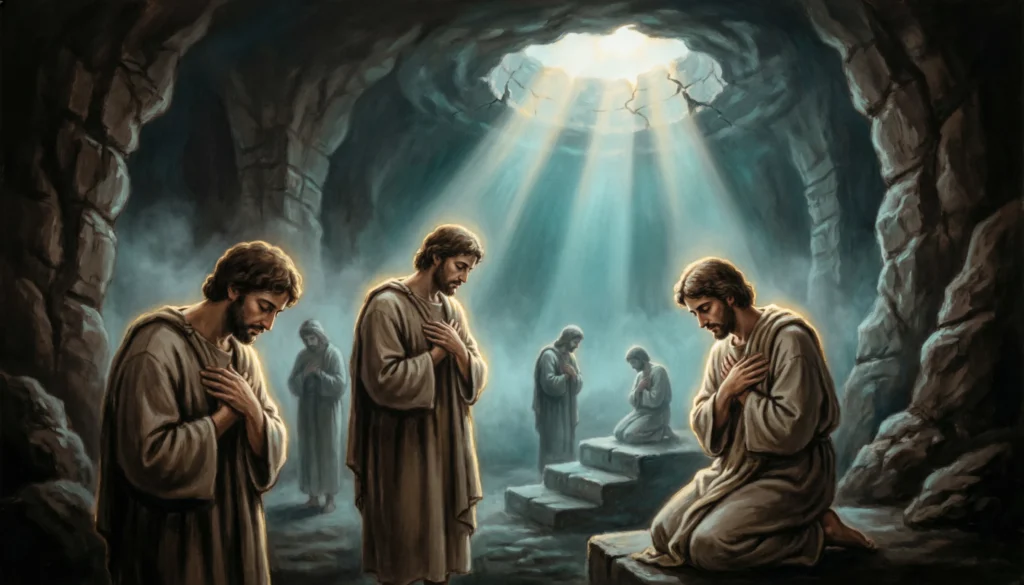
In the Bible, Sheol (שְׁאוֹל, She’ol) is the Hebrew term for the realm of the dead a shadowy place where all people go after death, both righteous and wicked. It is sometimes described as a pit, grave, or underworld, emphasizing separation from the living rather than eternal punishment.
The term Sheol appears frequently in the Old Testament and is a critical concept for understanding the biblical view of the afterlife, death, and God’s justice. Many readers encounter Sheol in the Psalms, Isaiah, and Job, yet its meaning is often misunderstood or oversimplified.
Understanding what Sheol means in the Bible gives insight into Hebrew thought on death, the fate of the righteous and wicked, and the hope for resurrection.
This article explores the definition, origin, biblical usage, spiritual significance, and lessons connected to Sheol.
The Hebrew Origin of Sheol
- Hebrew Spelling: שְׁאוֹל (She’ol)
- Pronunciation: Shay-ol or Sheh-ol
- Meaning: Grave, pit, or the place of the dead
- Root Word: Possibly related to sha’al (שָׁאַל), meaning “to ask” or “to inquire,” suggesting a hidden or mysterious place.
Key Concept: Sheol is not inherently a place of torment; it is the abode of the dead, often depicted as a dark, silent, and separate existence from the land of the living.
Sheol in the Old Testament
Sheol appears over 65 times in the Hebrew Bible. Its usage reveals several aspects of Hebrew thought on death and the afterlife.
1. Sheol as the Grave
- Job 17:13–16 – Sheol is described as the place of darkness and silence where the dead reside.
- Psalm 6:5 – “For in death there is no remembrance of you; in Sheol who will give you praise?”
Here, Sheol represents the physical grave, emphasizing separation from life and the living community.
2. Sheol as a Place of Universal Destiny
- Sheol was common to all people, regardless of moral standing.
- Ecclesiastes 9:10 – Death comes to everyone, and all descend to Sheol.
Spiritual Insight: The Old Testament often portrays Sheol as a neutral place, without moral differentiation, where both the righteous and wicked go.
3. Sheol and the Wicked
- Certain passages connect Sheol with destruction or punishment:
- Psalm 16:10 – God preserves the righteous from Sheol.
- Proverbs 15:11 – Sheol is “open before the Lord,” implying divine awareness of all.
Some interpreters see Sheol as a precursor concept to hell, but it is not identical to the New Testament Gehenna, which is a place of eternal punishment.
Sheol in the New Testament Context
The term Sheol itself is not used in the Greek New Testament; instead, the concept is conveyed through:
- Hades (ᾍδης) – Greek equivalent of Sheol, meaning the abode of the dead.
- Luke 16:23 – In the parable of the rich man and Lazarus, Hades represents a conscious state for the wicked after death.
- Revelation 20:13–14 – Hades is associated with final judgment and the lake of fire.
Insight: Sheol and Hades originally denote the realm of the dead, later theological developments in the New Testament distinguish the fate of the righteous and wicked.
Spiritual Meaning of Sheol
Sheol teaches several key spiritual truths:
- Mortality and Human Limitations – All humans face death, highlighting the fleeting nature of life.
- Separation from the Living – Sheol emphasizes that death is a separation from the earthly realm.
- Dependence on God – The righteous hope in God for deliverance from Sheol (Psalm 49:15).
- God’s Sovereignty Over Life and Death – Even in Sheol, God is aware and in control.
- Hope of Resurrection – Though Sheol is the grave, Scripture hints at future restoration and resurrection (Isaiah 26:19).
Examples of Sheol in Scripture
| Scripture | Description of Sheol | Significance |
|---|---|---|
| Psalm 6:5 | Place of silence and forgetfulness | Shows the despair of death apart from God |
| Job 14:13 | Hide me in Sheol until God remembers | Expresses hope for divine intervention |
| Proverbs 15:11 | Sheol is open before the Lord | Demonstrates God’s knowledge of all souls |
| Isaiah 14:9 | Sheol stirring to meet the dead | Personifies Sheol as part of divine judgment imagery |
Sheol vs. Hell
| Term | Meaning | Distinction |
|---|---|---|
| Sheol | Grave, abode of the dead | Neutral place in Hebrew thought; all go here after death |
| Hades | Greek equivalent of Sheol | Abode of the dead, sometimes depicted as temporary |
| Gehenna | Place of eternal punishment | New Testament concept of final judgment for the wicked |
Key Insight: Sheol is not inherently hell. It is the temporary realm of the dead, whereas hell (Gehenna) represents eternal punishment in the New Testament.
Lessons from Sheol
- Life Is Temporary – Sheol reminds us that earthly life is finite.
- Hope in God Is Eternal – Even the righteous can look beyond Sheol for God’s salvation.
- God Judges Justly – Sheol illustrates the need for accountability and divine oversight.
- Prepare Spiritually – Awareness of Sheol calls for spiritual readiness and relationship with God.
- Death Is Not the End – The Bible points beyond Sheol to resurrection and eternal life (Daniel 12:2).
FAQs
What does Sheol mean in the Bible?
Sheol is the Hebrew term for the realm of the dead, a shadowy place where all people go after death.
Is Sheol the same as hell?
Not exactly. Sheol is neutral and temporary, while hell (Gehenna) is eternal punishment in the New Testament.
Who goes to Sheol?
All humans, righteous and wicked, according to the Old Testament.
Is Sheol conscious?
Generally described as a silent, shadowy place, though some passages personify it metaphorically.
Does God care about those in Sheol?
Yes, God is sovereign over Sheol and aware of all souls.
Can the righteous escape Sheol?
Yes, Scripture promises God’s deliverance for the righteous (Psalm 49:15).
What is the connection between Sheol and Hades?
Hades is the Greek equivalent of Sheol, often used in the New Testament.
Does Sheol teach spiritual lessons for believers?
Yes, it emphasizes mortality, dependence on God, hope, and preparation for eternal life.
Conclusion
In the Bible, Sheol represents the realm of the dead, a place of separation from the living rather than eternal torment. It underscores human mortality, the seriousness of life, and God’s sovereign control over life and death.
While Sheol is shadowy and temporary, the biblical narrative points toward hope, resurrection, and the ultimate victory of God over death.
For believers, Sheol reminds us to trust God, live righteously, and hope in His promise of eternal life, knowing that death is not the final word.
Discover More Related Articles:
- Dismayed Meaning in the Bible: Trusting God in Troubling Times in 2026
- Biblical Meaning of Eunuch: Role, Status, and Spiritual Lessons in 2026

Daniel Moore is a content writer and language enthusiast at TextRoast.com, specializing in decoding slang, abbreviations, and trending text expressions. He creates engaging and informative articles that help readers understand the meaning behind everyday words and online communication.