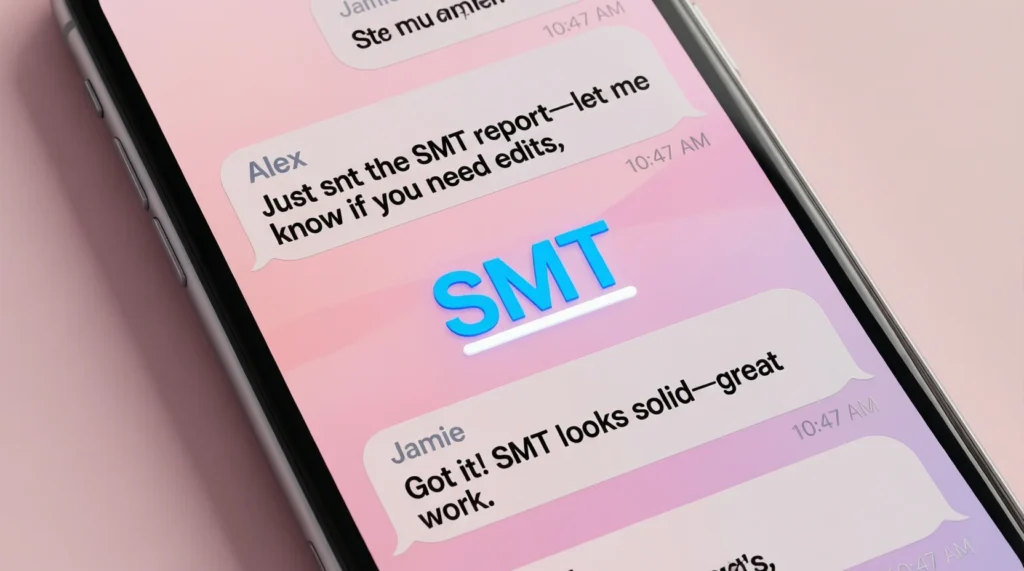
SMT in texting most commonly means “something.”
It is an informal abbreviation used in casual conversations to save time while typing, especially in chats between friends or peers.
Texting slang changes fast, and abbreviations like SMT often leave people confused. One short message can carry very different meanings depending on context, tone, and the relationship between the sender and receiver.
If you’ve seen “SMT” in a text, chat, or social media message and wondered what it means, this complete guide will explain everything clearly. From its most common definition to tone-based usage, examples, comparisons, alternatives, and FAQs, this article covers it all in a simple, friendly, and professional way.
What Does SMT Mean in Text Messages?
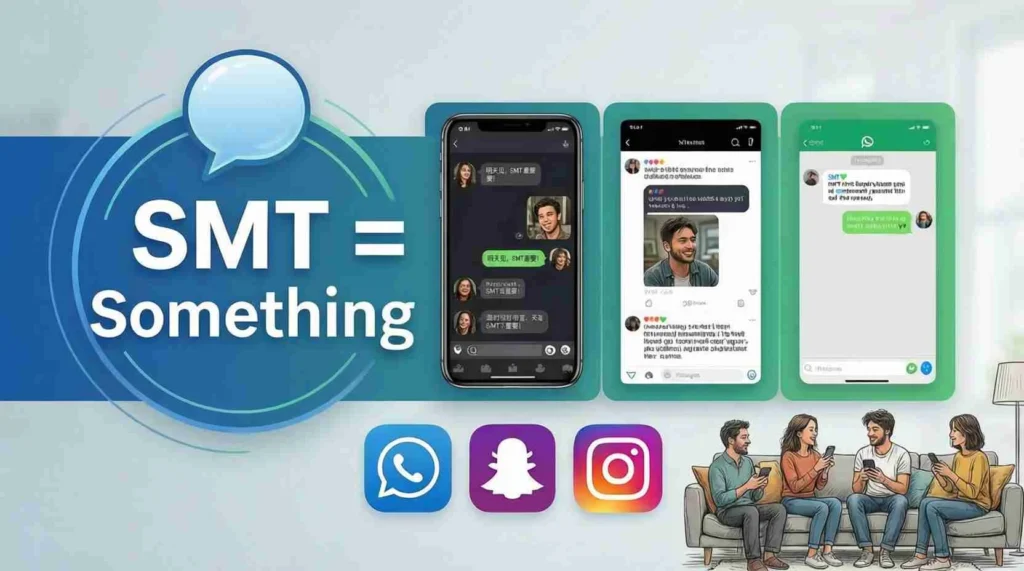
In everyday texting, SMT is short for “something.” It is commonly used when people want to keep messages brief and informal.
You will mostly see SMT in:
- Casual chats
- Social media comments
- Messaging apps like WhatsApp, Snapchat, and Instagram
- Conversations between friends or close acquaintances
Example:
“I need to tell you smt important.”
In this case, SMT simply replaces the word “something” and carries no hidden meaning.
Origin and Popularity of SMT
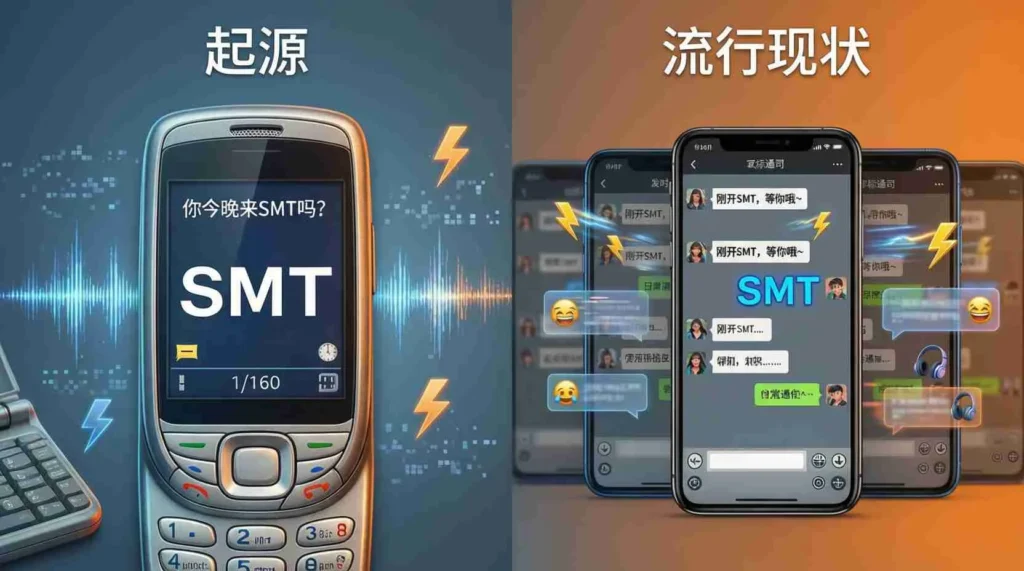
Where Did SMT Come From?
SMT became popular during the early days of mobile texting and instant messaging. When text messages had strict character limits, people shortened commonly used words to save space and time. “Something” was frequently used, so it naturally became abbreviated to SMT.
Why Is SMT Still Used Today?
Even though modern messaging apps no longer limit characters, SMT remains popular because:
- It is quick to type
- It feels casual and conversational
- Younger users prefer shorthand language
- It fits naturally into informal digital communication
How SMT Is Used in Real Conversations
Friendly or Casual Usage
This is the most common and harmless use of SMT.
Examples:
“Let’s do smt fun today.”
“I want smt sweet after dinner.”
“There’s smt I need to ask you.”
Tone: Friendly and relaxed
Neutral or Vague Usage
Sometimes SMT is used when the speaker does not want to be specific.
Examples:
“He mentioned smt about the meeting.”
“I heard smt like that before.”
Tone: Neutral and informational
Negative or Dismissive Usag
In some slang contexts, especially influenced by UK or Caribbean expressions, SMT can suggest annoyance. In these cases, it may be interpreted as “suck my teeth,” a gesture of frustration or disapproval.
Examples:
“SMT, whatever.”
“SMT, I’m done arguing.”
Tone: Dismissive or annoyed
This usage is less common but important to recognize, especially if the message feels cold or irritated.
SMT Example Table With Context
| Text Message | Meaning | Tone |
|---|---|---|
| “Tell me smt interesting” | Something | Friendly |
| “I feel smt is wrong” | Something | Neutral |
| “SMT, okay.” | Annoyance | Negative |
| “We need to discuss smt important” | Something | Serious |
Does SMT Have Other Meanings?
Yes, but mostly outside of texting.
Alternate Meanings of SMT
- Surface Mount Technology in electronics
- Simultaneous Multithreading in computing
- Subject Matter Test or Trainer in education
In casual texting and social media, SMT almost always means “something.”
SMT vs Similar Text Abbreviations
SMT is not the only shorthand for “something.” Here is how it compares to similar terms:
| Abbreviation | Meaning | Usage Style |
|---|---|---|
| SMT | Something | Very casual |
| STH | Something | Casual |
| SMTH | Something | Casual |
| IDK | I don’t know | Casual |
| TBH | To be honest | Casual |
| IMO | In my opinion | Semi casual |
All three SMT, STH, and SMTH mean the same thing, but SMT is the shortest and most informal.
Is SMT Appropriate for Professional Use?
No. SMT should not be used in professional or formal communication.
Avoid using SMT in:
- Work emails
- Academic writing
- Business conversations
- Customer support messages
Professional Alternatives to SMT
Use these instead:
- Something
- An issue
- A matter
- A task
- A concern
Example:
Incorrect: “We need to discuss smt.”
Correct: “We need to discuss something.”
When Should You Use SMT?
You can safely use SMT when:
- Messaging friends or family
- Chatting casually online
- Writing informal comments or captions
Avoid using SMT when:
- Speaking to clients or supervisors
- Writing formal messages
- Clarity and tone are important
Common Misunderstandings About SMT
- SMT is not always rude
- SMT is not a swear word
- SMT usually means something simple
- Tone and context determine meaning
Understanding the surrounding message is key.
FAQs
1. What does SMT mean in texting?
SMT usually means “something” in casual text conversations.
2. Is SMT rude?
No, not usually. It can sound rude only if used with an annoyed tone.
3. What does SMT mean from a girl or a guy?
It means the same thing regardless of gender: “something.”
4. Is SMT the same as STH or SMTH?
Yes, all three mean “something.”
5. Can SMT have a negative meaning?
Yes, in rare slang usage it can show annoyance or dismissal.
6. Is SMT used on WhatsApp and Snapchat?
Yes, SMT is commonly used across all messaging platforms.
7. Should I use SMT at work?
No. Always use full words in professional settings.
8. How should I reply if someone texts SMT?
Respond based on context. You can ask for clarification or continue the conversation naturally.
Conclusion
SMT is a simple texting abbreviation that most often means “something.” It is widely used in casual conversations and social media messages because it saves time and feels natural. While usually harmless, its tone can change based on context, so it is best avoided in professional communication.
If you are unsure, spelling out “something” is always the safest choice.
Understanding abbreviations like SMT helps you communicate clearly, avoid misunderstandings, and respond confidently in modern digital conversations.
Discover More Related Articles:
- What Does ~ Mean in Text? Casual Text Conversations (2026)
- What Does !! Mean in Text? Casual Text Messages (2026)

Daniel Moore is a content writer and language enthusiast at TextRoast.com, specializing in decoding slang, abbreviations, and trending text expressions. He creates engaging and informative articles that help readers understand the meaning behind everyday words and online communication.