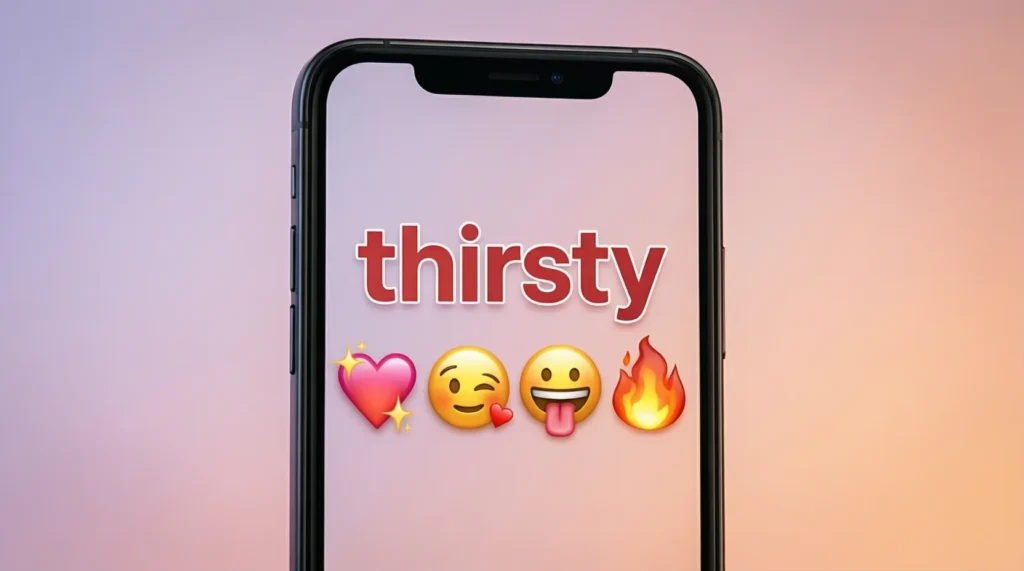
In slang, “thirsty” means overly eager for attention, validation, affection, or romantic interest, often in a way that feels obvious, desperate, or uncomfortable to others.
If someone has ever called a person “thirsty” online or in a text message, chances are it had nothing to do with water. In modern slang, thirsty has taken on a completely different meaning, especially on social media, dating apps, and casual conversations.
This article explains what thirsty means in slang, how it’s used, where it comes from, whether it’s offensive, and how to recognize it in real-life and online situations. You’ll also find examples, tone breakdowns, comparisons, polite alternatives, and FAQs, all written clearly and naturally for easy understanding and SEO performance.
What Does Thirsty Mean in Slang?
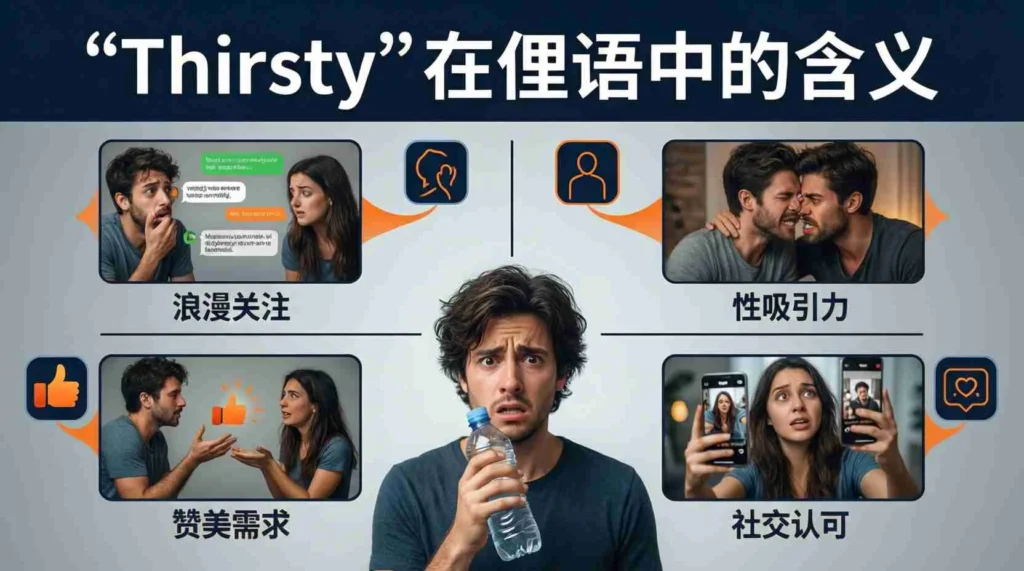
In slang usage, thirsty describes someone who is trying too hard to get attention, especially:
- Romantic attention
- Sexual interest
- Compliments
- Social validation
The word suggests a lack of subtlety, patience, or self-control, similar to how extreme thirst implies desperation for water.
Example:
“He keeps liking all her photos and commenting hearts. He’s thirsty.”
Origin of the Slang Term “Thirsty”

Where Did “Thirsty” Come From?
The slang meaning of thirsty evolved from its literal definition. Just as someone who is physically thirsty urgently needs water, a “thirsty” person metaphorically craves attention or affection.
The term gained popularity through:
- African American Vernacular English
- Hip-hop culture
- Reality TV
- Twitter, Instagram, and TikTok
By the early 2010s, “thirsty” became mainstream slang, widely used online.
How “Thirsty” Is Used in Everyday Slang
1. Thirsty for Romantic Attention
This is the most common meaning.
Examples:
“He’s DMing every girl he sees. That’s thirsty.”
“She keeps flirting nonstop. Kinda thirsty behavior.”
Tone: Judgmental or teasing
2. Thirsty for Validation or Fame
Thirsty can also describe someone who constantly seeks likes, views, or praise.
Examples:
“She posts selfies every hour for compliments.”
“That post felt thirsty for attention.”
Tone: Critical but casual
3. Playful or Joking Use
Among friends, thirsty can be used humorously.
Examples:
“Okay, calm down, you’re thirsty today.”
“Not you being thirsty in the comments.”
Tone: Lighthearted teasing
Thirsty Example Table With Context
| Situation | Example | Meaning | Tone |
|---|---|---|---|
| Dating | “Stop begging for replies, you look thirsty.” | Over-eager | Negative |
| Social media | “That caption is thirsty.” | Attention-seeking | Critical |
| Friends joking | “You’re thirsty for compliments today.” | Playful | Friendly |
| DMs | “Why is he so thirsty?” | Desperate interest | Judgmental |
Is Calling Someone Thirsty an Insult?
It depends on context and tone.
When It Can Be Insulting
- Said seriously
- Used publicly
- Aimed to shame or mock
- Said by strangers
When It’s Not a Big Deal
- Used jokingly among friends
- Used self-referentially
- Said in a playful tone
Example:
“I was thirsty, I admit it.”
Thirsty vs Similar Slang Terms
Here’s how “thirsty” compares to related slang words:
| Term | Meaning | Difference |
|---|---|---|
| Thirsty | Desperate for attention | Most common |
| Simp | Overly devoted, often one-sided | Stronger insult |
| Clout-chasing | Seeking fame or popularity | Social status focus |
| Desperate | Lacking self-respect | More serious |
| Cringe | Embarrassing behavior | Reaction-based |
Thirsty is usually less harsh than simp but more judgmental than desperate when used casually.
Common Signs of “Thirsty” Behavior
- Excessive flirting
- Over-commenting on posts
- Constant compliments
- Double or triple texting
- Begging for attention
- Ignoring social boundaries
Not all enthusiasm is thirsty, but lack of balance often triggers the label.
Is “Thirsty” Gender-Specific?
No. Anyone can be called thirsty regardless of gender.
However, social media often applies the term differently:
- Men are often labeled thirsty for romantic pursuit
- Women may be labeled thirsty for validation or likes
Both uses exist, but the meaning remains the same.
Polite or Neutral Alternatives to “Thirsty”
If you want to express the idea without sounding rude, consider:
- Attention-seeking
- Overly eager
- Trying too hard
- Looking for validation
- Very enthusiastic
Professional Example:
“His approach feels overly eager.”
How to Avoid Looking Thirsty Online
- Give space in conversations
- Avoid over-commenting
- Match energy levels
- Focus on self-confidence
- Let interactions feel natural
Confidence is usually the opposite of thirsty behavior.
FAQs
1. What does thirsty mean in slang?
It means someone is overly eager for attention or affection.
2. Is thirsty always a bad thing?
Not always. It can be playful or joking depending on tone.
3. What does thirsty mean on social media?
Seeking likes, comments, validation, or attention excessively.
4. What does thirsty mean in texting?
Trying too hard for a reply or romantic interest.
5. Is thirsty worse than simp?
No. Simp is usually harsher and more insulting.
6. Can someone call themselves thirsty?
Yes. It’s often used jokingly or self-aware.
7. Is thirsty slang offensive?
It can be, especially if used to shame or embarrass someone.
8. How do you respond if someone calls you thirsty?
Stay calm. You can laugh it off, clarify intentions, or ignore it.
Conclusion
In slang, thirsty describes someone who seeks attention too eagerly, often in a way that feels obvious or uncomfortable. While the term can be humorous among friends, it can also come across as insulting depending on tone and context.
Understanding how and when the word is used helps you navigate modern conversations, social media culture, and online communication with confidence and awareness.
When in doubt, balance, confidence, and authenticity are always better than trying too hard.
Discover More Related Articles:
- What Does Pookie Mean in Slang? For Casual Conversations in 2026
- What Does DDF Mean? When and When Not to Use It in 2026

David Brown is a content writer and language enthusiast at textroast.com, where he creates insightful articles that explain the meanings of words, slang, and phrases used in everyday life. His work helps readers decode modern language trends, understand cultural expressions, and make sense of online communication with clarity and fun.