
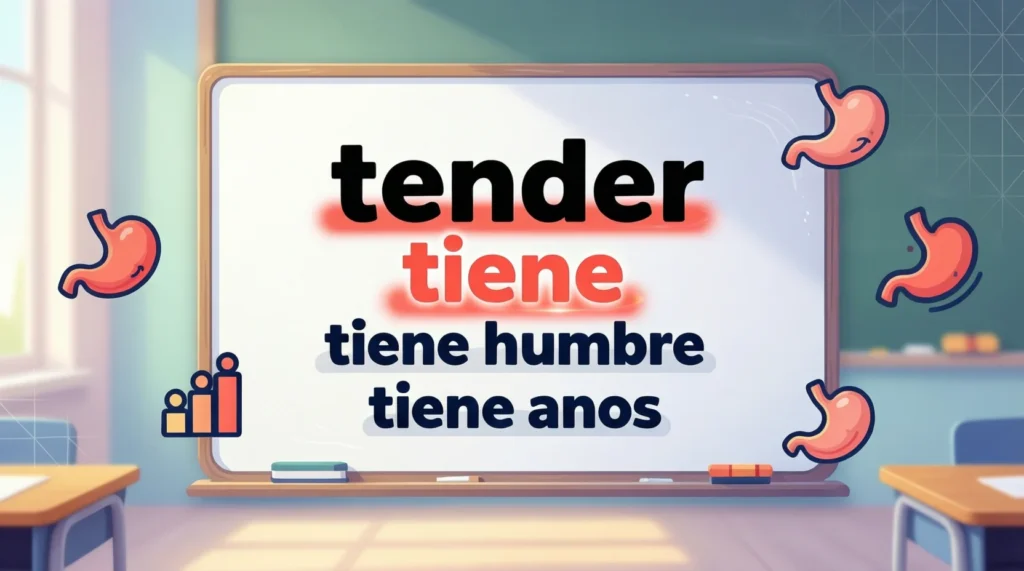
Tiene is a Spanish verb form meaning he has she has you have formal or it has and comes from the verb tener which means to have.
If you are learning Spanish or hearing it in conversations movies or songs you may often come across the word tiene and wonder what it means. At first glance it looks simple but tiene is one of the most commonly used Spanish words and plays a major role in everyday communication. Understanding it properly will instantly improve your Spanish comprehension and speaking confidence.
In this complete article you will learn what tiene means in Spanish its grammatical role how it is used in real life examples how tone and context affect meaning common mistakes learners make and how it compares with similar Spanish words.
Basic Meaning of Tiene
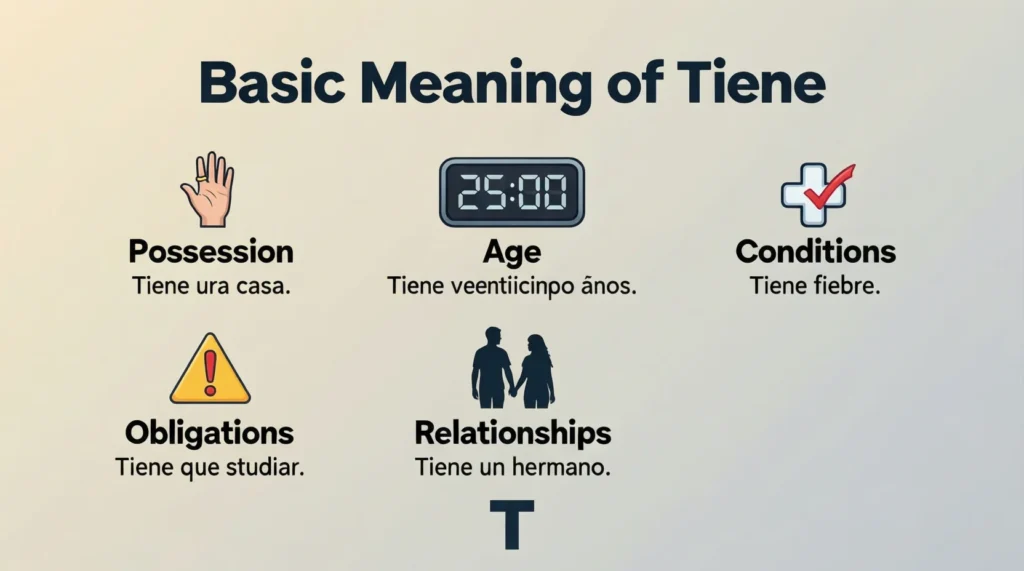
The word tiene comes from the Spanish verb tener meaning to have.
Tiene is used when talking about
Possession
Age
Conditions
Obligations
Relationships
It always refers to a third person singular or formal you.
Verb Root Tener Explained
Tener is an irregular Spanish verb.
Here is its present tense conjugation for clarity.
| Subject | Form of Tener |
|---|---|
| Yo | Tengo |
| Tú | Tienes |
| Él Ella Usted | Tiene |
| Nosotros | Tenemos |
| Ellos Ustedes | Tienen |
So tiene is used for
He
She
It
You formal
What Tiene Literally Means
Tiene literally means
Has
Examples
Él tiene un coche
He has a car
Ella tiene tiempo
She has time
Tiene Used for Possession
One of the most common uses of tiene is possession.
Examples
Tiene dinero
He has money
Tiene una casa grande
She has a big house
This usage is very straightforward.
Tiene Used for Age
In Spanish age is expressed using tener not to be.
Example
Tiene veinte años
They are twenty years old
This is different from English and very important for learners.
Tiene Used for Physical Conditions
Tiene is used to describe physical or emotional states.
Examples
Tiene hambre
He is hungry
Tiene frío
She is cold
Tiene miedo
He is afraid
Spanish uses tener instead of to be in these cases.
Tiene Used for Illness
Tiene is also used for sickness or discomfort.
Examples
Tiene fiebre
He has a fever
Tiene dolor de cabeza
She has a headache
Tiene Used for Obligations
When combined with que tiene expresses obligation.
Example
Tiene que estudiar
He has to study
This structure is very common in spoken Spanish.
Tiene Used in Questions
Tiene is often used in questions.
Examples
Tiene tiempo
Do you have time
Tiene hermanos
Does he have siblings
Tone usually indicates it is a question.
Formal Use of Tiene
Tiene is used when speaking formally to someone using usted.
Example
¿Tiene una reserva
Do you have a reservation
This is common in customer service and professional settings.
Tiene vs Tienes
This is a common confusion.
Tiene is for
He
She
It
You formal
Tienes is for
You informal
Example
Tú tienes razón
You are right
Él tiene razón
He is right
Tiene vs Hay
Tiene means has.
Hay means there is or there are.
Example
Tiene comida
He has food
Hay comida
There is food
They are not interchangeable.
Pronunciation of Tiene
Tiene is pronounced
TYEH neh
The e sounds are soft.
Correct pronunciation helps avoid confusion with tiene and tienes.
Common Expressions Using Tiene
Spanish uses tiene in many fixed expressions.
Tiene razón
He is right
It sentido
It makes sense
Tiene suerte
He is lucky
Tiene importancia
It matters
These expressions are very common.
Emotional Tone of Tiene
Tiene itself is neutral.
Emotion comes from
Context
Tone
Facial expression
The word can sound caring curious serious or neutral depending on how it is said.
Tiene in Written Spanish
Tiene is used frequently in
Books
Articles
Messages
Emails
It is standard Spanish not slang.
Mistakes Learners Make With Tiene
Common errors include
Using tiene instead of tienes
Using estar instead of tener
Forgetting that age uses tener
Example incorrect
Ella es veinte años
Correct
Ella tiene veinte años
Can Tiene Refer to Objects
Yes.
Example
El coche tiene problemas
The car has problems
Tiene can be used for people animals and objects.
Tiene in Negative Form
To say does not have use no tiene.
Example
No tiene dinero
He does not have money
Tiene in Past and Future
Tiene is present tense only.
Past example
Tenía hambre
He was hungry
Future example
Tendrá tiempo
He will have time
Comparison With English Has
Spanish tiene covers more situations than English has.
English uses be for
Age
Feelings
Spanish uses tener and therefore tiene.
Cultural Importance of Tener
Tener is one of the most important verbs in Spanish.
Mastering tiene helps you
Speak naturally
Understand native speakers
Avoid beginner mistakes
FAQs
What does tiene mean in Spanish?
Tiene means he has she has you have formal or it has.
Is tiene from tener?
Yes tiene is the third person form of tener.
Can tiene mean is?
No but Spanish uses tiene where English uses is for age and feelings.
What is the difference between tiene and tienes?
Tiene is third person or formal you while tienes is informal you.
Is tiene formal?
It can be formal when used with usted.
Does tiene work for age?
Yes Spanish uses tiene to express age.
Can objects use tiene?
Yes objects can use tiene.
Is tiene present tense?
Yes it is present tense only.
Conclusion
So what does tiene mean in Spanish Tiene means has and comes from the verb tener. It is used to talk about possession age feelings health obligations and more. It applies to he she it and formal you making it one of the most essential verb forms in Spanish.
Understanding how and when to use tiene will significantly improve your fluency and help you sound more natural in real conversations. Once you master tiene you unlock a large part of everyday Spanish communication.
Discover More Related Articles:
- What Does Oppa Mean? Korean Word Often Mistaken for Japanese in 2026
- What Does ONA Mean in Anime and How It’s Different From TV Series in 2026

David Brown is a content writer and language enthusiast at textroast.com, where he creates insightful articles that explain the meanings of words, slang, and phrases used in everyday life. His work helps readers decode modern language trends, understand cultural expressions, and make sense of online communication with clarity and fun.