
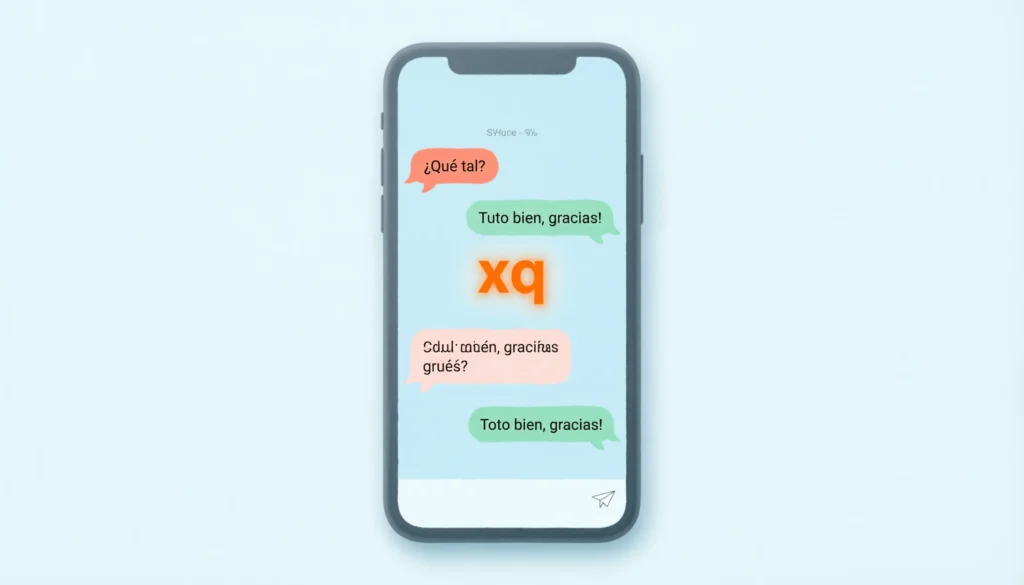
XQ in Spanish is an informal abbreviation used in texting and online writing that means “porque” (because) or “por qué” (why), depending on context.
If you spend time texting, chatting, or scrolling through Spanish language social media, you’ve probably seen xq pop up again and again. At first glance, it can look confusing, especially for Spanish learners. Is it slang? Is it an abbreviation? Does it change meaning based on context?
The short answer is yes, xq is an informal abbreviation, and it plays a big role in modern written Spanish. In this detailed guide, you’ll learn what xq means in Spanish, how it’s used, where it comes from, when it’s appropriate, examples in real conversations, common mistakes, and safer alternatives.
What Does XQ Stand For
XQ is a shortened form based on sound and convenience.
X
Represents “por”
Q
Represents “que” or “qué”
Together, xq can replace
Porque meaning because
Por qué meaning why
The exact meaning depends entirely on how it’s used in a sentence.
XQ Meaning “Because”
The most common meaning of xq is because.
Example
No fui xq estaba cansado
I didn’t go because I was tired
Here, xq replaces porque.
Tone
Casual and informal
This usage is extremely common in text messages and social media.
XQ Meaning “Why”
XQ can also mean why when used in a question.
Example
Xq no viniste
Why didn’t you come
In this case, xq replaces por qué.
Context clue
If it’s a question, xq usually means why.
How Context Changes the Meaning of XQ
Because xq can mean both because and why, context is essential.
Statement
Xq no tenía tiempo
Because I didn’t have time
Question
Xq no tienes tiempo
Why don’t you have time
Punctuation and sentence structure clarify the meaning.
Where XQ Is Commonly Used
XQ is most common in
Text messages
WhatsApp chats
Social media comments
Online forums
Casual notes
It is rarely seen in formal writing.
Is XQ Slang or Abbreviation
XQ is an abbreviation, not a traditional slang word.
It shortens common words to save time and effort, similar to
u instead of you
bc instead of because
Origin of XQ
XQ emerged from early digital communication.
Texting culture
Character limits
Speed typing
Spanish speakers created shortcuts like
xq
pq
tmb
k
XQ became popular because it is short and easily recognizable.
XQ vs Porque vs Por Qué
Understanding the difference is important.
Porque
Because
Formal and correct
Por qué
Why
Formal and correct
XQ
Because or why
Informal and casual
It should not replace porque or por qué in formal contexts.
XQ vs PQ
Both are used informally.
XQ
More visual and modern
PQ
More phonetic
Both mean because or why depending on context.
Pronunciation of XQ
XQ is not usually spoken aloud.
When read, it is mentally translated as
Porque
Por qué
People do not say “equis cu” in normal conversation.
XQ in Spoken Spanish
XQ is almost never spoken.
In speech, people always say
Porque
Por qué
XQ exists almost entirely in written digital communication.
XQ in Social Media
It is widely used on platforms like
Instagram
Twitter
Facebook
TikTok comments
Example
Me gusta xq es diferente
I like it because it’s different
It sounds relaxed and modern.
Tone of XQ
XQ sounds
Casual
Friendly
Relaxed
It can sound careless or unprofessional in serious contexts.
When Not to Use XQ
Avoid xq in
School essays
Work emails
Formal messages
Professional writing
Using xq in these contexts can appear lazy or disrespectful.
Polite and Professional Alternatives
Instead of xq, use
Porque
Por qué
Ya que
Debido a que
These are grammatically correct and appropriate in all settings.
XQ and Grammar Rules
XQ ignores standard spelling rules.
It does not use accents
It does not distinguish between porque and por qué
This is acceptable only in informal writing.
Common Mistakes Learners Make
Using xq in formal writing
Using xq in spoken Spanish
Confusing meaning without context
Understanding when to use it is more important than memorizing it.
XQ Compared to English Shortcuts
XQ is similar to English texting shortcuts like
bc for because
u for you
r for are
They are convenient but informal.
Cultural Significance of XQ
XQ reflects modern Spanish communication.
It shows how
Language adapts to technology
Efficiency influences writing
Younger generations shape usage
It’s a symbol of digital age Spanish.
Is XQ Understood Everywhere
Yes, xq is widely understood across Spanish speaking countries.
Spain
Latin America
US Spanish speakers
Meaning is consistent, though frequency may vary.
XQ in Different Age Groups
Younger speakers
Use xq frequently
Older speakers
May understand it but use it less
It is more common among teens and young adults.
Example Table of XQ Usage
| Sentence | Meaning |
|---|---|
| No fui xq llovía | Because it was raining |
| Xq llegaste tarde | Why did you arrive late |
| Me gusta xq es fácil | Because it’s easy |
| Xq no contestas | Why aren’t you answering |
FAQs
What does xq mean in Spanish?
It means because or why depending on context.
Is xq correct Spanish?
It is informal but commonly used.
Can xq replace porque?
Only in casual writing.
Is xq used in spoken Spanish?
No it is mostly written.
Is xq rude?
Not rude but informal.
Do accents matter in xq?
Accents are dropped in abbreviations.
Is xq used in all countries?
Yes it is widely understood.
Should Spanish learners use xq?
Only in informal texting.
Conclusion
So what does xq mean in Spanish XQ is a modern informal abbreviation that stands for porque or por qué, meaning because or why depending on context. It is widely used in texting and online conversations but should be avoided in formal or professional writing.
Understanding xq helps you read and understand real world Spanish as it’s used today, especially online. While it’s not a replacement for proper grammar, it’s an important part of modern digital communication in Spanish.
Discover More Related Articles:
- What Does Punta Mean in Spanish? Full Cultural Context in 2026
- Feliz Navidad Meaning in English and Spanish Christmas Culture in 2026

Daniel Moore is a content writer and language enthusiast at TextRoast.com, specializing in decoding slang, abbreviations, and trending text expressions. He creates engaging and informative articles that help readers understand the meaning behind everyday words and online communication.