Definition
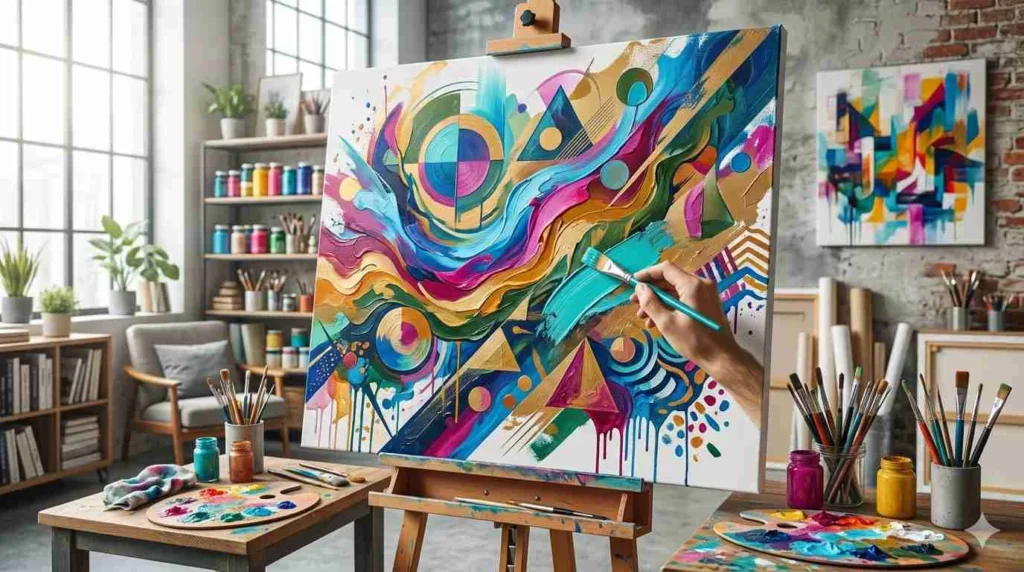
Abstract in art refers to a style of artwork that does not attempt to realistically represent visual reality. Instead, it uses shapes, colors, lines and forms to express emotions, ideas or concepts in a non-literal way.
In simple terms, abstract art is not about showing things exactly as they look in real life. It is about expressing what something feels like rather than what it looks like.
Have you ever looked at a painting and thought, “What am I even looking at?” That moment is often your first encounter with abstract art.
Unlike realistic paintings that clearly show people, landscapes, or objects, abstract art steps away from direct representation. It invites viewers to feel, interpret, and imagine instead of just recognizing.
This is exactly why abstract art is both confusing and fascinating at the same time. It breaks rules, challenges expectations, and opens the door to personal interpretation.
Today, abstract art is everywhere, from museum galleries to modern home décor, digital design, branding, and even fashion.
Origin of Abstract Art
Abstract art did not appear overnight. It developed gradually in the early 20th century as artists started questioning traditional ways of painting.
Key Historical Development
- Early inspiration came from movements like Impressionism and Expressionism
- Artists began focusing more on emotions than realism
- Around the 1900s, abstraction became a recognized art movement
Important Influences
- Changes in society and technology
- World War impacts, leading artists to express deeper emotions
- Scientific discoveries that challenged how people saw reality
Famous Early Abstract Artists
- Wassily Kandinsky, often called the father of abstract art
- Piet Mondrian, known for geometric abstraction
- Kazimir Malevich, who explored minimal abstract forms
These artists believed art did not need to copy reality to be meaningful.
What Does Abstract Mean in Art Today?
In modern usage, abstract art means any artwork that moves away from realistic representation.
It can include:
- Shapes that do not represent real objects
- Colors used for emotional expression
- Distorted or simplified forms
- Completely non recognizable compositions
Today, abstract art is widely used not only in fine art but also in:
- Interior design
- Digital illustration
- Advertising visuals
- Album covers
- Fashion patterns
Characteristics of Abstract Art
Here are the main features that define abstract art:
1. Non Realistic Representation
Objects are not shown as they appear in real life.
2. Focus on Emotion
The artwork expresses feelings instead of accurate visuals.
3. Use of Shapes and Colors
Colors and shapes become the main language of communication.
4. Freedom of Interpretation
Each viewer may understand the artwork differently.
5. Experimentation
Artists often break traditional rules intentionally.
Types of Abstract Art
Abstract art is not one single style. It includes several variations:
1. Geometric Abstraction
Uses shapes like squares, circles, and lines in structured compositions.
2. Lyrical Abstraction
Focuses on flowing, expressive brushwork and soft forms.
3. Abstract Expressionism
Emphasizes spontaneous and emotional painting techniques.
4. Minimalist Abstraction
Uses very simple elements and limited colors.
5. Color Field Painting
Large areas of color are used to create emotional impact.
Examples of Abstract Art (With Context)
To understand abstract art better, here are simple examples:
- A painting made of red and black shapes that express anger or intensity
- A canvas filled with flowing blue lines representing calmness or water movement
- A composition of geometric squares showing balance and structure
- Random splashes of paint representing chaos or energy
Tone-Based Interpretation Examples
| Artwork Style | Viewer Feeling | Interpretation |
|---|---|---|
| Bright chaotic colors | Energetic, loud | Excitement or confusion |
| Soft pastel shapes | Calm, peaceful | Relaxation or harmony |
| Sharp black lines | Serious, intense | Conflict or tension |
| Circular patterns | Balanced, stable | Unity or continuity |
Why Abstract Art Is Popular Today
Abstract art continues to grow in popularity because:
- It fits modern interior design styles
- It allows emotional expression without limits
- It works well in digital media and branding
- It does not require strict technical realism
- It encourages personal interpretation
In simple words, abstract art gives freedom to both the artist and the viewer.
Abstract Art vs Realistic Art
Understanding the difference helps clarify the meaning of abstract in art.
| Feature | Abstract Art | Realistic Art |
|---|---|---|
| Representation | Non literal | Accurate and detailed |
| Focus | Emotion and concept | Physical appearance |
| Style | Free and expressive | Structured and precise |
| Interpretation | Open ended | Clear and direct |
| Examples | Kandinsky style paintings | Portraits, landscapes |
Common Misunderstandings About Abstract Art
Many people misunderstand abstract art as “random” or “meaningless,” but that is not true.
Common myths:
- It has no meaning
- Anyone can do it without skill
- It is just random paint
Reality:
- It requires strong artistic intention
- It often involves deep emotional expression
- It uses thoughtful composition and balance
Alternate Meanings of “Abstract”
Outside of art, the word “abstract” can also mean:
- Summary: A short version of a document or research paper
- Conceptual idea: Something not physical or concrete
However, in the context of art, it specifically refers to non representational visual expression.
Polite and Professional Alternatives
When describing abstract art in professional contexts, you can use:
- Non representational art
- Conceptual visual art
- Expressive art style
- Non figurative composition
- Contemporary abstract design
These terms are often used in galleries, art education, and design industries.
Real World Usage of Abstract Art
Abstract art is widely used beyond galleries:
Interior Design
- Wall paintings in modern homes
- Office décor for creative environments
Digital Media
- Website backgrounds
- App UI visuals
- Social media branding
Commercial Design
- Product packaging
- Advertising visuals
- Fashion prints
How to Understand Abstract Art Easily
If you are new to abstract art, here are simple tips:
- Focus on emotions instead of objects
- Look at colors and what they make you feel
- Don’t search for “correct meaning”
- Observe patterns and movement
- Trust your personal interpretation
There is no right or wrong answer in abstract art appreciation.
FAQs
What does abstract mean in art?
Abstract in art means creating artwork that does not directly represent real objects but instead uses shapes, colors, and forms to express ideas or emotions.
Is abstract art supposed to look like something?
No, abstract art does not need to resemble anything real. It focuses more on feeling and expression.
Who started abstract art?
Artists like Wassily Kandinsky and Piet Mondrian are considered pioneers of abstract art.
Why is abstract art important?
It allows artists to express emotions freely and encourages viewers to interpret meaning in their own way.
Is abstract art easy to create?
It may look simple, but creating meaningful abstract art requires creativity, balance, and intention.
What is the difference between abstract and modern art?
Abstract art is a style, while modern art is a broader art movement that includes many styles including abstract.
Can abstract art have meaning?
Yes, abstract art often carries emotional or conceptual meaning even if it is not obvious.
Why do people like abstract art?
People enjoy it because it is open to interpretation and adds emotional depth to spaces.
Conclusion
Abstract art is one of the most expressive and flexible forms of visual creativity. It moves away from strict realism and focuses instead on emotions, ideas, and imagination. Rather than showing the world as it is, abstract art shows how the world feels.
Understanding what abstract means in art helps you appreciate not just paintings in museums but also modern design, digital media, and everyday visuals around you. Once you stop searching for literal meaning, abstract art becomes a powerful emotional experience rather than a visual puzzle.
You love it or find it confusing, abstract art always invites one thing: your personal interpretation.
Discover More Related Articles:
- From Confusion to Clarity: Understanding Vertices in Geometry In 2026
- Construction Made Simple: What ROM Really Means & Why It Matters In 2026
- Math Symbols Explained: What the ‘ (Prime) Sign Means In 2026

Laura Jackson is a writer at textroast.com, where she creates engaging articles that decode the meanings behind slang, phrases, and everyday expressions. Passionate about language and communication, she makes complex or confusing terms easy to understand, turning learning into a fun and relatable experience for readers around the world.