
Definition
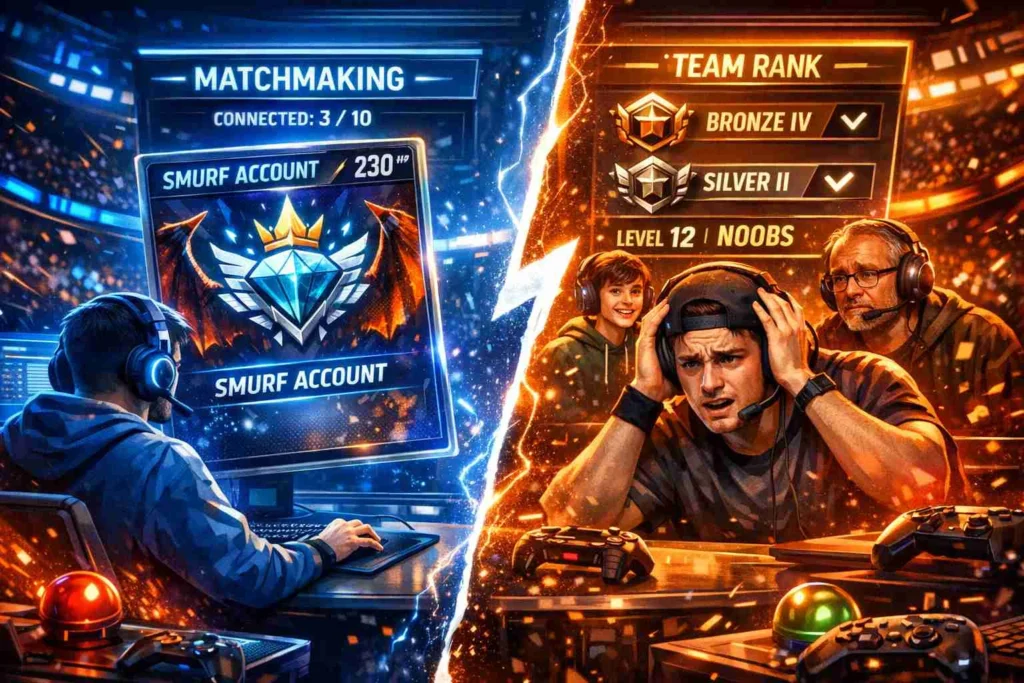
Smurfing in gaming is when a highly skilled or experienced player creates a new account to play against less skilled or beginner players, often to gain easier wins or hide their true skill level.
In simple words, smurfing means a strong player pretending to be a beginner so they can compete in lower-ranked matches. This behavior is common in competitive online games and can significantly affect matchmaking fairness and player experience.
If you’ve ever played an online multiplayer game and suddenly faced an opponent who seemed way too good for your level, you might have already encountered smurfing.
It is one of the most debated topics in online gaming communities today. Some players see it as harmless fun or practice, while others consider it unfair and frustrating. You’re playing ranked matches in FPS games, MOBAs, or battle royale titles, smurfing can change the entire experience of the game.
Understanding what smurfing means in gaming helps players recognize unfair matches, improve matchmaking awareness, and better understand competitive systems.
Origin of the Term “Smurfing” in Gaming
The term “smurfing” has an interesting history.
It originated in the late 1990s from a game of Warcraft II. Two highly skilled players created alternate accounts named after Smurf cartoon characters. Their main goal was to play against weaker opponents without being recognized.
They chose names like “Papa Smurf” and “Smurfette,” and soon other players started calling this behavior “smurfing.”
Since then, the term has spread across almost all online competitive games.
Why Do Players Smurf in Games?
Smurfing is not always done for the same reason. Players may have different motivations depending on their goals or mindset.
Common reasons include:
- To play with friends who are at lower ranks
- To practice new characters or strategies without pressure
- To escape high-rank competitive stress
- To test skills in easier lobbies
- For entertainment or trolling purposes
- To boost confidence after losing streaks
While some reasons seem harmless, others can negatively affect the gaming experience for new players.
How Smurfing Affects Online Gaming
Smurfing can have both positive and negative effects, but most gaming communities consider it harmful to fair play.
Negative impacts:
- New players get matched with highly skilled opponents
- Beginners feel frustrated or discouraged
- Ranking systems become less accurate
- Competitive integrity is reduced
- Toxic behavior may increase in matches
Positive impacts (less common):
- Smurfs can help friends learn faster
- Some players use it to experiment with new tactics
- Occasionally improves matchmaking skill gap awareness
However, game developers usually focus more on reducing smurfing than encouraging it.
Examples of Smurfing in Popular Games
To understand it better, let’s look at real-world gaming scenarios.
Example 1: Competitive Shooter Game
A Diamond-ranked player creates a new account in a game like Valorant or CS-style shooter. They get placed in beginner lobbies and dominate matches easily.
Example 2: MOBA Game
An experienced League-style player uses a new account and plays against Bronze or Silver-ranked players, winning most matches alone.
Example 3: Battle Royale Game
A skilled Fortnite or PUBG player starts a fresh account and easily eliminates beginners in early matches.
Smurfing Example Table
| Situation | Player Behavior | Impact on Game |
|---|---|---|
| High-ranked player creates new account | Plays against beginners | Unfair matches, easy wins |
| Experienced player uses smurf for practice | Tests new characters | Mixed impact |
| Pro player smurfs for fun | Dominates low ranks | Frustration for new players |
| Friend helping low-ranked teammate | Boosting experience | Slightly positive but unbalanced |
Is Smurfing Allowed in Gaming?
Smurfing rules depend on the game.
- Some games tolerate alternate accounts
- Some strictly ban smurfing in ranked modes
- Many games allow multiple accounts but discourage abusing matchmaking
- Competitive esports platforms often have strict anti-smurf systems
In general, smurfing itself is not always illegal, but it may violate fair play policies depending on intent and behavior.
Smurfing vs Related Gaming Terms
Smurfing is often confused with other gaming terms. Let’s break them down clearly.
Smurfing vs Boosting
- Smurfing: A skilled player uses a low-ranked account
- Boosting: A skilled player helps another account rank up unfairly
Alt Account vs Smurfing
- Smurfing: Used to play against weaker opponents intentionally
- Alt account: A secondary account for general use, not necessarily for unfair matches
Smurfing vs Trolling
- Smurfing: Based on skill imbalance
- Trolling: Deliberately annoying or disrupting teammates/opponents
Alternative Meanings of Smurfing
Outside gaming, “smurfing” can also refer to:
- Financial smurfing: Breaking large transactions into smaller ones to avoid detection
- Cybersecurity contexts: Masking identity or activity
- Informal slang: Rarely used outside gaming communities
However, in modern usage, it mostly refers to gaming behavior.
Why Players Dislike Smurfing
Many gamers express frustration with smurfing because it affects fairness.
Common complaints:
- “I keep getting destroyed by players way above my rank”
- “Ranking system feels broken”
- “It’s hard for beginners to learn”
- “Matches are not balanced anymore”
This is why developers constantly try to improve matchmaking algorithms.
Developer Actions Against Smurfing
Game companies actively try to reduce smurfing through:
- Skill-based matchmaking (SBMM)
- Phone or email verification
- Ranked system adjustments
- Detection of unusual win streaks
- Linking accounts to hardware or devices
- Faster rank calibration systems
These systems aim to ensure fair competition for all players.
Professional Alternatives to Smurfing Behavior
If players want to avoid smurfing but still improve or experiment, they can:
- Use practice modes or training arenas
- Play unranked casual matches
- Create custom games with friends
- Try different roles in their main account
- Use sandbox or test environments
These options help maintain fairness while still allowing skill growth.
Usage Tips: Understanding Smurfing in Conversations
When gamers use the term “smurfing,” it can appear in different tones:
- Friendly: “I think that guy is smurfing lol 😄”
- Neutral: “There might be a smurf in this match.”
- Negative: “This game is full of smurfs, it’s unfair.”
Knowing the tone helps you understand the situation better in gaming chats.
FAQs
What does smurfing mean in gaming?
Smurfing means a skilled player using a new or low-ranked account to play against less experienced players, often resulting in unfair matches.
Why do players smurf in online games?
Players smurf to play easier matches, practice new strategies, avoid high-rank pressure, or play with friends in lower ranks.
Is smurfing considered cheating in games?
It is not always classified as cheating, but many games discourage it because it disrupts fair matchmaking and balance.
How can you identify a smurf player?
Smurf players often have high kill counts, fast reaction times, and gameplay skills that don’t match their low rank.
Does smurfing ruin competitive gaming?
In many cases, yes. It can make matches unfair for beginners and reduce the overall competitive experience.
Can smurfing get you banned?
Some games may ban or penalize smurfing if it violates their fair play or ranking policies.
What is the difference between smurfing and boosting?
Smurfing is playing on a low-level account yourself, while boosting involves someone else helping you increase rank unfairly.
How do game developers stop smurfing?
They use skill-based matchmaking, account verification, behavior tracking, and faster ranking systems to reduce smurf accounts.
Conclusion
Smurfing in gaming is a widely recognized behavior where skilled players use new accounts to compete against less experienced opponents. While it may sometimes be done for harmless reasons like practice or playing with friends, it often leads to unfair gameplay experiences for beginners.
Understanding what smurfing means in gaming helps players recognize why matches may feel unbalanced and why developers continuously work to improve matchmaking systems.
As online gaming continues to grow, maintaining fair competition remains a top priority for both players and developers. If used responsibly, gaming remains fun and competitive for everyone.
Discover More Related Articles:
- From Confusion to Clarity: Understanding Vertices in Geometry In 2026
- Construction Made Simple: What ROM Really Means & Why It Matters In 2026
- Math Symbols Explained: What the ‘ (Prime) Sign Means In 2026

Laura Jackson is a writer at textroast.com, where she creates engaging articles that decode the meanings behind slang, phrases, and everyday expressions. Passionate about language and communication, she makes complex or confusing terms easy to understand, turning learning into a fun and relatable experience for readers around the world.