
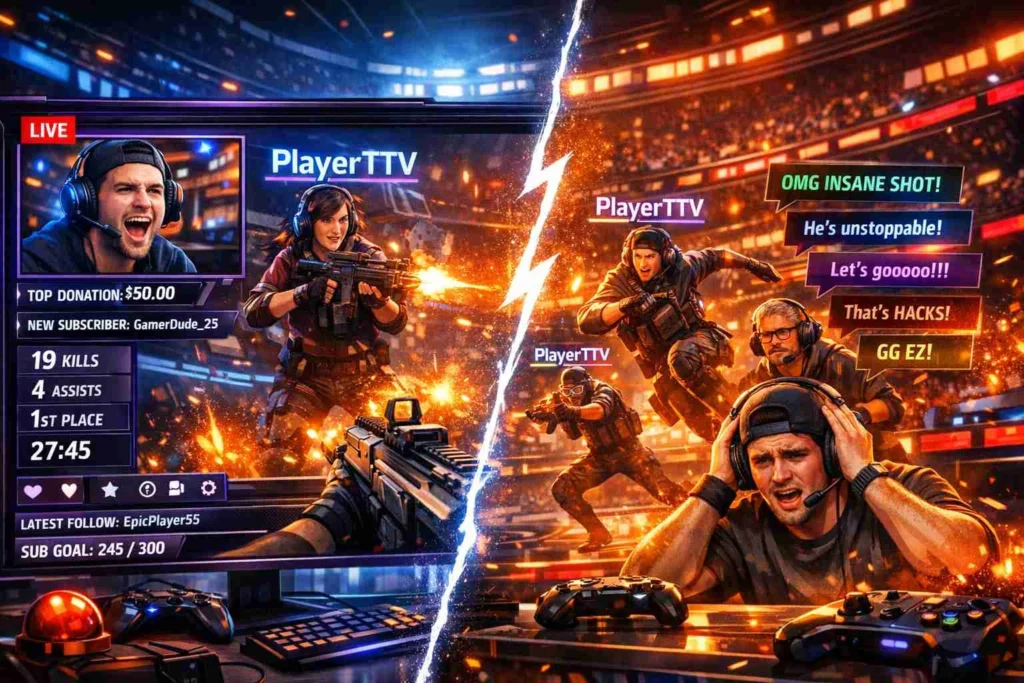
Definition
TTV in gaming typically stands for “Twitch TV” and is used in usernames or tags to indicate that a player streams gameplay on Twitch. It is often added by gamers to promote their live streams or attract viewers from in-game matches.
If you’ve ever been in an online match and seen a username like “ProGamerTTV” or “SniperKing_TTV,” you might have wondered what it actually means. Is it a rank? A clan tag? A warning sign? Or just random letters?
The truth is, TTV has become a widely recognized part of gaming culture, especially in competitive online games like Fortnite, Call of Duty, Valorant, Apex Legends, and more. It often signals that a player is also a content creator or streamer trying to grow an audience on Twitch.
But there’s more to it than just three letters. Let’s break it down in detail.
Origin of TTV in Gaming
The term “TTV” comes directly from Twitch TV, the popular live-streaming platform owned by Amazon where gamers broadcast their gameplay.
How it started:
- Twitch originally had the domain twitch.tv
- Streamers began adding “TTV” to usernames in games
- Example: “ShadowHunterTTV” = ShadowHunter on Twitch TV
- It became a simple way to advertise live streams
Over time, the abbreviation “TTV” stuck because:
- It’s short and easy to recognize
- It fits neatly into usernames
- It works across all gaming platforms
What started as self-promotion gradually turned into a cultural identity within gaming communities.
Why TTV Became So Popular
TTV exploded in popularity due to the rise of streaming culture.
Here’s why it caught on:
- Easy marketing tool – Players don’t need ads; their username does the promotion
- Cross-platform visibility – Seen in every match, lobby, and kill feed
- Streaming boom – Twitch became the center of gaming content creation
- Aspiration factor – Many players want to become streamers
- Community identity – It signals “I’m a gamer AND a content creator”
However, not all reactions to TTV are positive, which we’ll discuss later.
How TTV Is Used in Gaming
TTV is mostly used in usernames, but its meaning can vary slightly depending on context.
Common uses:
- Usernames: “EliteSniperTTV”
- Clan tags: “[TTV] PlayerName”
- In-game identity branding
- Self-promotion for Twitch channels
- Spectator attraction (hoping viewers check their stream)
Psychological effect in matches:
When players see TTV in a name, they often assume:
- The player might be a streamer
- The player may be more competitive or tryhard
- The player might be recording gameplay
This can change how others play against them.
Examples of TTV Usage in Context
Here are real-style examples of how TTV appears in gaming environments:
Table: TTV Usage Examples
| Context | Example | Meaning |
|---|---|---|
| Username | ShadowReaperTTV | Player streams on Twitch |
| Clan Tag | [TTV]GhostAim | Part of streamer branding |
| Kill Feed | Eliminated by ProClutchTTV | Opponent is a streamer |
| Lobby Name | SniperQueen_TTV | Twitch promotional identity |
| Chat Reaction | “Nice shot TTV lol” | Recognizing streamer in match |
Positive, Neutral, and Negative Meanings of TTV
TTV doesn’t always carry the same tone. Depending on the situation, it can be positive, neutral, or even slightly negative.
Positive meaning:
- “I’m a streamer, check my Twitch”
- Builds personal brand
- Shows gaming identity proudly
Neutral meaning:
- Just part of username
- No emotional or competitive intent
- Simple identification
Negative / sarcastic meaning:
In some gaming communities, “TTV” can be used in a mocking way:
- “Tryhard TTV” → overly sweaty player
- “TTV but still lost” → sarcastic insult
- “Another TTV camper” → frustration from opponents
This shows how gaming slang can shift meaning based on context.
Comparison with Related Gaming Terms
To better understand TTV, it helps to compare it with similar gaming abbreviations.
TTV vs Other Tags
| Term | Meaning | Usage |
|---|---|---|
| TTV | Twitch TV streamer tag | Self-promotion in usernames |
| YT | YouTube | Indicates YouTube content creator |
| FB | Facebook Gaming | Less common streaming tag |
| CLAN tags | Group identity | Team-based gaming identity |
| SMURF | High skill player on low rank account | Competitive behavior |
| TRYHARD | Extremely competitive player | Behavioral label |
Key difference:
TTV is about content creation, while most other terms describe skill, platform, or behavior.
Alternate Meanings of TTV
Although in gaming TTV almost always means Twitch TV, there are rare alternate meanings in other contexts:
- Time To Victory (rare gaming strategy term)
- Total Transaction Value (business/finance, not gaming)
- Thermal Transfer Voltage (technical/science context)
However, in gaming culture, 99% of the time, TTV = Twitch TV streamer tag.
Polite or Professional Alternatives to TTV
Some players prefer more subtle or cleaner branding instead of using TTV directly.
Better alternatives include:
- “Live on Twitch”
- “Streamer”
- “On Twitch”
- “Watch me on Twitch”
- “Streaming now”
Why people switch:
- Looks more professional
- Less spammy or repetitive
- Avoids negative stereotypes in competitive lobbies
- Better for long-term branding
Real Impact of TTV in Gaming Communities
TTV has shaped gaming culture in unexpected ways.
Effects include:
- Increased awareness of streamers
- More in-game toxicity in some cases
- Rise of self-promotion culture
- Players checking Twitch mid-match
- Memes and jokes about “TTV players”
In some competitive games, players even target TTV users just to appear on stream, which adds another layer of interaction between gaming and content creation.
Should You Use TTV in Your Username?
This depends on your goal.
Use TTV if:
- You actively stream on Twitch
- You want visibility and growth
- You are building a gaming brand
Avoid TTV if:
- You don’t actually stream
- You want a clean competitive identity
- You prefer privacy
- You don’t want attention in matches
Summary of Key Points
- TTV stands for Twitch TV
- It is used mainly in gaming usernames
- It indicates that a player is a Twitch streamer
- It can be used positively, neutrally, or sarcastically
- It is part of modern gaming culture and branding
- Alternatives exist for more professional identity building
FAQs
What does TTV mean in gaming?
TTV means “Twitch TV” and is used in usernames to show that a player streams on Twitch and wants to promote their channel.
Is TTV only used by streamers?
Mostly yes, but sometimes players use it even if they don’t actively stream, which can lead to confusion or jokes in games.
Why do gamers put TTV in their name?
Gamers use TTV to promote their Twitch channel, gain viewers, and build a streaming identity while playing online games.
Is TTV considered cringe in gaming?
It depends on the community. Some players find it normal, while others use it sarcastically or mock it in competitive matches.
Does TTV affect gameplay?
Not directly, but opponents may change behavior if they think they are playing against a streamer.
What is the difference between TTV and YT in gaming?
TTV refers to Twitch streamers, while YT refers to YouTube content creators.
Can I use TTV if I don’t stream?
Yes, but it may be misleading and can attract unnecessary attention or criticism in games.
Is TTV still popular in 2026?
Yes, it is still widely used, especially in competitive multiplayer games and streaming communities.
Conclusion
TTV in gaming is more than just a random abbreviation it represents the blending of gaming and live streaming culture. Standing for Twitch TV, it is commonly used by players who want to promote their streams directly through their usernames. While it can help build visibility and personal branding, it also carries mixed reactions depending on the gaming community.
In simple terms, TTV = identity + promotion + gaming culture. You choose to use it or not depends on how you want to present yourself in the gaming world. If you’re a streamer, it can be a useful branding tool; if not, a cleaner username might be the better choice.
Discover More Related Articles:
- From Confusion to Clarity: Understanding Vertices in Geometry In 2026
- Construction Made Simple: What ROM Really Means & Why It Matters In 2026
- Math Symbols Explained: What the ‘ (Prime) Sign Means In 2026

Daniel Moore is a content writer and language enthusiast at TextRoast.com, specializing in decoding slang, abbreviations, and trending text expressions. He creates engaging and informative articles that help readers understand the meaning behind everyday words and online communication.