Definition
Adagio in music means a slow tempo marking that instructs musicians to play the piece slowly, calmly, and with expressive feeling. It is typically used to create a peaceful, emotional, or reflective mood in music.
If you have ever listened to a slow, emotional piece of classical music that feels peaceful, flowing, and deeply expressive, there is a good chance you were hearing something marked as adagio. This term is one of the most important musical tempo markings used by composers for centuries, and it continues to shape how musicians interpret emotion in sound today.
From orchestras performing symphonies to film scores that make emotional scenes unforgettable, adagio plays a powerful role in setting mood and atmosphere. But what exactly does it mean?
Now let’s explore this concept in depth, including its origin, usage, emotional meaning, and real musical examples.
Origin and meaning of Adagio in music
The word adagio comes from the Italian language, which has been the traditional language of musical notation for centuries. Many musical instructions such as allegro, andante, and presto also come from Italian.
In Italian, adagio loosely translates to:
- “at ease”
- “slowly”
- “comfortable pace”
Over time, classical composers adopted this term to indicate a slow tempo in their compositions. It became widely used during the Baroque and Classical periods, especially in symphonies, sonatas, and concertos.
Unlike modern tempo measurements that rely on exact beats per minute, traditional Italian tempo words like adagio focus more on expression and feeling rather than strict timing.
What does Adagio mean in practical music terms?
In practical terms, adagio indicates that the music should be played slowly and smoothly. However, it is not just about speed. It also communicates emotion.
When a piece is marked adagio, musicians are expected to:
- Play at a slow and relaxed pace
- Emphasize emotional expression
- Maintain smooth and flowing transitions between notes
- Focus on tone quality and feeling rather than speed
While modern interpretations sometimes associate adagio with a general range of around slow beats per minute, the exact speed can vary depending on the composer and style of music.
Emotional expression of Adagio in music
One of the most powerful aspects of adagio is its emotional depth. This tempo is often used to express feelings that are:
- Calm and peaceful
- Sad or reflective
- Romantic and emotional
- Deeply expressive or spiritual
Because of its slow nature, adagio gives both performers and listeners time to absorb each musical phrase. It allows silence, space, and resonance to become part of the emotional storytelling.
For example:
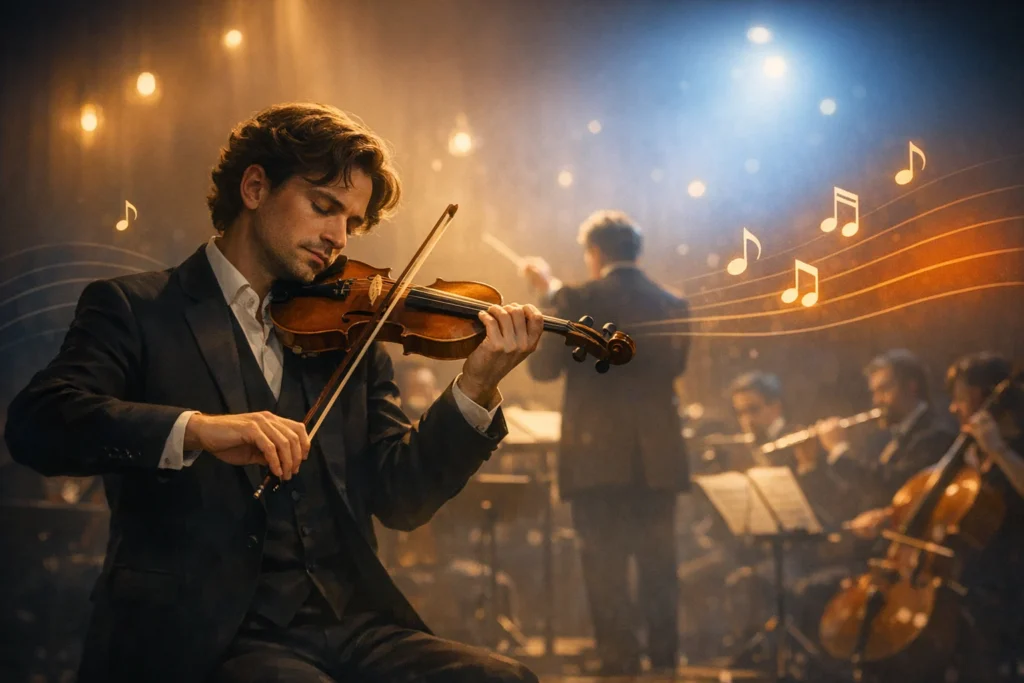
- A violin adagio may feel sorrowful and deeply personal
- A piano adagio might feel calm and meditative
- An orchestral adagio can feel grand and emotional, like a cinematic moment
This is why adagio is frequently used in film music and emotional scenes.
How Adagio is used in real musical compositions
Composers use adagio in different ways depending on the mood they want to create. It is commonly found in:
- Slow movements of symphonies
- Emotional sections of concertos
- Solo piano pieces
- Film soundtracks
- Ballet music
In classical music, the second or third movement of a larger work is often marked adagio to provide contrast with faster sections.
Example table: Adagio in musical context
| Musical Context | How Adagio is Used | Emotional Effect |
|---|---|---|
| Symphony movement | Slow middle section | Reflection and calmness |
| Piano solo | Gentle and expressive performance | Intimate emotion |
| Film score | Background emotional scene | Sadness or romance |
| String quartet | Soft melodic passage | Deep thought or tension release |
Famous examples of Adagio in music
Many well-known classical and modern compositions use adagio to create emotional impact.
Some notable examples include:
- Beethoven’s Symphony No. 7 (Second Movement)
A deeply expressive and slow movement often described as hauntingly beautiful. - Mozart’s Piano Concerto No. 23 (Second Movement)
A peaceful and lyrical adagio that feels soft and emotional. - Samuel Barber’s Adagio for Strings
One of the most famous adagio pieces ever written, often used in films and memorial events.
These works show how adagio is not just a tempo marking, but a storytelling tool in music.
Adagio vs other musical tempo terms
To better understand adagio, it helps to compare it with other common tempo markings used in music.
Comparison table
| Tempo Term | Meaning | Speed Level | Emotional Tone |
|---|---|---|---|
| Largo | Very slow and broad | Slower than adagio | Deep, heavy, solemn |
| Adagio | Slow and expressive | Slow | Calm, emotional, reflective |
| Andante | Walking pace | Moderate | Gentle, natural flow |
| Moderato | Moderate speed | Medium | Balanced and neutral |
| Allegro | Fast and lively | Fast | Bright, joyful, energetic |
| Presto | Very fast | Very fast | Exciting and intense |
From this comparison, adagio sits in the slower category but is more expressive and flowing than extremely slow terms like largo.
Variations and related terms of Adagio
Music theory also includes variations of adagio that provide slightly different meanings:
- Adagietto: Slightly faster than adagio, still slow but lighter in mood
- Molto adagio: Very slow and highly expressive
- Adagio sostenuto: Sustained slow tempo with smooth continuity
These variations allow composers to fine-tune emotional expression more precisely.
Adagio in modern music and popular culture
While adagio is rooted in classical music, it is still widely used today in:
- Movie soundtracks
- Emotional background music in TV shows
- Contemporary orchestral compositions
- Piano covers and instrumental music online
Modern composers often use adagio to create emotional depth in dramatic scenes. For example, slow orchestral music in films often uses adagio-style pacing to highlight sadness, love, or reflection.
Even in pop and instrumental genres, artists sometimes use adagio-inspired arrangements to slow down a melody and emphasize emotion.
Common misconceptions about Adagio
Many beginners misunderstand what adagio really means. Here are some common misconceptions:
1. “Adagio means exact speed”
Not exactly true. It indicates a slow tempo, but not a fixed beats per minute.
2. “Adagio is always sad music”
While it is often emotional, adagio can also feel peaceful, romantic, or even hopeful.
3. “All slow music is adagio”
Not all slow music is adagio. Other terms like largo or lento may be more appropriate depending on style.
4. “It is outdated”
Adagio is still widely used in modern music composition and performance.
How musicians interpret Adagio
Musicians do not simply slow down when they see adagio. They interpret it carefully based on:
- Composer’s intention
- Style of the piece
- Instrument being played
- Emotional context
For example:
- A pianist may use softer dynamics and longer pauses
- A violinist may use smooth bowing techniques
- A conductor may shape the orchestra’s phrasing for emotional flow
This interpretive flexibility is what makes adagio so powerful in performance.
When to use Adagio in music writing or speaking
If you are describing music or giving instructions, adagio is appropriate when you want to express:
- A slow emotional section in a composition
- A calm and expressive musical passage
- A reflective or soft musical mood
Professional alternatives in explanation:
- “slow tempo section”
- “expressive slow movement”
- “calm musical passage”
- “gentle and sustained tempo”
These alternatives can be useful in academic writing or modern explanations.
FAQs
What does adagio mean in music?
Adagio means a slow and expressive tempo in music, often used to create emotional or calm moods.
Is adagio the slowest tempo in music?
No, adagio is slow but not the slowest. Terms like largo or grave are typically slower.
How slow is adagio in beats per minute?
It is generally considered slow, but the exact speed varies depending on interpretation and composition.
Is adagio always sad music?
No, adagio can be peaceful, romantic, emotional, or reflective, not just sad.
What instruments commonly play adagio sections?
All instruments can play adagio, including piano, violin, cello, and full orchestras.
What is the difference between adagio and andante?
Adagio is slower and more expressive, while andante is a moderate walking pace.
Why do composers use adagio?
Composers use it to create emotional depth, calmness, or reflective moments in music.
Conclusion
Adagio is more than just a musical instruction. It is a powerful expressive tool that allows composers and performers to slow down time and connect deeply with emotion. It appears in a classical symphony or a modern film score, adagio continues to shape how audiences experience music.
Its slow, flowing nature gives space for reflection, emotion, and storytelling. That is why even after centuries, adagio remains one of the most meaningful and widely used tempo markings in music.
If you understand adagio, you understand one of the most emotional languages in music.
Discover More Related Articles:
- Understanding TDS in Water: Meaning, Measurement & Health Impact In 2026
- Candescent Explained: The Meaning of “Cand” Made Easy In 2026
- Confused About Conduction in Science: Here’s What It Really Means In 2026

Daniel Moore is a content writer and language enthusiast at TextRoast.com, specializing in decoding slang, abbreviations, and trending text expressions. He creates engaging and informative articles that help readers understand the meaning behind everyday words and online communication.