Definition
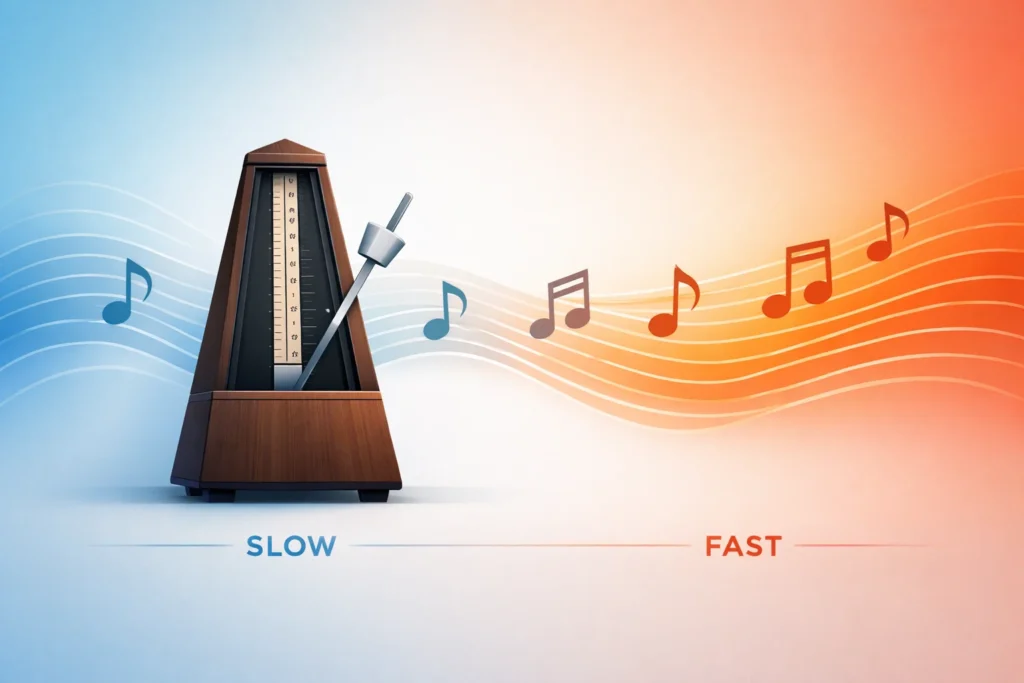
Tempo in music refers to the speed or pace of a piece of music. It tells musicians how fast or slow a song should be played and is usually measured in beats per minute (BPM).
Have you ever noticed how some songs make you feel like relaxing slowly on a rainy day, while others instantly make you want to dance or run? That difference is not random. It comes from something called tempo.
Tempo is one of the most important building blocks in music. Whether you’re listening to a soft piano melody, a fast EDM track, or a dramatic movie soundtrack, tempo quietly controls the emotional energy behind it.
Understanding tempo helps you:
- Feel music more deeply
- Play instruments more accurately
- Recognize different music styles easily
- Create or mix music more professionally
Let’s break it down in a simple, clear, and practical way.
What Is Tempo in Music? (Simple Explanation)
Tempo is the speed at which music is played. It determines how quickly the beats move in a song.
Think of tempo like the heartbeat of music:
- A slow heartbeat = slow music
- A fast heartbeat = fast music
For example:
- A calm lullaby has a slow tempo
- A pop dance track has a fast tempo
In music notation, tempo is usually written at the top of a sheet music page.
Origin and Meaning of Tempo
The word tempo comes from the Italian language, meaning “time.” Italian became the standard language for musical terms during the classical music era.
Composers like Beethoven, Mozart, and Bach used tempo markings to guide musicians on how fast their compositions should be performed.
Even today, most tempo instructions in music are still written in Italian, such as:
- Adagio (slow)
- Allegro (fast)
- Presto (very fast)
This historical influence is why modern musicians still use traditional Italian tempo terms worldwide.
Why Tempo Is Important in Music
Tempo is not just about speed. It shapes the emotion, style, and energy of a song.
Here’s why tempo matters:
1. Sets the Mood
- Slow tempo = calm, sad, romantic, emotional
- Fast tempo = energetic, happy, exciting
2. Defines Music Genre
Different genres depend heavily on tempo:
- Classical music: often moderate to slow
- Pop music: moderate to fast
- EDM: fast and energetic
- Jazz: varies widely
3. Helps Musicians Stay in Sync
Tempo ensures that all instruments and vocals stay perfectly timed together.
4. Affects Listener Experience
Even the same melody can feel completely different if played at different speeds.
How Tempo Is Measured (BPM Explained)
Tempo is measured in BPM (Beats Per Minute).
What is BPM?
BPM stands for Beats Per Minute, which counts how many beats happen in one minute of music.
For example:
- 60 BPM = 60 beats in one minute (slow)
- 120 BPM = 120 beats in one minute (moderate)
- 180 BPM = 180 beats in one minute (very fast)
Simple Breakdown:
- Lower BPM = slower music
- Higher BPM = faster music
Common Tempo Markings in Music
Instead of numbers, classical music often uses Italian words to describe tempo.
Tempo Reference Table
| Tempo Name | Meaning | BPM Range | Mood/Feeling |
|---|---|---|---|
| Largo | Very slow | 40–60 BPM | Heavy, emotional |
| Adagio | Slow | 66–76 BPM | Calm, relaxed |
| Andante | Walking pace | 76–108 BPM | Natural, flowing |
| Moderato | Moderate | 108–120 BPM | Balanced, steady |
| Allegro | Fast | 120–156 BPM | Happy, lively |
| Presto | Very fast | 168–200 BPM | Exciting, intense |
These markings help musicians understand the intended feel of a composition.
Real-World Examples of Tempo in Music
Tempo plays a huge role in different types of songs.
Slow Tempo Examples
- Romantic piano pieces
- Sad movie background music
- Lullabies for babies
Moderate Tempo Examples
- Pop songs
- Rock ballads
- Worship music
Fast Tempo Examples
- EDM and techno music
- Hip-hop beats
- Action movie soundtracks
Example Comparison:
- A slow love song feels emotional and soft
- A fast dance track feels energetic and powerful
Same its structure, different emotional impact just because of tempo.
Tempo vs Other Music Terms
Tempo is often confused with similar musical concepts. Let’s clear that up.
Tempo vs Rhythm
- Tempo: Speed of the music
- Rhythm: Pattern of beats and sounds
Tempo vs Beat
- Tempo: How fast beats happen
- Beat: The basic pulse in music
Meter vs Meter
- Tempo: Speed
- Meter: How beats are grouped (like 4/4 time)
Simple Summary:
- Tempo = speed
- Rhythm = pattern
- Beat = pulse
- Meter = structure
Types of Tempo Changes in Music
Music is not always fixed in speed. Tempo can change for expression.
Common Tempo Changes:
- Accelerando: Gradually getting faster
- Ritardando: Gradually getting slower
- Rubato: Flexible timing for emotional expression
- A tempo: Return to original speed
These changes help music feel more natural and emotional.
How Tempo Is Used in Modern Music Production
Today’s digital world, it is essential for music production.
In Digital Audio Workstations (DAWs):
- Producers set BPM before creating beats
- Tempo syncs loops and samples
- DJs match tempo for smooth transitions
In Live Music:
- Drummers control tempo for the whole band
- Conductors guide orchestras using tempo cues
And in Fitness and Dance:
- Workout music uses fast tempo for energy
- Yoga music uses slow tempo for relaxation
Tips for Understanding and Using Tempo
If you are learning music or just want to understand it better, here are helpful tips:
1. Tap Along with Songs
Try tapping your foot and count beats per minute.
2. Use a Metronome
A metronome helps you practice steady tempo.
3. Compare Songs
Listen to two songs and notice which feels faster.
4. Practice with BPM Apps
Many free apps help measure tempo easily.
5. Feel the Emotion
Don’t just count feel the music speed emotionally.
Professional Alternatives and Related Terms
In music discussions, instead of saying “tempo,” professionals may use:
- BPM (Beats Per Minute)
- Pace
- Speed of music
- Musical timing
- Rhythm speed (informal use)
While “tempo” is the correct technical term, these alternatives are often used in casual or production environments.
Alternate Meanings of Tempo (Outside Music)
Although tempo mainly refers to music, it is also used in other areas:
- Sports: speed of gameplay
- Dance: rhythm speed of movements
- Driving: pace of traffic flow
- Speech: speaking speed in communication
However, in most contexts, tempo still relates strongly to speed and timing.
FAQs
What does tempo mean in music?
It refers to the speed at which a piece of music is played, measured in beats per minute (BPM).
What is BPM in simple words?
BPM stands for Beats Per Minute and tells how many beats happen in one minute of music.
Is tempo the same as rhythm?
No, tempo is the speed of music while rhythm is the pattern of beats.
What is a slow tempo called?
Slow tempo is often called Largo or Adagio in classical music.
What is a fast tempo called?
Fast tempo is called Allegro or Presto depending on the speed.
Why is tempo important in songs?
Tempo controls mood, energy, and emotional impact of music.
Can tempo change in a song?
Yes, tempo can speed up or slow down using musical techniques like accelerando or ritardando.
How do musicians keep tempo?
They use tools like metronomes, counting beats, or following a conductor.
Conclusion
Tempo is much more than just “fast or slow music.” It is the pulse that shapes emotion, structure, and energy in every song.
From calm lullabies to high-energy dance tracks, tempo decides how we feel music in our hearts and bodies. You are a listener, learner, or musician, understanding tempo helps you appreciate music on a deeper level.
So next time you hear a song, try to notice its tempo you’ll start experiencing music in a completely new way.
Discover More Related Articles:
- Understanding TDS in Water: Meaning, Measurement & Health Impact In 2026
- Candescent Explained: The Meaning of “Cand” Made Easy In 2026
- Confused About Conduction in Science: Here’s What It Really Means In 2026

Laura Jackson is a writer at textroast.com, where she creates engaging articles that decode the meanings behind slang, phrases, and everyday expressions. Passionate about language and communication, she makes complex or confusing terms easy to understand, turning learning into a fun and relatable experience for readers around the world.