
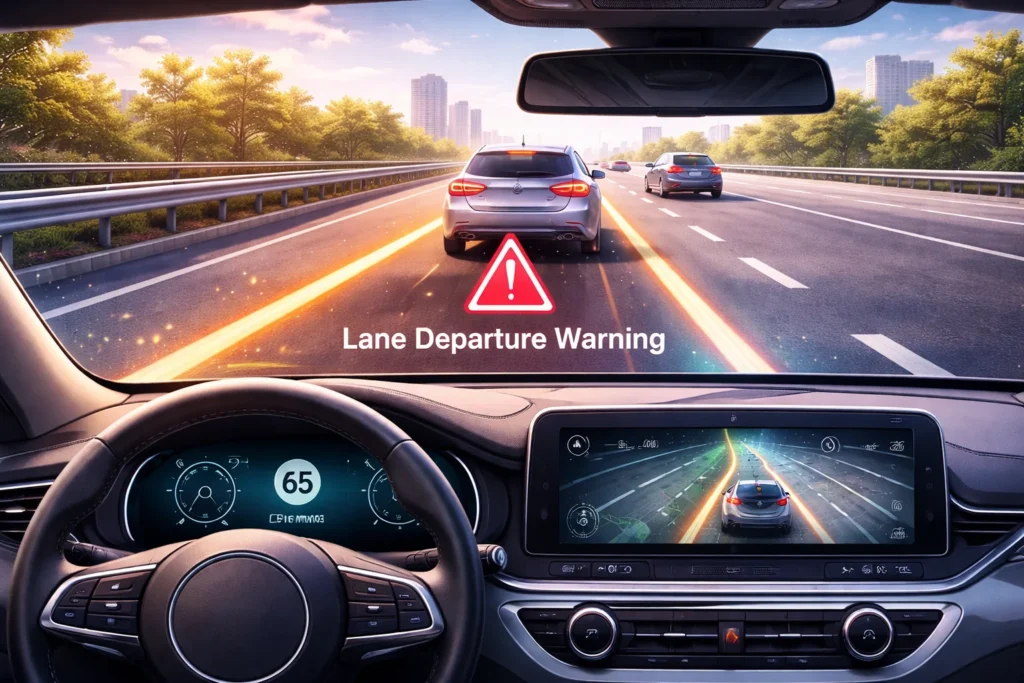
Definition
LDW (Lane Departure Warning) is a driver-assistance safety feature in cars that alerts you when your vehicle unintentionally drifts out of its lane without using a turn signal.
Imagine you’re driving on a long highway. Your eyes feel heavy, or maybe you’re momentarily distracted by your phone or adjusting the radio. Suddenly, your car begins to drift slightly out of its lane. Before anything dangerous happens, a beep sounds, your steering wheel vibrates, or a warning flashes on your dashboard.
That’s LDW (Lane Departure Warning) doing its job.
In today’s modern vehicles, safety technologies like LDW are becoming increasingly common. But what exactly does LDW mean in a car, how does it work, and why is it important? This comprehensive guide will walk you through everything you need to know in a simple, clear, and engaging way.
What Does LDW Mean in a Car?
LDW stands for Lane Departure Warning. It is part of a group of advanced safety technologies known as ADAS (Advanced Driver Assistance Systems).
In simple terms:
LDW monitors your car’s position within lane markings and alerts you if you drift out unintentionally.
Key Purpose:
- Prevent accidents caused by driver distraction
- Reduce fatigue-related incidents
- Improve overall road safety
How Does LDW Work?
LDW uses a combination of sensors and cameras to detect lane markings on the road.
Main Components:
- Front-facing camera (usually near the windshield)
- Image processing software
- Warning system (sound, vibration, or visual alert)
Step-by-Step Process:
- The camera continuously scans the road ahead.
- The system detects lane lines (white or yellow).
- If your car starts drifting without signaling:
- The system triggers an alert.
Types of Alerts:
- 🔊 Beeping sound
- 📳 Steering wheel vibration
- ⚠️ Dashboard warning light
Origin and Growing Popularity of LDW
Origin
LDW technology was first introduced in luxury vehicles in the early 2000s. As automotive technology advanced, it became more affordable and widely available.
Why It Became Popular
- Increasing road accidents due to distractions
- Growing demand for safety features
- Government safety regulations in many countries
- Integration with other smart systems like adaptive cruise control
Today, LDW is commonly found in:
- Sedans
- SUVs
- Trucks
- Even budget-friendly cars
Real-World Usage of LDW
LDW is especially useful in everyday driving situations.
Common Scenarios:
- Long highway drives 🛣️
- Late-night driving 🌙
- Heavy traffic conditions 🚗🚗🚗
- Driver fatigue or distraction
Example:
You’re driving on a highway and accidentally drift slightly left. Without LDW, you might not notice. With LDW, the system immediately alerts you, helping you correct your position safely.
Examples with Context and Tone
Here are some realistic examples showing how LDW is used in conversation:
Friendly Tone 🙂
“Good thing my car has LDW it beeped when I started drifting!”
Neutral Tone 😐
“The LDW system activated when the vehicle crossed the lane marking.”
Slightly Negative or Dismissive Tone 😒
“LDW keeps beeping even when I’m trying to avoid potholes!”
Types of Lane Assistance Systems
LDW is just one type of lane-related safety feature. Let’s look at how it compares to others.
Comparison Table: LDW vs Related Systems
| Feature | Full Form | Function | Driver Control |
|---|---|---|---|
| LDW | Lane Departure Warning | Alerts driver only | Driver controls steering |
| LKA | Lane Keeping Assist | Actively steers car back into lane | Partial system control |
| LCA | Lane Centering Assist | Keeps vehicle centered continuously | High system involvement |
| FCW | Forward Collision Warning | Warns about front collisions | No steering control |
LDW vs Lane Keeping Assist (LKA)
This is one of the most common points of confusion.
LDW:
- Only warns
- Does not control the car
LKA:
- Warns and corrects steering
- Helps keep the car in lane automatically
Simple Analogy:
- LDW = A friend saying “Hey, you’re drifting!”
- LKA = A friend grabbing the wheel slightly to help
Benefits of LDW in Cars
LDW offers several practical advantages:
Safety Benefits:
- Reduces lane drift accidents
- Helps tired drivers stay alert
- Prevents side collisions
Driving Comfort:
- Adds confidence on long trips
- Assists in maintaining focus
Insurance & Value:
- May reduce insurance premiums
- Increases vehicle resale value
Limitations of LDW
While LDW is useful, it’s not perfect.
Common Limitations:
- May not detect faded lane markings
- Can struggle in heavy rain or fog
- May give false alerts in construction zones
- Doesn’t replace attentive driving
Important Reminder:
LDW is an assistance feature, not a replacement for the driver.
Alternate Meanings of LDW
Although LDW mainly refers to Lane Departure Warning in cars, it can have other meanings in different contexts.
Other Possible Meanings:
- Long Day’s Work (informal)
- Lightweight Division Wrestling (sports context)
However, in automotive terms, LDW almost always refers to Lane Departure Warning.
Polite or Professional Alternatives
If you’re explaining LDW in a professional setting, you can use:
- Lane safety alert system
- Lane monitoring technology
- Driver assistance warning system
- Lane tracking alert feature
Usage Tips for Drivers
To get the most out of LDW:
Best Practices:
- Always use turn signals properly
- Keep windshield clean (for camera visibility)
- Stay attentive don’t rely fully on the system
- Adjust sensitivity settings if available
Example Table: When LDW Activates
| Situation | Will LDW Activate? | Reason |
|---|---|---|
| Drifting without signal | Yes | Unintentional movement |
| Changing lane with signal | No | Intentional movement |
| Driving on faded lanes | Maybe not | Poor visibility |
| Sharp turns | Usually no | System recognizes curves |
FAQs
What does LDW mean in a car?
LDW stands for Lane Departure Warning, a safety system that alerts drivers when they unintentionally leave their lane.
Is LDW the same as lane assist?
No, LDW only warns the driver, while lane assist systems like LKA can actively steer the car.
How does LDW alert the driver?
It uses sounds, vibrations, or visual warnings on the dashboard.
Can LDW prevent accidents?
It helps reduce the risk, but it cannot fully prevent accidents without driver attention.
Does LDW work at all speeds?
Most systems activate at higher speeds, usually above 50–60 km/h.
Why does my LDW beep unnecessarily?
It may detect unclear lane markings or interpret road conditions incorrectly.
Can LDW be turned off?
Yes, most vehicles allow drivers to disable or adjust the system.
Is LDW worth having in a car?
Yes, it adds an extra layer of safety, especially for highway driving.
Conclusion
LDW, or Lane Departure Warning, is one of the most valuable safety features in modern vehicles. It acts like a silent co-pilot, constantly monitoring your lane position and alerting you when something goes wrong.
While it doesn’t take control of the car, it plays a crucial role in preventing accidents caused by distraction or fatigue. When combined with other driver assistance technologies, LDW significantly enhances road safety and driving confidence.
If you’re considering buying a car or upgrading your current one, having LDW is definitely a smart choice.
Discover More Related Articles:
- Understanding TDS in Water: Meaning, Measurement & Health Impact In 2026
- Candescent Explained: The Meaning of “Cand” Made Easy In 2026
- Confused About Conduction in Science: Here’s What It Really Means In 2026

Laura Jackson is a writer at textroast.com, where she creates engaging articles that decode the meanings behind slang, phrases, and everyday expressions. Passionate about language and communication, she makes complex or confusing terms easy to understand, turning learning into a fun and relatable experience for readers around the world.