Definition
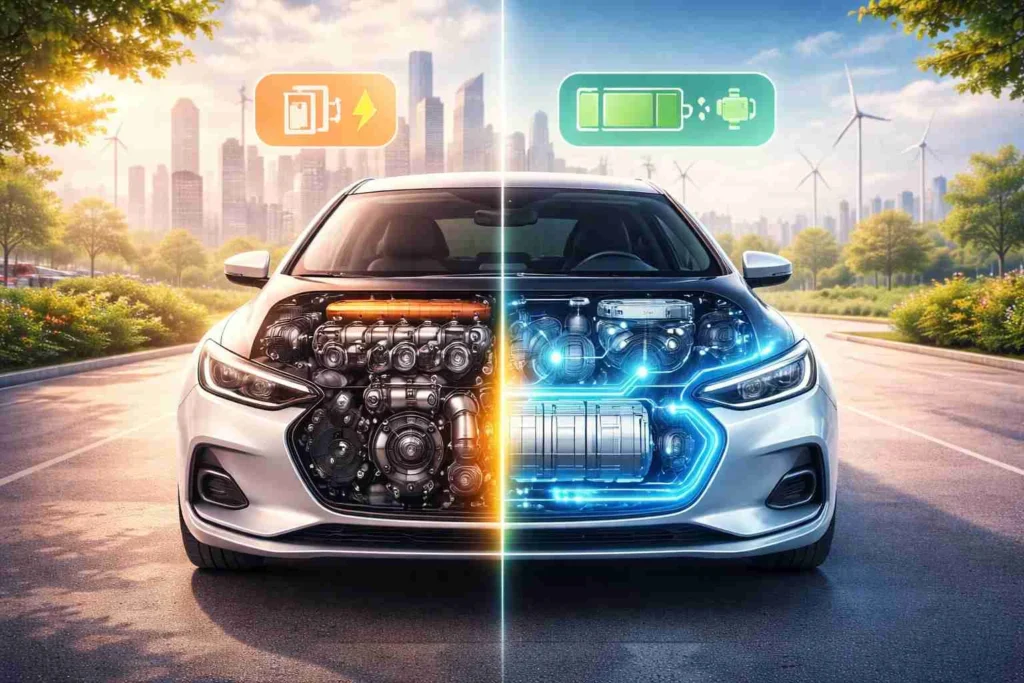
A hybrid car is a vehicle that uses two or more power sources, typically a gasoline engine and an electric motor, to improve fuel efficiency, reduce emissions, and enhance overall performance.
If you’ve ever browsed cars online or heard someone say, “I’m thinking of getting a hybrid,” you might have wondered what that actually means. Is it electric? And is it still gas-powered? Is it better?
The answer is: a hybrid car combines the best of both worlds.
In today’s world of rising fuel costs and growing environmental awareness, hybrid vehicles have become incredibly popular. They promise better mileage, lower emissions, and a smoother driving experience without fully committing to an all-electric lifestyle.
In this guide, we’ll break everything down in simple terms what hybrid means in cars, how it works, why people choose it, and how it compares to other vehicle types.
What Does Hybrid Mean in Cars?
At its core, the word “hybrid” simply means a combination of two different things.
In cars, it refers to a system that combines:
- A traditional internal combustion engine (petrol or diesel)
- An electric motor powered by a battery
These two systems work together to:
- Reduce fuel consumption
- Lower emissions
- Improve efficiency
Unlike fully electric vehicles, hybrids don’t rely entirely on charging stations. They can refuel at petrol pumps and recharge their batteries automatically while driving.
How Do Hybrid Cars Work?
Hybrid cars are designed to intelligently switch between or combine power sources depending on driving conditions.
Here’s how they typically operate:
1. Starting and Low Speeds
- The electric motor powers the car
- No fuel is used
- Quiet and smooth driving
2. Acceleration
- Both engine and electric motor work together
- Provides extra power when needed
3. Cruising at High Speed
- Gasoline engine takes over
- Electric motor assists when necessary
4. Braking and Deceleration
- Energy is captured through regenerative braking
- This energy recharges the battery
Types of Hybrid Cars
Not all hybrid vehicles are the same. There are several types, each with its own advantages.
1. Full Hybrid (HEV)
- Can run on electric power alone, engine alone, or both
- Automatically switches between modes
- Most common type
2. Mild Hybrid (MHEV)
- Electric motor assists the engine but cannot run alone
- Improves fuel efficiency slightly
- Lower cost than full hybrids
3. Plug-in Hybrid (PHEV)
- Larger battery than standard hybrids
- Can be charged using an external power source
- Can drive longer distances on electricity alone
Origin and Rise in Popularity
The concept of hybrid vehicles isn’t new it dates back over a century. However, hybrids gained mainstream attention in the late 1990s and early 2000s.
Why the sudden popularity?
- Rising fuel prices
- Increased environmental concerns
- Government incentives for eco-friendly vehicles
- Advances in battery and motor technology
Today, hybrid cars are widely used across the world, from compact city cars to luxury SUVs.
Real-World Usage of Hybrid Cars
Hybrid vehicles are designed for practical everyday use. Here’s where they shine the most:
Urban Driving
- Frequent stops and slow speeds
- Electric motor reduces fuel consumption
Traffic Conditions
- Engine shuts off during idle
- Saves fuel and reduces emissions
Long Drives
- Combines efficiency with range
- No need to worry about charging stations
Examples of Hybrid Driving Experience
Let’s look at how people might describe hybrids in different tones:
Friendly Tone 😊
“This hybrid car is amazing! It’s so quiet in traffic and saves me money on fuel.”
Neutral Tone
“Hybrid vehicles offer a balance between fuel efficiency and performance.”
Slightly Dismissive Tone
“Hybrids are fine, but I’d rather go fully electric.”
Benefits of Hybrid Cars
Hybrid cars come with several advantages that make them appealing to a wide range of drivers.
Fuel Efficiency
- Uses less petrol than traditional cars
- Ideal for city driving
Lower Emissions
- Produces fewer pollutants
- More environmentally friendly
Reduced Running Costs
- Less fuel consumption means savings
- Lower wear on engine and brakes
Smooth Driving Experience
- Quiet operation
- Seamless transitions between power sources
Drawbacks of Hybrid Cars
While hybrids offer many benefits, they also have some limitations.
Higher Initial Cost
- More expensive than regular petrol cars
Battery Replacement Cost
- Batteries can be costly to replace (though they last many years)
Less Powerful Than Some Petrol Cars
- Performance may not match high-performance vehicles
Comparison with Similar Terms
Understanding hybrids becomes easier when you compare them with related vehicle types.
Hybrid vs Electric vs Petrol Cars
| Feature | Hybrid Car | Electric Car | Petrol Car |
|---|---|---|---|
| Power Source | Engine + Electric | Electric Only | Petrol Only |
| Fuel Efficiency | High | Very High | Moderate |
| Emissions | Low | Zero | High |
| Charging Required | No (except PHEV) | Yes | No |
| Range | Long | Limited (varies) | Long |
Alternate Meanings of “Hybrid”
The word “hybrid” isn’t limited to cars. It’s used in other contexts too:
- Technology: Hybrid apps combine web and mobile features
- Work Models: Hybrid work means working from home and office
- Biology: Hybrid species are a mix of two different species
However, in the automotive world, it specifically refers to dual-powered vehicles.
When Should You Choose a Hybrid Car?
A hybrid car might be the right choice if:
- You drive frequently in city traffic
- You want better fuel efficiency
- You’re not ready to switch to a fully electric car
- You want an eco-friendly option without charging concerns
Practical Tips for Using Hybrid Cars
- Drive smoothly to maximize electric usage
- Avoid sudden acceleration
- Keep your battery system well-maintained
- Use regenerative braking effectively
Example Table: Hybrid Car Features in Daily Use
| Scenario | Power Source Used | Benefit |
|---|---|---|
| City traffic | Electric motor | Saves fuel, quiet ride |
| Highway driving | Petrol engine | Better speed and range |
| Stop-and-go traffic | Engine off | Reduced fuel consumption |
| Braking | Regenerative system | Recharges battery automatically |
FAQs
What does hybrid mean in cars?
A hybrid car uses both a gasoline engine and an electric motor to improve fuel efficiency and reduce emissions.
How do hybrid cars save fuel?
They use electric power at low speeds and capture energy during braking, reducing the need for fuel.
Are hybrid cars better than petrol cars?
Yes, in terms of fuel efficiency and emissions, but they may cost more upfront.
Do hybrid cars need charging?
Most hybrids do not need external charging, except plug-in hybrids.
What is the difference between hybrid and electric cars?
Hybrid cars use both fuel and electricity, while electric cars run only on electricity.
Are hybrid cars expensive to maintain?
Maintenance costs are generally similar to petrol cars, though battery replacement can be costly.
How long do hybrid batteries last?
Most hybrid batteries last between 8 to 15 years depending on usage.
Is buying a hybrid car worth it?
Yes, especially if you want to save fuel, reduce emissions, and enjoy a smooth driving experience.
Conclusion
Hybrid cars represent a smart middle ground between traditional petrol vehicles and fully electric cars. By combining two power sources, they offer improved fuel efficiency, lower emissions, and a more refined driving experience.
If you’re someone who wants to save money on fuel, reduce your environmental impact, and avoid the limitations of electric charging infrastructure, a hybrid vehicle can be an excellent choice.
As automotive technology continues to evolve, hybrids are likely to remain a key part of the transition toward greener transportation.
Discover More Related Articles:
- Understanding TDS in Water: Meaning, Measurement & Health Impact In 2026
- Candescent Explained: The Meaning of “Cand” Made Easy In 2026
- Confused About Conduction in Science: Here’s What It Really Means In 2026

David Brown is a content writer and language enthusiast at textroast.com, where he creates insightful articles that explain the meanings of words, slang, and phrases used in everyday life. His work helps readers decode modern language trends, understand cultural expressions, and make sense of online communication with clarity and fun.