Definition
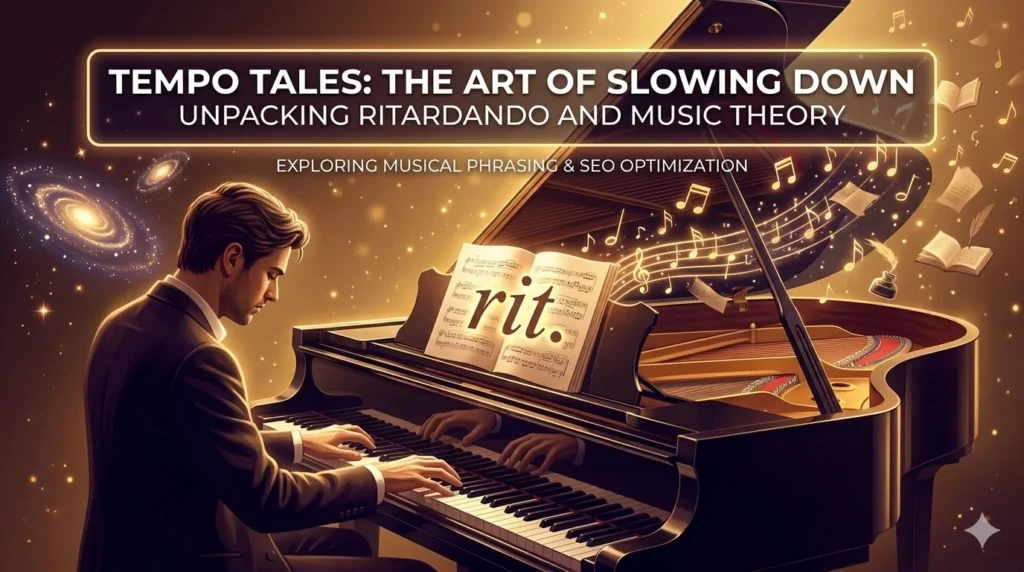
“Rit” in music is a shorthand notation for ritardando, which instructs musicians to gradually slow down the tempo of a piece of music. It signals a controlled decrease in speed, often used to create emotional emphasis, dramatic effect, or a smooth transition between musical phrases.”
If you’ve ever looked at a piece of sheet music and spotted the word “rit.”, you might have paused and wondered what it actually means. Is it a technical instruction? A mood indicator? Or just a random abbreviation?
In reality, “rit” is one of the most expressive and commonly used musical directions in classical, jazz, film scoring, and even modern pop arrangements. It plays a subtle but powerful role in shaping how a piece feels rather than just how it sounds.
Understanding what “rit” means can instantly improve your musical interpretation, whether you’re a beginner pianist, a choir singer, or simply someone curious about music theory.
Let’s break it down in a simple, human way so you can confidently recognize and apply it in real music.
Origin and Meaning of Rit (Ritardando)
The term rit comes from the Italian musical word ritardando, which literally means “delaying” or “slowing down.”
Italian became the universal language of music during the classical period because many influential composers, including Bach, Mozart, and Beethoven, used Italian musical terminology in their scores. Over time, shorter abbreviations like “rit.” became standard in sheet music to save space while keeping instructions clear.
Key meaning:
- Rit = ritardando
- Meaning = gradually slowing down the tempo
- Function = expressive tempo control
Unlike a sudden stop or pause, rit is smooth and progressive. Think of it like gently easing your foot off the accelerator while driving rather than slamming the brakes.
How “Rit” Is Used in Sheet Music
In musical notation, “rit.” is placed above or below the staff to signal a tempo change. It usually appears at emotionally significant moments in a composition.
Where you typically find it:
- End of a musical phrase
- Before a chorus or final section
- Transition into a softer or more emotional passage
- Closing bars of a piece
What performers are expected to do:
When musicians see “rit.”, they are expected to:
- Gradually slow down the tempo
- Maintain musical flow (not stop abruptly)
- Follow the emotional shape of the music
- Coordinate timing if performing in a group
In ensemble performances, the conductor usually guides the rit to ensure all musicians slow down together.
Musical Effect and Emotional Purpose of Rit
“Rit” is not just a technical instruction; it is a storytelling tool in music.
Emotional effects of rit:
- Creates tension before resolution
- Adds emotional depth or sadness
- Highlights a musical phrase
- Signals closure or ending
- Enhances drama in film music
For example, in a romantic piano piece, a rit might appear just before the final chord to give the listener a feeling of emotional release. In film scores, it often builds suspense before a major scene change.
Think of it as music taking a deep breath before finishing a thought.
Real-World Examples of Rit in Music
Let’s look at how rit appears in actual musical contexts.
Example 1: Classical Piano Piece
A pianist plays a flowing melody. Near the end, the sheet music shows “rit.” The performer slowly reduces speed, making the ending feel soft and reflective.
Example 2: Choir Performance
A choir singing a hymn may use rit before the final line to create a peaceful and reverent ending.
Example 3: Film Music
In a movie soundtrack, orchestral music might include rit just before a dramatic reveal or emotional scene transition.
Example Table: How Rit Works in Practice
| Music Situation | What Rit Does | Emotional Result |
|---|---|---|
| Piano solo ending | Gradually slows tempo | Calm and reflective ending |
| Choir hymn finale | Soft reduction in speed | Spiritual or peaceful feel |
| Film orchestral score | Controlled deceleration | Suspense or emotional build |
| Jazz performance | Slight tempo relaxation before end | Smooth expressive finish |
Rit vs Related Musical Terms
Many learners confuse rit with other tempo-related instructions. While they are similar, each has a unique purpose.
1. Rit vs Rallentando
- Ritardando (rit.): Gradual slowing, often more structured
- Rallentando (rall.): Also slowing down, but often more dramatic and sometimes broader in expression
2. Rit vs Accelerando
- Rit: Slows down
- Accelerando (accel.): Speeds up gradually
These are opposites in musical direction.
3. Rit vs A Tempo
- Rit: Slows down
- A tempo: Returns to original tempo after a change
4. Rit vs Fermata
- Rit: Gradual slowdown
- Fermata: Hold a note or pause completely
Common Mistakes When Interpreting Rit
Many beginners misunderstand how rit should be performed.
Mistake 1: Stopping suddenly
Rit is not a stop. It is a smooth slowdown.
Mistake 2: Slowing too early
If you start rit too soon, it can ruin the musical phrasing.
Mistake 3: Over-exaggerating
Some performers slow down too much, making the music feel dragged.
Mistake 4: Ignoring ensemble timing
In group music, rit must be coordinated, not individual.
How to Perform Rit Correctly (Practical Tips)
If you’re a musician or student, here are simple ways to master rit:
1. Think in phrases
Do not slow down randomly. Identify where the musical sentence naturally ends.
2. Practice gradual slowing
Use a metronome and slowly reduce tempo step by step.
3. Listen to emotional cues
Rit is often linked to expression. Ask yourself: “What emotion is this part trying to express?”
4. Follow the conductor (if present)
In orchestras or choirs, the conductor controls the rit timing.
5. Keep musical flow
Even while slowing down, maintain smooth rhythm and tone.
Alternate Meanings of Rit
In music theory, “rit” almost exclusively refers to ritardando, but context matters.
Occasionally, musicians may see:
- “rit.” as shorthand in handwritten scores
- Misinterpretations by beginners thinking it means a pause or rest (which it does not)
Important clarification:
- Rit does NOT mean silence
- Rit does NOT mean stopping abruptly
- Rit only refers to gradual slowing of tempo
Polite or Professional Ways to Describe Rit
If you’re explaining music in academic or teaching contexts, you can use these alternatives:
- Gradual tempo reduction
- Controlled slowing of pace
- Expressive deceleration
- Tempo relaxation toward cadence
These phrases are useful in formal writing or music education settings.
FAQs
What does rit mean in music?
Rit means ritardando, which instructs musicians to gradually slow down the tempo of the music in a smooth and controlled way.
Is rit the same as a pause in music?
No, rit is not a pause. It means the music slows down gradually, but it does not stop or become silent.
Where is rit usually used in songs?
Rit is often used at the end of phrases, before final sections, or in emotional moments where a slower tempo enhances expression.
Does rit mean stop playing?
No, rit never means stopping. It only instructs performers to reduce speed gradually while continuing to play.
What is the difference between rit and rallentando?
Both mean slowing down, but ritardando is usually more structured, while rallentando can feel more expressive and free.
Can rit be used in modern music?
Yes, rit is used in pop, jazz, film scores, and contemporary music, not just classical compositions.
How do musicians know how much to slow down with rit?
The amount of slowing depends on musical context, conductor direction, or stylistic interpretation.
Is rit written as rit or ritardando in sheet music?
Both are used. “Rit.” is a short abbreviation, while “ritardando” is the full term.
Conclusion:
Understanding what “rit” means in music gives you a deeper appreciation of how emotion and timing work together in a composition. It is not just a technical instruction but a powerful expressive tool that helps shape musical storytelling.
You’re performing or listening, recognizing rit allows you to notice the subtle slowing moments that make music feel more human, emotional, and impactful.
In simple terms, rit is where music gently slows down to let emotion speak louder than speed.
Discover More Related Articles:
- From Confusion to Clarity: Understanding Vertices in Geometry In 2026
- Construction Made Simple: What ROM Really Means & Why It Matters In 2026
- Math Symbols Explained: What the ‘ (Prime) Sign Means In 2026

Laura Jackson is a writer at textroast.com, where she creates engaging articles that decode the meanings behind slang, phrases, and everyday expressions. Passionate about language and communication, she makes complex or confusing terms easy to understand, turning learning into a fun and relatable experience for readers around the world.