Definition
Tempo in music refers to the speed or pace at which a piece of music is played. It is usually measured in beats per minute (BPM), and it determines a song feels slow, moderate, or fast. In simple terms, tempo controls how quickly the rhythm of a song moves forward.
Music is not just about melodies and lyrics it’s also about timing. Have you ever noticed how some songs make you feel relaxed and calm, while others instantly energize you or make you want to dance? That emotional difference often comes down to one powerful musical element: tempo.
Understanding what a tempo means in music helps you appreciate songs more deeply, you’re a listener, singer, DJ, or music producer. Let’s break it down in a simple and engaging way so you can fully grasp this essential concept.
What Is Tempo in Music? (Simple Explanation)
Tempo is the speed of a musical piece. It tells musicians how fast or slow they should play a song.
Think of tempo like a car’s speed:
- Slow tempo = relaxed driving 🚶♂️
- Medium tempo = normal city driving 🚗
- Fast tempo = racing speed 🏎️
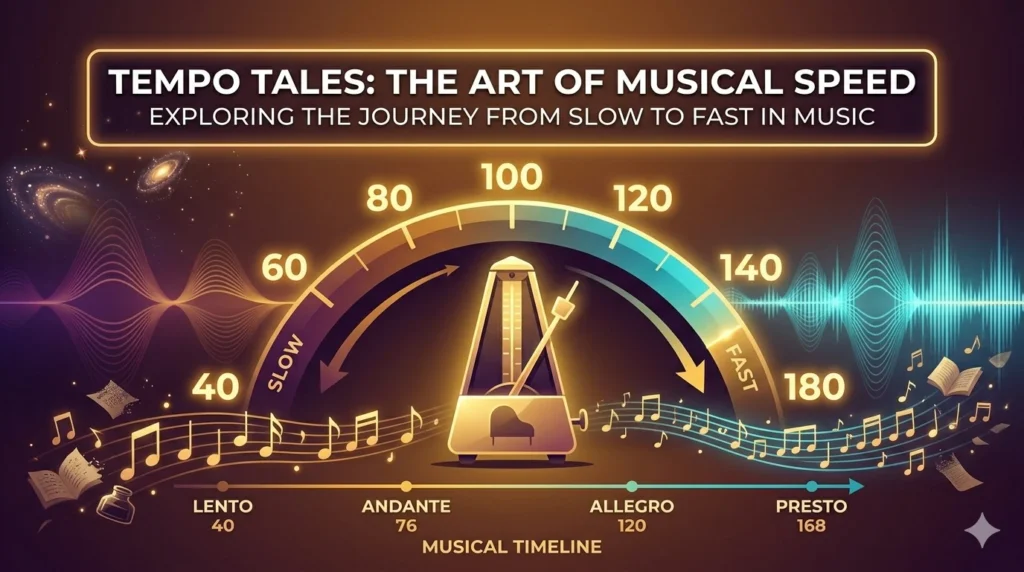
In music, tempo is measured in BPM (beats per minute). For example:
- 60 BPM = 60 beats in one minute (slow)
- 120 BPM = 120 beats in one minute (moderate)
- 180 BPM = very fast pace
So when someone asks, “what does a tempo mean in music?”, the answer is simple: it’s the musical speed that shapes the feel and energy of a song.
Origin of Tempo in Music
The concept of tempo has existed for centuries, but it became more structured during the development of classical music notation in Europe.
Before modern tools:
- Musicians relied on word descriptions like “fast” or “slow”
- Conductors interpreted speed based on emotion and tradition
Later, in the 17th and 18th centuries:
- Italian musical terms became standard (like Allegro, Adagio)
- A device called the metronome was invented to measure exact tempo
Today:
- Digital tools and software use precise BPM settings
- Tempo is essential in genres like pop, hip-hop, EDM, classical, and jazz
Why Tempo Is Important in Music
Tempo is not just a technical detail—it completely changes how music feels.
1. It controls mood
- Slow tempo = emotional, romantic, sad, or peaceful
- Fast tempo = energetic, exciting, or intense
2. It guides performers
Musicians rely on tempo to stay in sync with each other.
3. It defines genre style
Different music genres often follow typical tempo ranges.
4. It affects listener experience
Even the same melody can feel completely different when played at different tempos.
Common Tempo Ranges in Music (BPM Table)
Here is a simple breakdown of tempo ranges and their emotional feel:
| Tempo Name | BPM Range | Feeling | Example Style |
|---|---|---|---|
| Largo | 40–60 BPM | Very slow, emotional | Classical, sad piano |
| Adagio | 66–76 BPM | Calm and smooth | Ballads, soft music |
| Andante | 76–108 BPM | Walking pace | Relaxed pop, jazz |
| Moderato | 108–120 BPM | Medium speed | Most pop songs |
| Allegro | 120–168 BPM | Fast and lively | Dance, upbeat music |
| Presto | 168–200+ BPM | Very fast | EDM, metal, fast classical |
This table helps you understand how tempo shapes musical energy.
Examples of Tempo in Real Songs
Let’s understand tempo with simple real-world examples:
Slow Tempo Example
- Romantic piano songs or sad ballads
- Creates emotional depth and reflection
- Example feeling: calm evening or heartbreak mood 💔
Moderate Tempo Example
- Most pop songs on the radio
- Balanced energy, easy to enjoy
- Example feeling: walking or casual driving 🚶♀️
Fast Tempo Example
- Dance music and electronic tracks
- High energy, exciting, party vibes 🎉
- Example feeling: workout or celebration
Tempo vs Related Music Terms
People often confuse tempo with other music concepts. Let’s clear that up:
Tempo vs Rhythm
- Tempo: Speed of the music
- Rhythm: Pattern of sounds and silences
👉 Think of tempo as speed, and rhythm as pattern.
Tempo vs Beat
- Beat: The basic pulse of music
- Tempo: How fast those beats happen
Meter vs Tempo
- Meter: Structure of beats (like 4/4 time)
- Tempo: Speed of those structured beats
Tempo vs BPM
- BPM: The measurement unit of tempo
- Tempo: The actual speed (expressed in BPM)
How Tempo Is Used in Modern Music Production
In today’s music world, tempo is essential for production and editing.
1. Digital Audio Workstations (DAWs)
Producers set tempo before creating beats.
2. DJ Mixing
DJs match tempos of two songs to blend them smoothly.
3. Film Scoring
Tempo changes emotions in movie scenes:
- Slow tempo = emotional scenes
- Fast tempo = action scenes
4. Live Performances
Bands follow a fixed or flexible tempo to stay coordinated.
Emotional Impact of Tempo
Tempo has a direct connection with human emotions.
Slow Tempo Effects
- Relaxation
- Sadness
- Reflection
- Calmness
Fast Tempo Effects
- Excitement
- Happiness
- Energy
- Urgency
Moderate Tempo Effects
- Balance
- Comfort
- Focus
- Flow
This is why music is so powerful—it affects how we feel without us realizing it.
Alternative Terms for Tempo
In music theory, tempo can also be described using traditional Italian terms:
- Lento – slow
- Adagio – leisurely
- Andante – walking pace
- Allegro – fast
- Vivace – lively
- Presto – very fast
These terms are still widely used in classical music notation and orchestras.
Polite or Professional Ways to Talk About Tempo
If you are discussing music in a professional setting, you might use phrases like:
- “The tempo is slightly faster than expected.”
- “Let’s reduce the tempo for emotional effect.”
- “The piece maintains a steady moderate tempo.”
- “We should adjust BPM for better synchronization.”
Common Misunderstandings About Tempo
Many beginners think:
❌ Tempo is the same as volume
❌ Tempo changes automatically in all songs
❌ Faster tempo always means better music
But in reality:
✔ Tempo is only about speed
✔ Musicians control tempo intentionally
✔ Slow songs can be just as powerful as fast ones
FAQs
What does a tempo mean in music?
Tempo means the speed of a musical piece, usually measured in beats per minute (BPM).
Is tempo the same as rhythm?
No, tempo is speed while rhythm is the pattern of beats in music.
How is tempo measured in music?
Tempo is measured using BPM (beats per minute).
What is a normal tempo for pop songs?
Most pop songs range between 100 to 130 BPM.
Can tempo change in a song?
Yes, many songs change tempo to create emotional or dynamic effects.
Why is tempo important in music?
It affects mood, energy, and how a song feels to listeners.
What is the slowest tempo in music?
Largo is one of the slowest tempos, around 40–60 BPM.
What is the fastest tempo in music?
Presto is extremely fast, often above 168 BPM.
Conclusion
Tempo is one of the most important foundations of music. It determines how fast or slow a piece is played and deeply influences the emotional experience of the listener. It’s a slow romantic ballad or a fast energetic dance track, tempo shapes the entire identity of a song.
If you understandit, you understand the heartbeat of music. It helps musicians stay in sync, producers create mood, and listeners connect emotionally with sound.
Next time you listen to a song, try noticing its tempo you’ll start hearing music in a whole new way.
Discover More Related Articles:
- Candescent Explained: The Meaning of “Cand” Made Easy In 2026
- Confused About Conduction in Science: Here’s What It Really Means In 2026
- Understanding TDS in Water: Meaning, Measurement & Health Impact In 2026

Daniel Moore is a content writer and language enthusiast at TextRoast.com, specializing in decoding slang, abbreviations, and trending text expressions. He creates engaging and informative articles that help readers understand the meaning behind everyday words and online communication.