
Definition
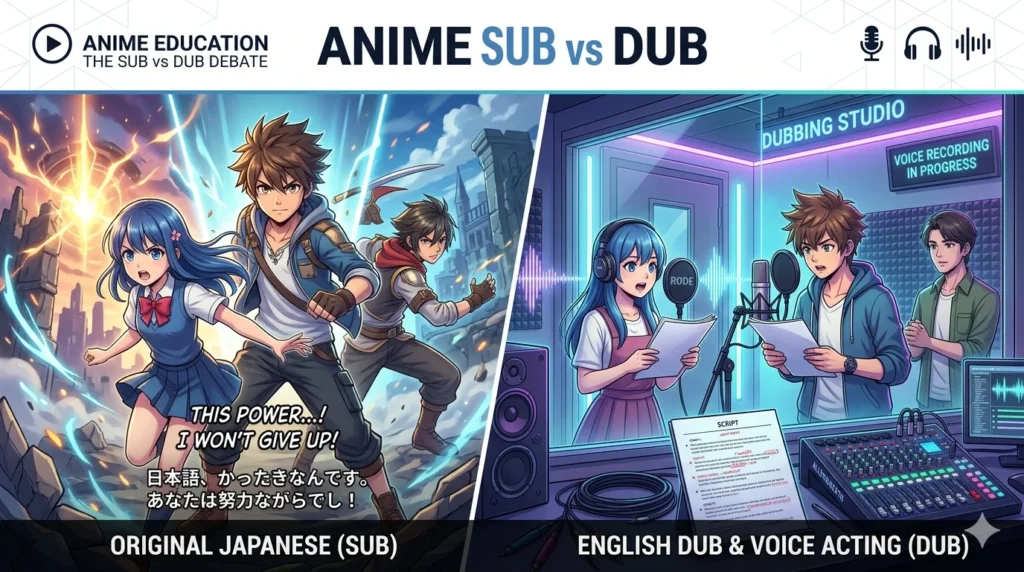
Dubbed anime means an anime version where the original Japanese audio is replaced with another language audio (such as English), using voice actors to match the characters’ lip movements and emotions.
In simple words, when you hear characters speaking English instead of Japanese in an anime, you are watching the dubbed version.
If you’ve ever started watching anime and wondered why some people are arguing about “dub vs sub,” you’re not alone. One of the most common terms you’ll see in anime communities is “dubbed”, and it often sparks strong opinions among fans.
Some people prefer hearing original Japanese voices with subtitles, while others enjoy anime fully translated and voiced in their own language. This is where the concept of dubbed anime becomes important.
Understanding what “dubbed” means helps you:
- Choose the right viewing experience
- Enjoy anime without confusion
- Understand anime discussions online
- Explore global versions of your favorite shows
Let’s break it down in a clear and friendly way.
What Does Dubbed Mean in Anime?
In anime, “dubbed” refers to replacing the original audio (usually Japanese) with a translated voice-over in another language.
This process is called dubbing, and it involves professional voice actors recording dialogue in a different language while matching the timing and emotions of the original characters.
Simple Breakdown:
- Original anime language: Japanese
- Dubbed version: English, Hindi, Spanish, etc.
- Result: Characters speak your language instead of Japanese
So when someone says:
“I watched the English dub of Naruto”
It means they watched Naruto with English voice acting instead of Japanese audio.
Origin and Popularity of Dubbed Anime
It didn’t become popular overnight. It grew over decades as anime expanded outside Japan.
Early Days
In the 1990s and early 2000s, anime was still niche outside Japan. Shows like Dragon Ball Z, Pokémon, and Sailor Moon were among the first widely dubbed anime series in English.
Why Dubbing Became Popular
It gained popularity because:
- Not everyone could read subtitles quickly
- Children preferred hearing their language
- TV networks needed localized content
- Anime became mainstream entertainment
Today’s Situation
Now, streaming platforms offer both:
- Subbed versions (original Japanese with subtitles)
- Dubbed versions (translated voice audio)
This gives viewers more freedom than ever before.
How Anime Dubbing Works (Behind the Scenes)
Dubbing is not just translation it’s a full creative process.
Here’s how it typically works:
Step 1: Translation
The original Japanese script is translated into another language.
Step 2: Adaptation
The script is adjusted to:
- Match lip movements
- Fit cultural meaning
- Maintain tone and emotion
Step 3: Voice Acting
Professional voice actors record the dialogue in studios.
Step 4: Editing & Syncing
Audio is carefully synced with animation.
Step 5: Final Mixing
Sound effects and background music are balanced with dialogue.
This process ensures the dubbed version feels natural and enjoyable.
Dubbed vs Subbed Anime: Key Differences
One of the most searched comparisons is dubbed vs subbed anime.
Here’s a clear breakdown:
| Feature | Dubbed Anime | Subbed Anime |
|---|---|---|
| Audio | Local language (English, etc.) | Original Japanese |
| Subtitles | Not needed | Required |
| Viewing Style | Listen and watch | Read and watch |
| Emotion Accuracy | Depends on voice acting | Very close to original |
| Popularity | Casual viewers | Hardcore anime fans |
Key Insight
Neither is “better” it depends on your preference.
Examples of Dubbed Anime in Real Use
To make it clearer, here are real-world examples:
Example 1: Neutral Usage
“I prefer the English dubbed version of Attack on Titan because I can focus on action scenes.”
Example 2: Friendly Opinion
“The Naruto dub is really good, especially for emotional scenes!”
Example 3: Dismissive Opinion
“The dub ruined the original feel of the anime 😕”
Example 4: Casual Conversation
“Are you watching it subbed or dubbed?”
Tone Differences in Dubbed Anime
One interesting part of it is tone variation.
Because different voice actors interpret characters differently, the tone can change slightly.
Possible tone variations:
- Friendly and natural tone (well-done dubs)
- Slightly exaggerated tone (early anime dubs)
- Emotionally different interpretation
For example:
- A serious scene in Japanese might sound slightly less intense in English dub
- Comedy scenes may feel more localized and funny
This is why some fans prefer original audio.
Commonly Used Anime Terms Related to “Dubbed”
Understanding “dubbed” is easier when you know related terms:
Subbed
Anime with original audio and subtitles.
Raw
Anime with no subtitles or translation.
Dubbed Version
Anime with translated voice audio.
SimulDub
A dubbed episode released shortly after the original Japanese airing.
Localization
Changing cultural references for global audiences.
Comparison Table: Sub vs Dub Experience
| Factor | Subbed Anime | Dubbed Anime |
|---|---|---|
| Immersion | High (original voices) | Moderate |
| Convenience | Lower (must read subtitles) | High (no reading needed) |
| Emotion accuracy | Very high | Varies by voice actor |
| Accessibility | Requires reading ability | Easier for beginners |
| Popularity | Anime fans | General audience |
Why Some Fans Prefer Dubbed Anime
It has many loyal fans for good reasons:
Easier Viewing
You can watch without reading subtitles constantly.
Multitasking Friendly
Perfect for casual watching while doing other things.
Accessibility
Helpful for younger viewers or people who struggle with reading subtitles.
Familiar Language
Hearing your own language makes characters feel more relatable.
Why Some Fans Prefer Subbed Anime
On the other side:
Original Voice Acting
Japanese voice actors are often highly trained and emotional.
Cultural Accuracy
Subbed versions preserve original expressions.
Faster Release
Subbed episodes usually release earlier than dubs.
No Localization Changes
Nothing is altered or adapted.
Is “Dubbed” Always English?
No. Dubbed anime is not limited to English.
It can be dubbed into:
- Hindi
- Spanish
- French
- German
- Arabic
- Many more languages
So “dubbed” simply means translated voice audio, not specifically English.
Polite Ways to Ask About Dubbed Anime
Instead of saying:
“Is it dubbed?”
You can also say:
- “Does this have an English dub?”
- “Is there a dubbed version available?”
- “Can I watch it in English audio?”
These sound more natural and clear in conversation.
Real Impact of Dubbed Anime in Global Culture
Dubbed anime played a huge role in making anime global.
Without dubbing:
- Many people wouldn’t have discovered anime
- Anime would remain niche outside Japan
- Streaming platforms wouldn’t be as popular for anime content
Shows like Pokémon, Dragon Ball Z, and One Piece gained massive international success largely because of dubbed versions.
FAQs
What does dubbed mean in anime?
Dubbed anime means the original Japanese audio is replaced with another language audio, such as English, so viewers can listen instead of reading subtitles.
Is dubbed anime better than subbed anime?
It depends on preference. Dubbed is easier to watch, while subbed keeps original voice acting and emotion.
Does dubbed mean English only?
No, dubbed means any translated voice language, not just English.
Why do people prefer subbed over dubbed?
Some viewers prefer subbed because it preserves original voice acting and cultural accuracy.
Does dubbed anime change the story?
No, the story remains the same, but some dialogue interpretation may slightly differ.
What is SimulDub in anime?
SimulDub means a dubbed episode is released shortly after the original Japanese episode airs.
Why does dubbed anime sometimes sound different?
Because voice actors interpret emotions differently, and localization changes may adjust dialogue for cultural clarity.
Conclusion
Understanding what dubbed means in anime is essential for any anime fan. In simple terms, dubbed anime replaces the original Japanese voice track with another language so viewers can enjoy the story without subtitles.
you prefer dubbed or subbed anime depends on your viewing style. Dubbed versions offer comfort and accessibility, while subbed versions provide original emotional depth.
Both formats have their own strengths, and neither is wrong. The best choice is the one that makes your anime experience more enjoyable and immersive.
Discover More Related Articles:
- RCV Meaning in Insurance: Replacement Cost Value Explained in 2026
- Why Most Keywords Say “Not Provided” in Google Analytics in 2026

Laura Jackson is a writer at textroast.com, where she creates engaging articles that decode the meanings behind slang, phrases, and everyday expressions. Passionate about language and communication, she makes complex or confusing terms easy to understand, turning learning into a fun and relatable experience for readers around the world.