
Defunition
Treble in music refers to the higher range of sound frequencies that produce bright, sharp, and clear tones, such as vocals, cymbals, and high pitched instruments. It is the opposite of bass and is essential for clarity and detail in audio.
When you listen to your favorite song, you probably notice the vocals, the shimmer of cymbals, or the bright sound of a guitar solo. That “bright” layer of sound you hear has a name in music and audio theory: treble.
Treble is one of the most important elements in shaping how music feels, sounds, and emotionally connects with listeners. Whether you are using headphones, adjusting an equalizer, or learning music production, understanding treble helps you control clarity and brightness in sound.
From pop music to classical orchestras and modern digital audio, treble plays a key role in how we experience sound every day.
Origin and History of Treble in Music
The word “treble” comes from old musical terminology rooted in Latin and medieval European music theory. It originally referred to the highest vocal part in choral music, especially in church compositions.
Over time, the meaning expanded from vocal classification to general sound frequency. With the development of modern audio engineering and electronics, treble became a standard term used in:
- Music production
- Audio equipment settings
- Sound mixing and mastering
- Everyday listening devices like headphones and speakers
Today, treble is universally recognized in both professional and casual audio contexts.
What Treble Means in Music (Simple Explanation)
In simple terms, treble is the high-pitched part of sound that makes audio feel sharp, clear, and detailed.
If music were a sandwich:
- Bass would be the bottom layer (deep and heavy sound)
- Midrange would be the filling (vocals and main instruments)
- Treble would be the top layer (bright and crisp details)
Without treble, music can sound dull, muddy, or flat. Too much treble, however, can make sound harsh or uncomfortable.
Treble in Sound Frequency and Audio Context
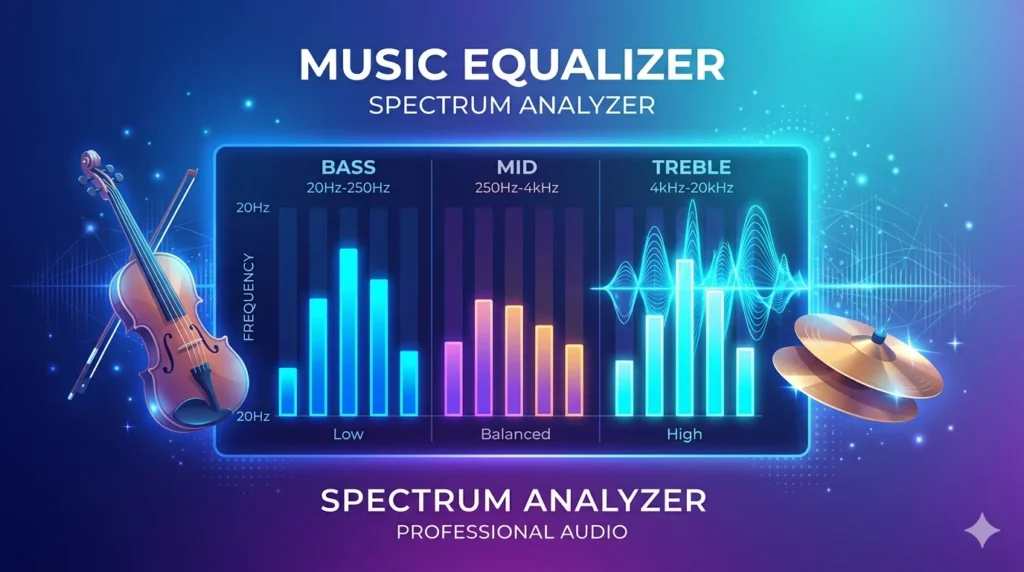
In audio science, treble refers to high frequency sound waves, typically ranging from:
- 2,000 Hz to 20,000 Hz (approximate range depending on system)
These frequencies include:
- Cymbals in drums
- Female and child vocal ranges (higher tones)
- Flutes and violins in higher registers
- Sibilant sounds like “s” and “sh” in speech
Treble is crucial for clarity because it defines the “edges” of sound.
Treble vs Bass vs Mid Frequencies
To fully understand treble, it helps to compare it with other frequency ranges.
| Frequency Type | Sound Range | Characteristics | Examples |
|---|---|---|---|
| Bass | Low frequencies | Deep, heavy, powerful | Kick drum, bass guitar |
| Midrange | Medium frequencies | Balanced, natural sound | Vocals, guitars |
| Treble | High frequencies | Bright, crisp, sharp | Cymbals, high vocals, strings |
Key Insight:
- Bass = power
- Mid = body
- Treble = clarity
A good mix balances all three.
Real World Usage Examples of Treble
Treble is not just technical jargon. It is something you hear and adjust every day.
In Music Listening
- Increasing treble makes vocals clearer and more detailed
- Reducing treble makes sound warmer and softer
Example in Audio Devices
- Headphones often include treble adjustment for clarity
- Smartphones use equalizers to enhance high frequencies
In Speech
- A sharp “s” sound in words is part of treble frequencies
Example in Music Production
- Producers boost treble to make instruments “shine” in a mix
Treble Adjustments in Everyday Sound: Example Table
| Setting Change | Effect on Sound | When to Use |
|---|---|---|
| Increase treble | Brighter, clearer, sharper sound | Pop music, podcasts |
| Decrease treble | Softer, warmer, less sharp sound | Relaxing music, sleep audio |
| Balanced treble | Natural, neutral sound | Everyday listening |
Treble in Instruments and Singing
It is especially important in both instruments and human voice.
Instruments that produce treble:
- Violin
- Flute
- Piccolo
- Cymbals
- Piano (higher keys)
Singing and voice:
- Female voices often contain stronger treble frequencies
- Child voices naturally have higher pitch
- Male singers use treble when singing in higher registers
Treble helps these sounds stand out clearly in music compositions.
Treble in Audio Equipment and Equalizers
Modern audio devices allow users to control treble manually using equalizers.
Common treble controls include:
- Treble knob on speakers
- High frequency slider in music apps
- Equalizer settings in smartphones
- Mixing tools in professional audio software
Why treble control matters:
- Enhances clarity in vocals
- Improves instrument separation
- Reduces muffled or unclear sound
However, too much treble can cause:
- Ear fatigue
- Harsh or piercing sound
- Loss of natural warmth
Emotional and Perceptual Impact of Treble
Treble does more than change sound technically. It also affects emotion and perception.
High treble sound feels:
- Bright
- Energetic
- Sharp
- Exciting
Low treble sound feels:
- Warm
- Soft
- Relaxed
- Calm
This is why music producers carefully balance treble depending on mood and genre.
For example:
- Pop music often has higher treble for energy
- Jazz may have smoother treble for warmth
- Classical music balances treble for natural orchestral sound
Common Misunderstandings About Treble
Many beginners confuse treble with general “loudness” or “high volume,” but they are different.
Misconceptions:
1. Treble means loud sound
Not true. Treble is about frequency, not volume.
2. More treble always improves sound
Too much treble can make sound unpleasant.
3. Treble only matters in music production
Treble affects everyday listening too, including phone calls and videos.
Related Terms and Alternatives
Treble is often discussed alongside other audio terms.
Related concepts:
- High frequency sound
- High pitch
- Upper register
- Bright tone
- Sonic clarity
Professional audio terms:
- High band EQ
- Frequency boost
- High shelf filter
Simple alternatives in everyday language:
- Sharp sound
- Bright sound
- Crisp audio
When to Adjust Treble (Practical Tips)
Here are some practical listening situations:
- If vocals sound unclear → increase treble slightly
- If sound feels harsh → reduce treble
- If music feels dull → increase treble and balance bass
- If listening at night → reduce treble for comfort
A balanced setting is usually best for long listening sessions.
FAQs
What does treble mean in music?
Treble refers to the high frequency sounds in music that create brightness, clarity, and detail, such as cymbals, flutes, and high pitched vocals.
Is treble the same as high pitch?
Yes, treble is closely related to high pitch sounds, but in audio engineering it specifically refers to a frequency range.
What happens when treble is increased?
Increasing treble makes sound brighter, sharper, and more detailed, especially in vocals and instruments.
What happens when treble is decreased?
Lowering treble makes sound warmer, softer, and less sharp, reducing brightness in audio.
Is treble good or bad in music?
Trble is neither good nor bad. It depends on balance. Too little makes sound dull, too much makes it harsh.
Where do we hear treble in everyday life?
We hear treble in voices, birds chirping, musical instruments, and electronic audio devices.
What is the difference between treble and bass?
Treble is high frequency sound, while bass is low frequency deep sound.
Can treble affect hearing comfort?
Yes, excessive treble can cause ear fatigue, while balanced treble improves listening comfort.
Conclusion
Treble is a fundamental part of music and sound that shapes how we experience audio clarity and brightness. It brings detail to vocals, sharpness to instruments, and life to recordings.
Understanding treble helps you:
- Improve music listening experience
- Adjust audio settings effectively
- Recognize sound quality differences
- Appreciate music production more deeply
In simple terms, treble is the “sparkle” of sound that makes music feel alive and detailed.
Discover More Related Articles:
- Construction Made Simple: What ROM Really Means & Why It Matters In 2026
- Math Symbols Explained: What the ‘ (Prime) Sign Means In 2026
- From Confusion to Clarity: Understanding Vertices in Geometry In 2026

Laura Jackson is a writer at textroast.com, where she creates engaging articles that decode the meanings behind slang, phrases, and everyday expressions. Passionate about language and communication, she makes complex or confusing terms easy to understand, turning learning into a fun and relatable experience for readers around the world.